Program Booklet
Celebrating 5 Years Amare
Friday November 20
8:00 p.m.
until approximately 10:15 p.m.
Program Concert Hall
Residentie Orkest and Nederlands Dans Theater are celebrating five years of “ Amare ” with two world premieres, world-class dance, a brass band, and Stravinsky’s *The Firebird*.
📳
Please put your phone on silent and dim the screen so as not to disturb others during the concert. Taking photos is allowed during applause.
Schedule
7:00 p.m. – Doors open
8:00 p.m. – Start Concert Hall & Danstheater
8:45 p.m. – Intermission & venue change
9:30 p.m. – Start Concert Hall & Danstheater
10:15 p.m. – Expected end
Programme
Paul Dukas ( 1865–1935)
Fanfare to Preface “La Péri” (1912)
Nederlands Dans Theater – Journey (world premiere)
Choreographyby Imre van Opstal and Marne van Opstal
Dancers: Chloé Albaret, Benjamin Behrends
Lighting designby Lisette van der Linden
Costume designby Imre van Opstal and Marne van Opstal in collaboration with the NDT Costume Workshop
Music:
Max Richter ( 1966)
Journey Song (CP1919) (2019, Dutch premiere)
Bianca Bongers ( 1987)
Amare 's Diary / Diaries for Amare (2026)
Bianca Bongers' new work, * Amare's Diary*, was made possible in part by Fonds RO.
Igor Stravinsky (1882-1971)
Suite from “L’Oiseau de feu” ( 1910—1919 version)
· Introduction - The Firebird and Its Dance - Variation of the Firebird
· Princess Rounds
· The Infernal Dance of King Kachtcheï
· Lullaby
· Final
What are you going to listen to?
When the “ Residentie Orkest ” and the Nederlands Dans Theater join forces to celebrate the fifth anniversary of “ Amare ,” it promises to be a special experience. Renowned choreographers are creating a new dance set to music by Max Richter; classics by Dukas and Stravinsky will be performed; and Bianca Bongers has composed a brand-new piece commissioned specifically for “ Amare .”
Noisy audience
The famous fanfare with which Paul Dukas opens his ballet *La Péri* was actually a last-minute solution. Originally, the ballet opens with almost inaudible music to evoke the exotic atmosphere of fairy-tale Persia, where the story is set. But to quiet the audience—which was rather boisterous at the time—he composed a short but forceful introduction in the form of a fanfare for brass instruments. And indeed, the hall fell silent immediately, allowing the ballet to begin in peace. Strangely enough, this Fanfare is nowadays the only part of *La Péri* that is still regularly performed—precisely the music from the ballet to which, of all things, no one dances.
Pulsar
In 1967, astronomers discovered a new type of celestial body, 2,000 light-years away from Earth. It was a luminous object that emitted signals with mathematical precision. For a moment, it was thought that extraterrestrial life had been discovered, but it turned out to be a pulsar—a rapidly rotating star that emits electrical pulses with extreme regularity. The star was given the prosaic name CP 1919. But for Max Richter, it provided enough inspiration for a new work in which he attempts to capture the pulsar’s astronomical characteristics in music. His *Journey Song (CP1919) * is primarily a slowly undulating soundscape in which pulses in various rhythms subtly interweave. According to the composer, the musicians are meant to play from memory—and preferably in the dark—as if the sounds were coming toward the listener from the dark depths of the infinite universe.
Marne van Opstal and Imre van Opstal on their new work: “Two dancers return to a shared history and memory, bringing with them everything that has happened since then. Music and movement exist side by side, each following its own path. They come together and drift apart again, while the music gradually builds toward a single, all-encompassing climax.”
Wandering through Amare
Over the past few months, composer Bianca Bongers has wandered through the various spaces of Amare. The results of these explorations can be found in a series of compositions she wrote specifically for the first 10th anniversary of Amare . Her fascination with the building is therefore also reflected in the orchestral work*Dagboek van Amare / Amare Diaries*. In it, she translates the spatial qualities of Amare into sound. For Bongers, “seeing” is linked to “hearing,” and an architectural design therefore also has musical significance. Consider areas of light and shadow, the relationships between dimensions, the building’s various functions, and the pillars that hold everything together and from which the entire structure “hangs.” She began with the conviction that if something is possible in architecture, it must also be possible in music. Each visit was like an encounter with the building: sometimes quiet and introspective, other times lively and expressive. This resulted in a piece composed of a multitude of musical planes—clearly defined yet entirely open to interpretation—effortlessly held together by pillars of vertical chords. But she also connects the music to her pregnancy, which she was experiencing during this period. This personal experience adds an extra dimension that brings the music to life, almost literally.
A Ballet of Color and Sound
Sergei Diaghilev of the renowned Ballets Russes company in Paris recognized the potential of his talented but still completely unknown compatriot, Igor Stravinsky. After a few small commissions, the composer was asked to write the music for a major ballet. *The Firebird* is a classic fairy tale in which a brave prince rescues a beautiful princess from the clutches of an evil sorcerer with the help of a mythical creature. It was meant to be a spectacle for the eyes and ears, featuring groundbreaking choreography by Michel Fokine. Diaghilev provided Stravinsky with a massive orchestra to ensure the music was at least as colorful as the dance and the staging. Stravinsky set to work with great diligence. He consulted constantly with the choreographer, set and costume designers, dancers, and others involved to ensure everything fit together as seamlessly as possible. Thus, he mirrored the colors used in the staging in his music: the pure white and blue of the prince and princess are primarily consonant and melodious; the controversial red and orange of the Firebird have a chromatic sound; and the purple and poison green of the sorcerer and his retinue are shrouded in harsh dissonances.
The success was unparalleled, and additional performances even had to be scheduled. Stravinsky’s work, in particular, made a deep impression. It was modern music that left the romantic ballet of the 19th century behind, yet managed to retain enough elements of it to avoid causing too abrupt a break in style. With *The Firebird* , Stravinsky established his reputation as a great composer, a reputation he would maintain throughout his life.
Kees Wisse
Biographies
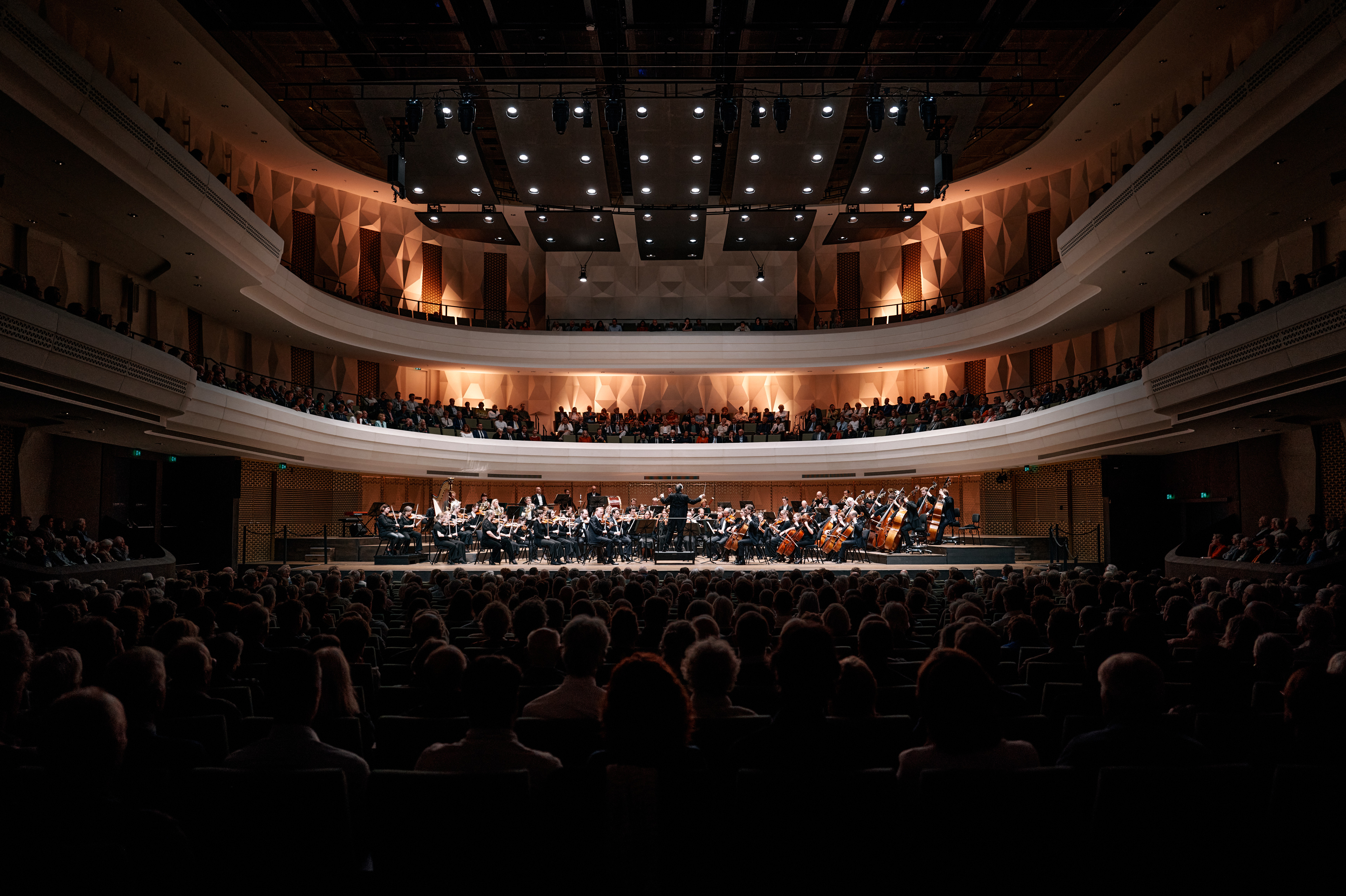
Residentie Orkest The Hague

Chloe Rooke
Imre van Opstal & Marne van Opstal
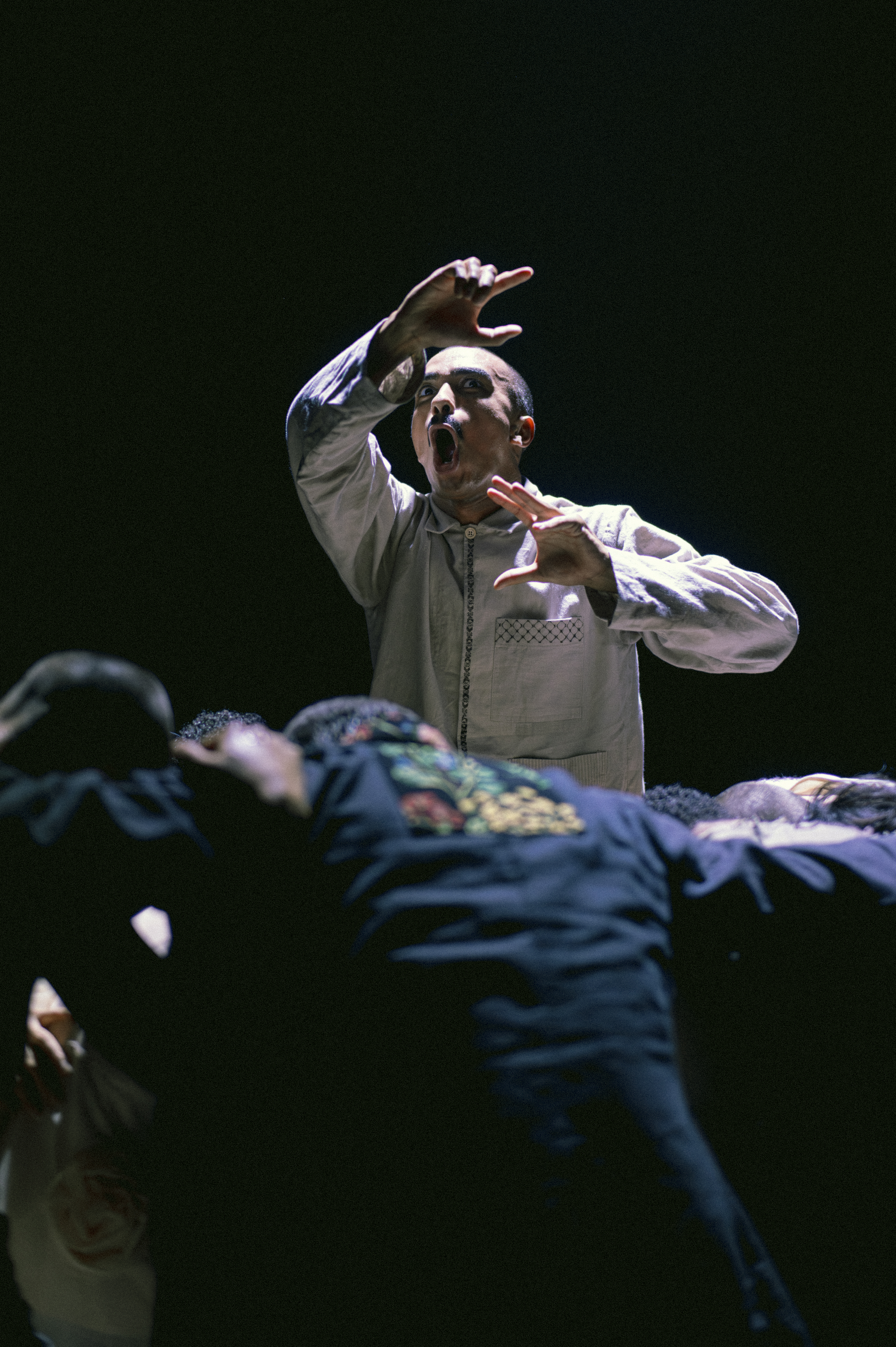
Dutch Dance Theater
Program Danstheater
Choreographer Hofesh Shechter is back at NDT with a raw and daring new piece for NDT 1. Shechter is known for works that reveal what lies beneath the surface, both within ourselves and in the world around us.
In *Tunnel Vision*, dreamlike scenes unfold alongside sudden glimpses of reality, as the dancers push their physical limits. Grand yet intimate, filled with intense physical abandon and pulsating music, this work promises to be a surreal journey that will completely sweep you away.
Programme
Tunnel Vision Tunnel Vision Tunnel
Vision Tunnel Vision Tunnel Vision
Tunnel Vision Tunnel Vision Tunnel
Vision Tunnel Vision Tunnel Vision
Tunnel Vision Tunnel Vision Tunnel
Vision Tunnel Vision Tunnel Vision
Tunnel Vision Tunnel Hope Vision
Tunnel Vision Tunnel Vision Tunnel
Vision Tunnel Vision Tunnel Vision
Tunnel Vision Tunnel Vision Tunnel
Vision Tunnel Vision Tunnel Vision
- Hofesh Shechter
Credits
Choreography by Hofesh Shechter
Assistant Choreographer Kim Kohlmann
Music: New Composition by Hofesh Shechter
Includes excerpts from:
Henry Purcell: The Gordian Knot Untied, Ill. Rondeau Minuet.
Johann Sebastian Bach: Cantata BWV 199, Tief gebückt und voller Reue.
Frédéric Chopin: Étude, Op. 10, No. 1 in C Major.
Lighting design by Tom Visser
Set Design by Tom Visser and Hofesh Shechter
Costume design by Yolanda Klompstra, produced by the NDT Costume Workshop
NDT rehearsal director Lucas Crandall
This production was co-funded by Ammodo Art.
Lobbies
About the Program
The Jazz Orchestra of the Concertgebouw (JOC) and the dance company OFFprojects join forces in *Storm*, a celebration of life’s unpredictable power and an invitation to embrace the unexpected. In this production for large venues, the four dancers and 18 jazz musicians move between set phrases and playful explorations—between virtuosity and tenderness. The result is a language of movement and sound that surprises and enchants. It promises to be a wonderful evening for both music and dance lovers.
Storm
Choreography
Amos Ben-Tal
Composition
, Shabaka Hutchings
's Conductor: Rob Horsting
Dancers: Alex Blondeau, Adam Khazmuradov, Annakha Flos, Ekaterina Cheporova, Karolina Szymura
Music
, Concertgebouw Jazz Orchestra
Musicians
, Marco Kegel, Jasper van Damme, Simon Rigter, Sjoerd Dijkhuizen, Jessie Brevé, Lucas Santana, Floriaan Wempe (saxophone), Suzan Veneman, Ellister van der Molen, Erik Veldkamp, Wim Both, Ruud Breuls, Jan van Duikeren, Sander Zweerink, Leo Koch (trumpet), Bert Boeren, Jan Oosting, Ilja Reingoud, Martin van den Berg, Lezaam Beets, Ron Oligschlaeger, Jeroen Vermazeren (trombone), Frans van Geest, Steve Zwanink (bass), Marcel Serierse, Tim Hennekes (drums)
Lighting Design
, Xavier van Wersch
Sound
, Koert Berends
Artistic AdvisoryBoard
, Yvan Dubreuil
A co-production by OFFprojects and the Concertgebouw Jazz Orchestra.
Fun Fact
Did you know that… the “ Concert Hall ” at Amare is actually a building within a building? The hall where the Residentie Orkest performs is acoustically isolated from the rest of Amare. This allows the orchestra to play at full volume while people dance and rehearse elsewhere in the building—without disturbing one another!
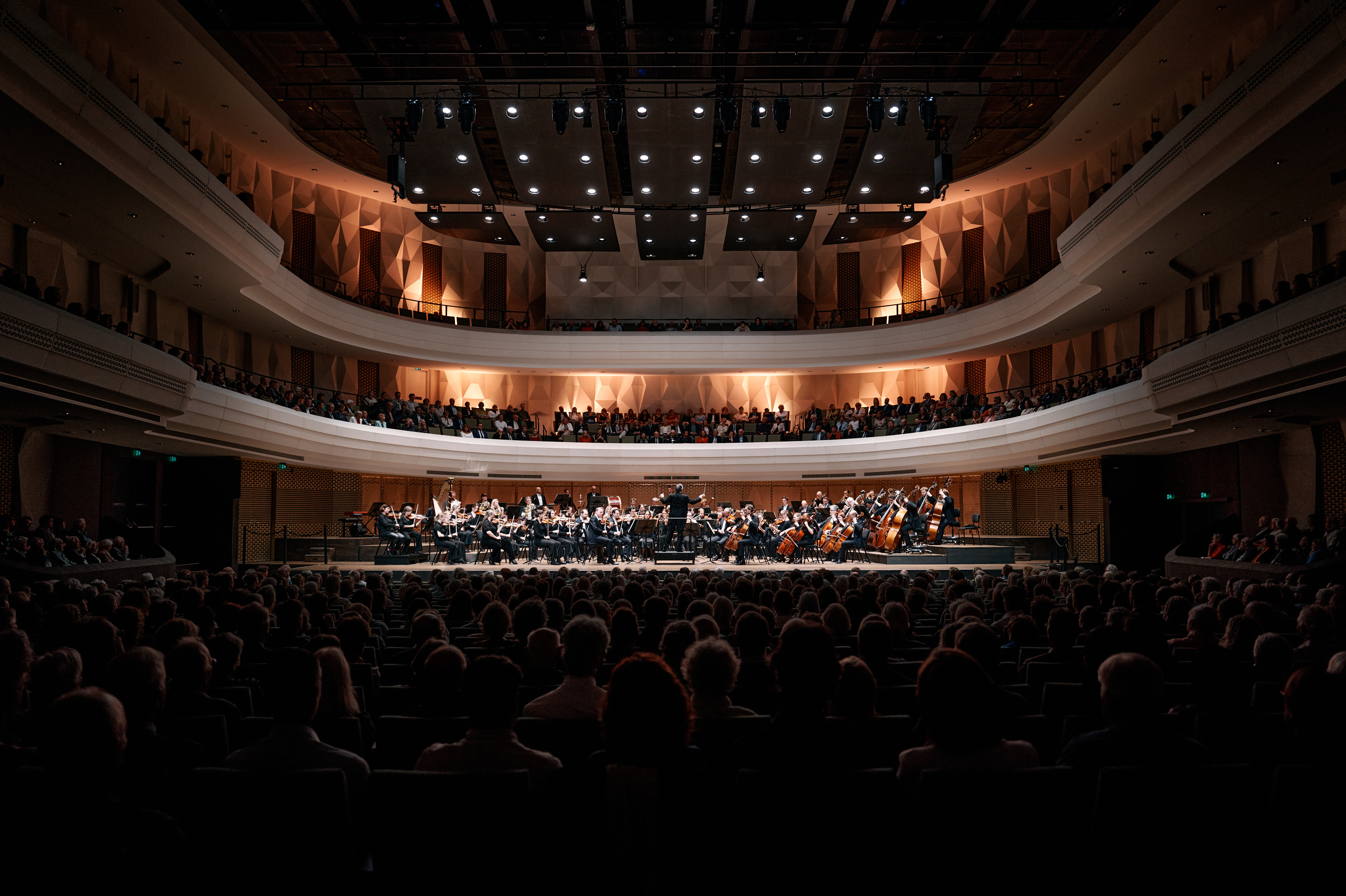
RO QUIZ
Who conducted The Firebird at the Residentie Orkest in 1928?-
Chief conductor Peter van Anrooy
Igor Stravinsky himself
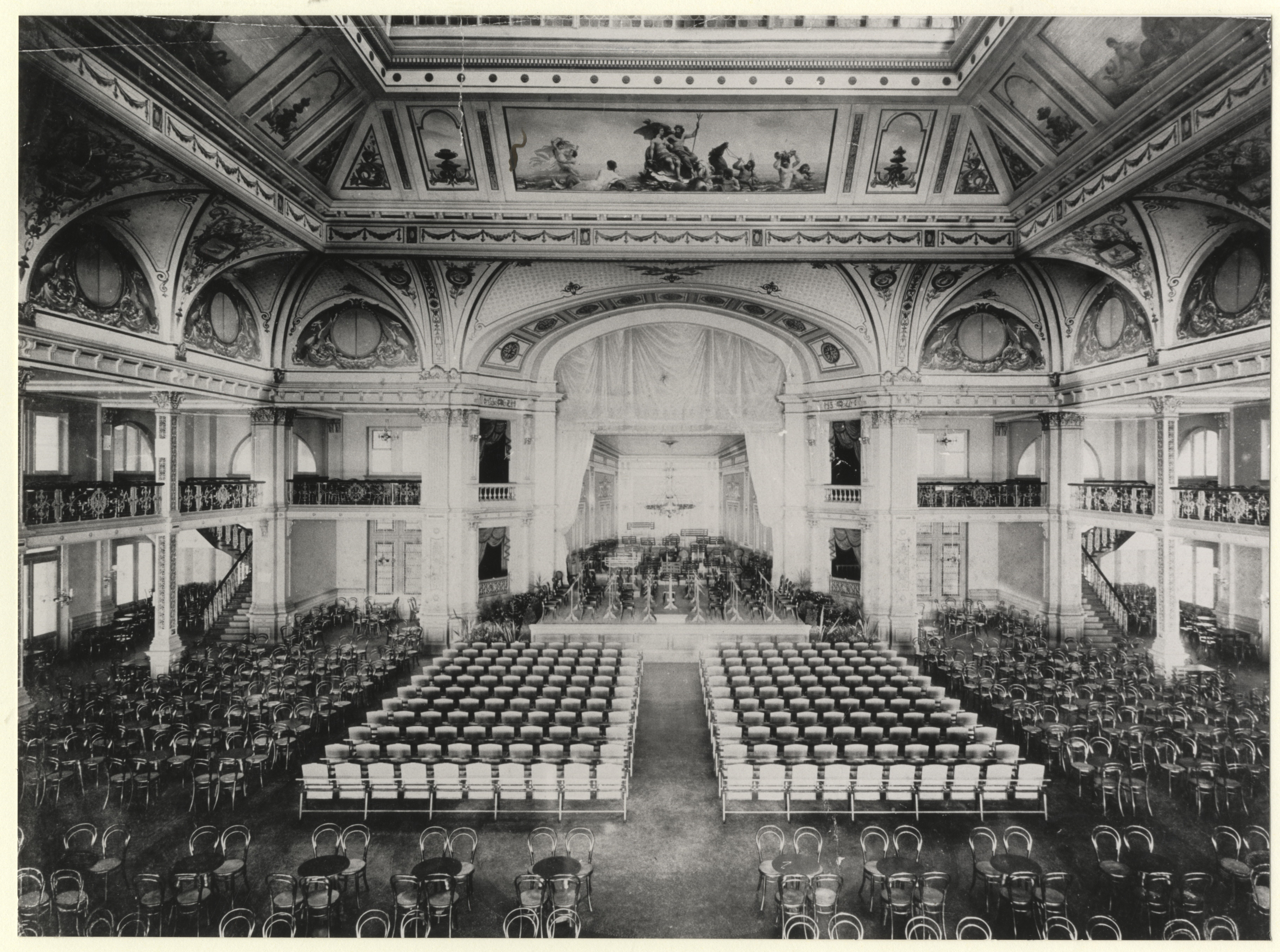
In the mid-1920s, Igor Stravinsky was a famous composer, especially in Europe. The earnings from his work were not bad, but there were a lot of mouths to fill. Stravinsky was married, had several children and was also entrusted with the care of his mother. Therefore, to make his income stream a little more regular, he performed frequently as a conductor and pianist including in the Netherlands. In September 1928, Igor Stravinsky made an appearance at Residentie Orkest for a concert entirely devoted to his music. Such as The Firebird which he also conducted himself. Stravinsky enjoyed his stay at the Kurhaus; he strolled along the beach and dined sumptuously at the Kurhaus restaurant every day. He gladly left the paying to others because "the world will pay me back what they didn't pay to Bartók and Mozart."
-
Renowned Stravinsky conductor Pierre Monteux
Igor Stravinsky himself
In the mid-1920s, Igor Stravinsky was a famous composer, especially in Europe. The earnings from his work were not bad, but there were a lot of mouths to fill. Stravinsky was married, had several children and was also entrusted with the care of his mother. Therefore, to make his income stream a little more regular, he performed frequently as a conductor and pianist including in the Netherlands. In September 1928, Igor Stravinsky made an appearance at Residentie Orkest for a concert entirely devoted to his music. Such as The Firebird which he also conducted himself. Stravinsky enjoyed his stay at the Kurhaus; he strolled along the beach and dined sumptuously at the Kurhaus restaurant every day. He gladly left the paying to others because "the world will pay me back what they didn't pay to Bartók and Mozart."
-
Igor Stravinsky himself
Igor Stravinsky himself
In the mid-1920s, Igor Stravinsky was a famous composer, especially in Europe. The earnings from his work were not bad, but there were a lot of mouths to fill. Stravinsky was married, had several children and was also entrusted with the care of his mother. Therefore, to make his income stream a little more regular, he performed frequently as a conductor and pianist including in the Netherlands. In September 1928, Igor Stravinsky made an appearance at Residentie Orkest for a concert entirely devoted to his music. Such as The Firebird which he also conducted himself. Stravinsky enjoyed his stay at the Kurhaus; he strolled along the beach and dined sumptuously at the Kurhaus restaurant every day. He gladly left the paying to others because "the world will pay me back what they didn't pay to Bartók and Mozart."
Igor Stravinsky himself
In the mid-1920s, Igor Stravinsky was a famous composer, especially in Europe. The earnings from his work were not bad, but there were a lot of mouths to fill. Stravinsky was married, had several children and was also entrusted with the care of his mother. Therefore, to make his income stream a little more regular, he performed frequently as a conductor and pianist including in the Netherlands. In September 1928, Igor Stravinsky made an appearance at Residentie Orkest for a concert entirely devoted to his music. Such as The Firebird which he also conducted himself. Stravinsky enjoyed his stay at the Kurhaus; he strolled along the beach and dined sumptuously at the Kurhaus restaurant every day. He gladly left the paying to others because "the world will pay me back what they didn't pay to Bartók and Mozart."

Help The Hague get music!
Support us and help reach and connect all residents of The Hague with our music.
View all program booklets
Be considerate of your neighbors and turn down your screen brightness.