Program Booklet
Close Up: Schubert's Octet
Wednesday , April Wednesday
8:15 p.m.
to approximately 9:30 p.m.
Schubert’s Octet is a masterpiece that pushes the boundaries of chamber music. Grand yet intimate, symphonic yet charming. A gem for music lovers.
📳
Please put your phone on silent and dim the screen so as not to disturb others during the concert. Taking photos is allowed during applause.
Programme
Franz Schubert ( 1797–1828)
’s Octet in F, D 803 (1824)
Adagio – Allegro
Adagio
Scherzo: Allegro vivace – Trio
Andante with variations
Menuetto: Allegretto
Andante molto – Allegro
The concert ends around 9:30 p.m.
What are you going to listen to?
The year 1824 marks a pivotal moment in music history. Ludwig van Beethoven was working on his Ninth Symphony, in which he radically pushed the boundaries of the symphonic genre. At the same time, Franz Schubert was in Vienna during a complex phase of his life: physically weakened, but artistically at his peak. In that same year, he composed some of his most ambitious chamber music works, including the string quartets Rosamunde and Death and the Maiden and the monumental Octet. And while Beethoven expanded the symphony into a universal, almost philosophical statement, Schubert explored how far chamber music could reach. The Octet is a fascinating example of this: a work that combines the intimacy of chamber music with a distinctly symphonic mindset.
Schubert’s Octet stands at the intersection of two traditions. On the one hand, it draws on the classical serenade, featuring multiple movements and a mixed instrumentation. On the other hand, it transcends that tradition through its scale, structural coherence, and expressive depth. The immediate impetus was a commission from Count Ferdinand Troyer, a philanthropist, amateur clarinetist, and great admirer of Beethoven’s Septet. The clarinet part was written especially for him, which explains the instrument’s prominent role in the piece.
Schubert composed the work in a remarkably short time: in just a few weeks, during February and March 1824. The first performance took place as early as April, at Troyer’s home in Vienna. The performance was led by violinist Ignaz Schuppanzigh, a key figure in Viennese musical life and closely associated with both Beethoven and Schubert. Yet it took years for the work to gain wider recognition. The first public performance did not take place until 1827, and publication did not follow until long after Schubert’s death. As with so much of his music, this work remained under the radar for a long time.
Beethoven’s popular Septet served as a model for the structure of the Octet. That work remained exceptionally popular throughout the nineteenth century, much to the frustration of Beethoven himself, who felt it overshadowed his more ambitious compositions. Schubert adopted this model but put his own spin on it. The instrumentation closely resembles Beethoven’s—a combination of winds and strings—though Schubert adds a second violin, which makes the sound richer and fuller. The six-part structure, akin to the classical serenade, is also retained. Within that form, Schubert plays with contrasts: a solemn opening set against lively sections, a classical-sounding minuet alongside a scherzo, and a set of variations as the central moment.
According to his contemporaries, Schubert was completely absorbed in his work while composing. His friend Moritz von Schwind described how one could visit him, have a brief conversation, yet he would continue writing undisturbed. That concentration also seems to resonate in the music itself: the Octet is carefully structured and rich in detail. A striking feature of the work is the use of rhythmic motifs, particularly dotted rhythms, which provide energy and cohesion. The clarinet is given a distinctly expressive role, especially in the slow movement, which seems specifically tailored to Troyer’s qualities. The horn also receives challenging passages, though the instrument is spared in the Adagio, only to return later in a subtle, intimate dialogue with the clarinet and bassoon.
The successive movements take the listener through a variety of moods: from the open-air, hunt-like energy of the scherzo to an almost salon-like elegance in the variation movement. In the finale, Schubert surprises the listener with a brief, solemn opening, followed by a lively and playful Allegro that brings the work to a stylish close.
Prefer it on paper? Download a condensed printable version of this program.
Biographies
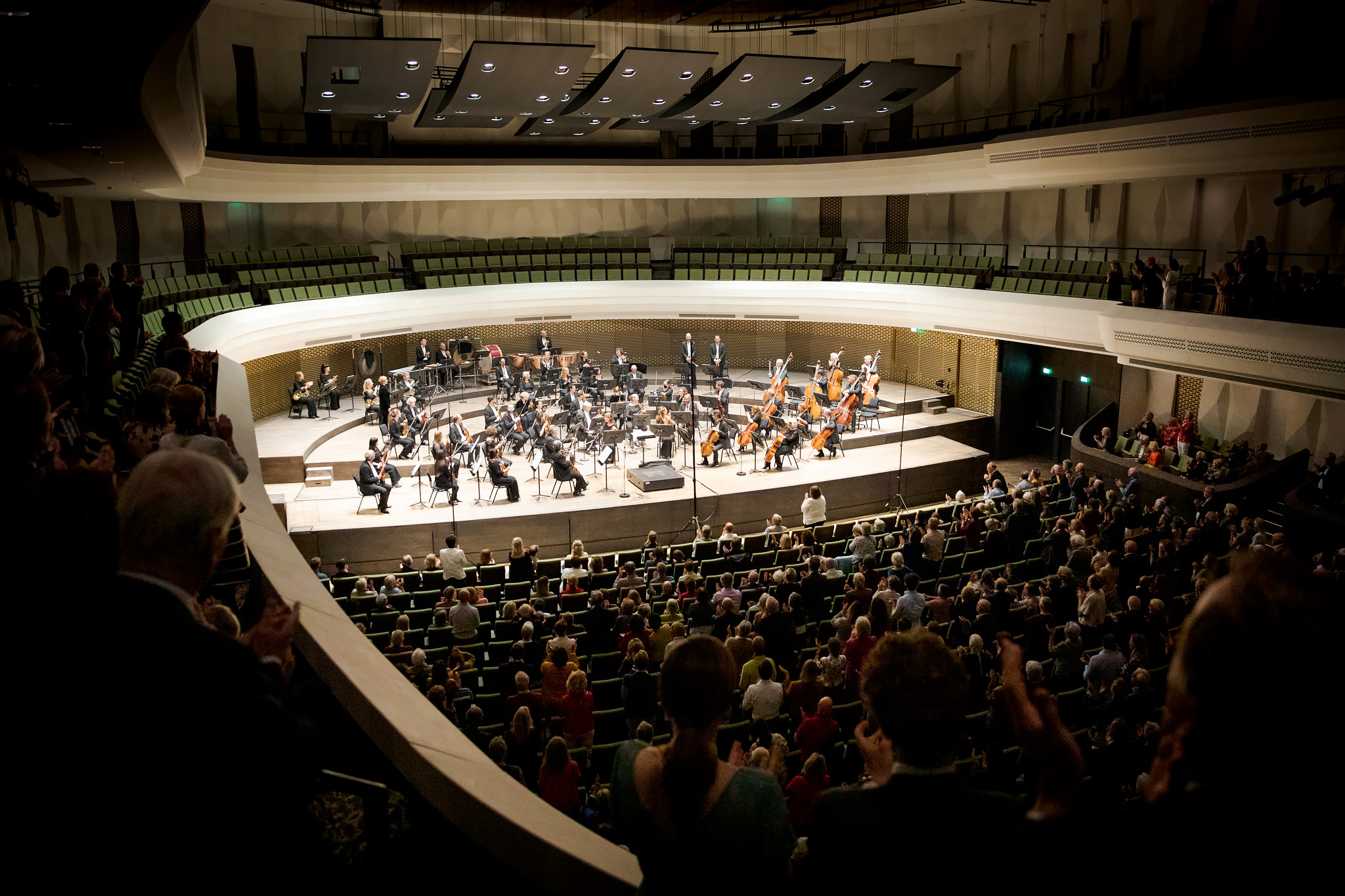
Residentie Orkest The Hague
Tonight's ensemble
Arno Stoffelsma, clarinet
Dorian Cooke, bassoon
Elizabeth Chell, horn
Justyna Briefjes, violin
Hester van der Vlugt, violin
Jan Buizer, viola
Gideon den Herder, cello
Lucia Mateo, double bass
RO QUIZ
What was Schubert's nickname?-
Schwammerl
Right answer: Schwammerl
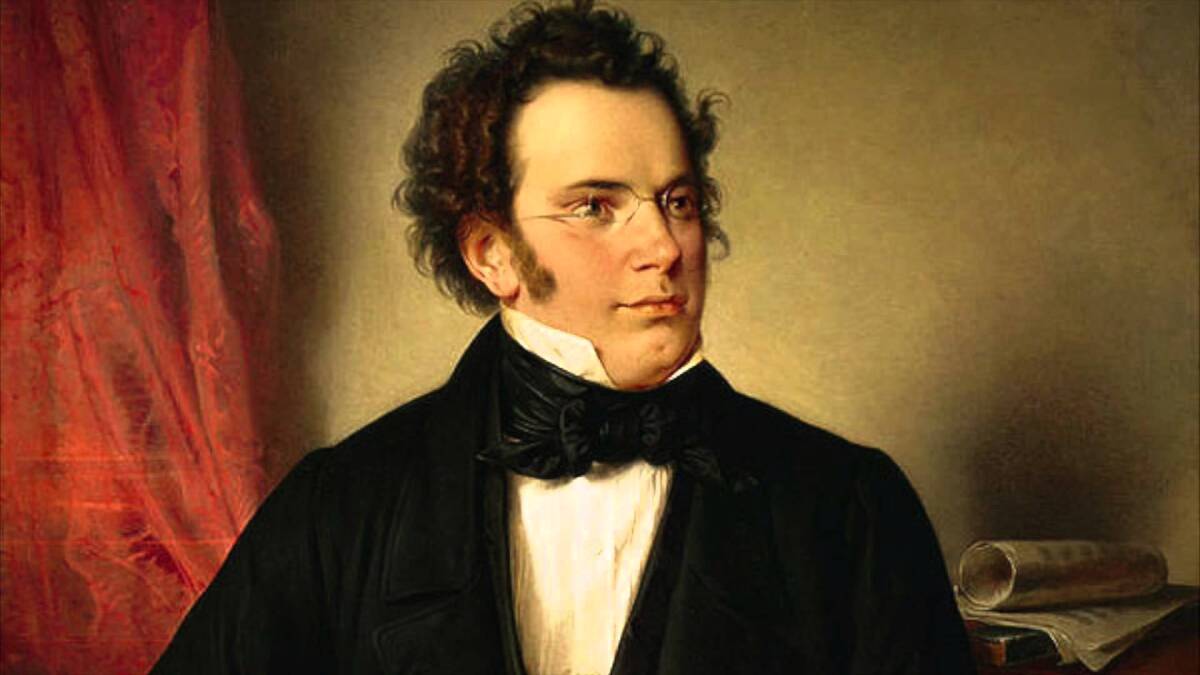
Schubert’s friends affectionately called him “Schwammerl,” an Austrian dialect word for “little mushroom.” That nickname likely referred to his small, somewhat stocky build (Schubert is said to have been only 1.52 meters tall). At the same time, the name also says something about the familiar, informal circle in which Schubert moved. Unlike many composers who actively sought the public spotlight, Schubert lived primarily within a close-knit circle of friends consisting of artists, poets, and music lovers. It was precisely within this circle that the famous Schubertiades arose: intimate gatherings where his music was performed, discussed, and celebrated. The nickname Schwammerl thus reveals not only something about his appearance, but also about the closeness and affection within his Viennese circle of friends.
-
Little Maestro
Right answer: Schwammerl
Schubert’s friends affectionately called him “Schwammerl,” an Austrian dialect word for “little mushroom.” That nickname likely referred to his small, somewhat stocky build (Schubert is said to have been only 1.52 meters tall). At the same time, the name also says something about the familiar, informal circle in which Schubert moved. Unlike many composers who actively sought the public spotlight, Schubert lived primarily within a close-knit circle of friends consisting of artists, poets, and music lovers. It was precisely within this circle that the famous Schubertiades arose: intimate gatherings where his music was performed, discussed, and celebrated. The nickname Schwammerl thus reveals not only something about his appearance, but also about the closeness and affection within his Viennese circle of friends.
-
The Viennese Singer
Right answer: Schwammerl
Schubert’s friends affectionately called him “Schwammerl,” an Austrian dialect word for “little mushroom.” That nickname likely referred to his small, somewhat stocky build (Schubert is said to have been only 1.52 meters tall). At the same time, the name also says something about the familiar, informal circle in which Schubert moved. Unlike many composers who actively sought the public spotlight, Schubert lived primarily within a close-knit circle of friends consisting of artists, poets, and music lovers. It was precisely within this circle that the famous Schubertiades arose: intimate gatherings where his music was performed, discussed, and celebrated. The nickname Schwammerl thus reveals not only something about his appearance, but also about the closeness and affection within his Viennese circle of friends.
Right answer: Schwammerl
Schubert’s friends affectionately called him “Schwammerl,” an Austrian dialect word for “little mushroom.” That nickname likely referred to his small, somewhat stocky build (Schubert is said to have been only 1.52 meters tall). At the same time, the name also says something about the familiar, informal circle in which Schubert moved. Unlike many composers who actively sought the public spotlight, Schubert lived primarily within a close-knit circle of friends consisting of artists, poets, and music lovers. It was precisely within this circle that the famous Schubertiades arose: intimate gatherings where his music was performed, discussed, and celebrated. The nickname Schwammerl thus reveals not only something about his appearance, but also about the closeness and affection within his Viennese circle of friends.








Help The Hague get music!
Support us and help reach and connect all residents of The Hague with our music.
View all program booklets
Be considerate of your neighbors and turn down your screen brightness.