Program Booklet
Shostakovich's Symphony No. 10
Sunday November 1
1:15 p.m.
until approximately 4:15 p.m.
A concert ranging from quiet power to an unstoppable storm
📳
Please put your phone on silent and dim the screen so as not to disturb others during the concert. Taking photos is allowed during applause.
Programme
A " Starter " will take place before this concert. You can attend it on the Tribunetrap.
Aaron Copland (1900–1990)
Fanfare for the Common Man (1942)
Samuel Barber ( 1910–1981)
Violin Concerto, Op. 14 (1939)
Allegro
Andante
Presto in Perpetual Motion
Dmitri Shostakovich ( 1906–1975)
Symphony No. 10 in E minor, Op. 93 (1951/1953)
Moderato
Allegro
Allegretto - Largo - Piú mosso
Andante - Allegro - L'istesso tempo
End of concert approximately 4:15 p.m.
What are you going to listen to?
Conductor Yutaka Sado’s return to The Hague is, in itself, something to look forward to. With his international flair and immediate musical energy, he leads a program that sweeps you away in one go. From Copland’s imposing brass, we move on to the passionate sounds of Barber. We arrive in the dark world of Dmitri Shostakovich’s Tenth: a symphonic thriller full of menace, memory, and explosive liberation.
Aaron Copland composed his *Fanfare for the Common Man* in 1942, in the midst of World War II. The work was commissioned by conductor Eugene Goossens, who asked several American composers to write a fanfare to boost morale during the war. Whereas fanfares were traditionally dedicated to monarchs, generals, or other dignitaries, Copland chose to pay tribute to the common man. The composition begins with solemn beats on the timpani and bass drum, after which the trumpets launch into a powerful melody. Gradually, the other brass instruments join in. Using simple musical means, wide intervals, and a slow tempo, Copland creates an impressive sense of space and dignity. The music sounds stately and grand, without losing its simplicity.
The fanfare became one of Copland's best-known works and later took a prominent place in the finale of his Third Symphony.
Classmates
The creation of Samuel Barber’s Violin Concerto was by no means a smooth process. The initiative came from the fabulously wealthy industrialist and philanthropist Samuel Fels. He had taken under his wing the twelve-year-old musical prodigy Iso Briselli, who had fled the Russian Revolution. Samuel Barber still knew him from the time they had studied together at the Curtis Institute of Music in Philadelphia between 1924 and 1933. Their paths crossed again a few years later when a former classmate suggested that the composer could write a violin concerto for the violinist. Samuel Fels was enthusiastic about the idea and offered Barber $1,000 for his work. A few months later, the first and second movements were complete. Briselli was pleased with it, but his teacher, Albert Meiff, was anything but. He thought the music was weak and far too simple for his brilliant student. He suggested that he “recompose” the piece according to his own vision, something Barber firmly rejected. Barber did, however, get his revenge by turning the finale into a true showpiece. But Briselli was not satisfied with that either. He found the content far too superficial and offered the composer several suggestions for revising it, which Barber also refused to accept. Ultimately, the entire collaboration was called off, though Barber did not return his $500 advance, claiming he had already spent it.
It’s a good thing that Barber, despite all the encouragement, didn’t change a single note of his Violin Concerto. The premiere in February 1941—now performed by Albert Sparring with the Philadelphia Orchestra under Ormandy—was a great success. Today, it ranks among the most frequently performed violin concertos of the twentieth century.
Forty degree fever
As a composer, Dmitri Shostakovich was at odds with the Stalinist regime. On the one hand, he was considered one of the Soviet Union's most important culture bearers, a status that earned him a cartload of Stalin Prizes, Lenin Orders and related awards. On the other hand, several times in his life it came to a precarious collision with "Power. For example, Shostakovich's opera Lady Macbeth from Mtsensk landed him a threatening rebuke in the state newspaper Pravda in 1936, and in 1948 he was openly attacked by Stalin's cultural watchdog Andrei Zhdanov for the allegedly "formalist" content of his music.
Just how much all of this affected the composer’s state of mind can be read in Julian Barnes’ historically accurate novel about Shostakovich, *The Turmoil of Time*. Terrified of the nightly knock on the door, the composer spends his nights in the book’s first chapter lying awake next to the elevator in his apartment. He is certain he will soon be arrested, and because he wants to spare his family the sight of his arrest, he has already packed his suitcase: three packs of Kazbek cigarettes, a stack of clean underwear, a toothbrush, and tooth powder.
From this perspective, one can imagine that Shostakovich must have felt a certain relief when news of Stalin's death reached him on March 6, 1953. As the composer reveals in his Testimony recorded by Solomon Volkov, in Tenth Symphony, written in the summer and fall of that same year, he took stock of the years of terror under the Red Czar.
After the oppressive climaxes of on the opening movement and the chilling anxiety parade that is stoked to a wind chill of forty-degree fever in the second movement, the symphony discharges into an ironic waltz in the third movement. On the compulsively repeated signature motif D-Es-C-B (D-S-C-H in German, the first letters of his first and last name), the composer pulls a sarcastic long nose at his tormentor.
Prefer it on paper? Download a condensed printable version of this program.
Biographies
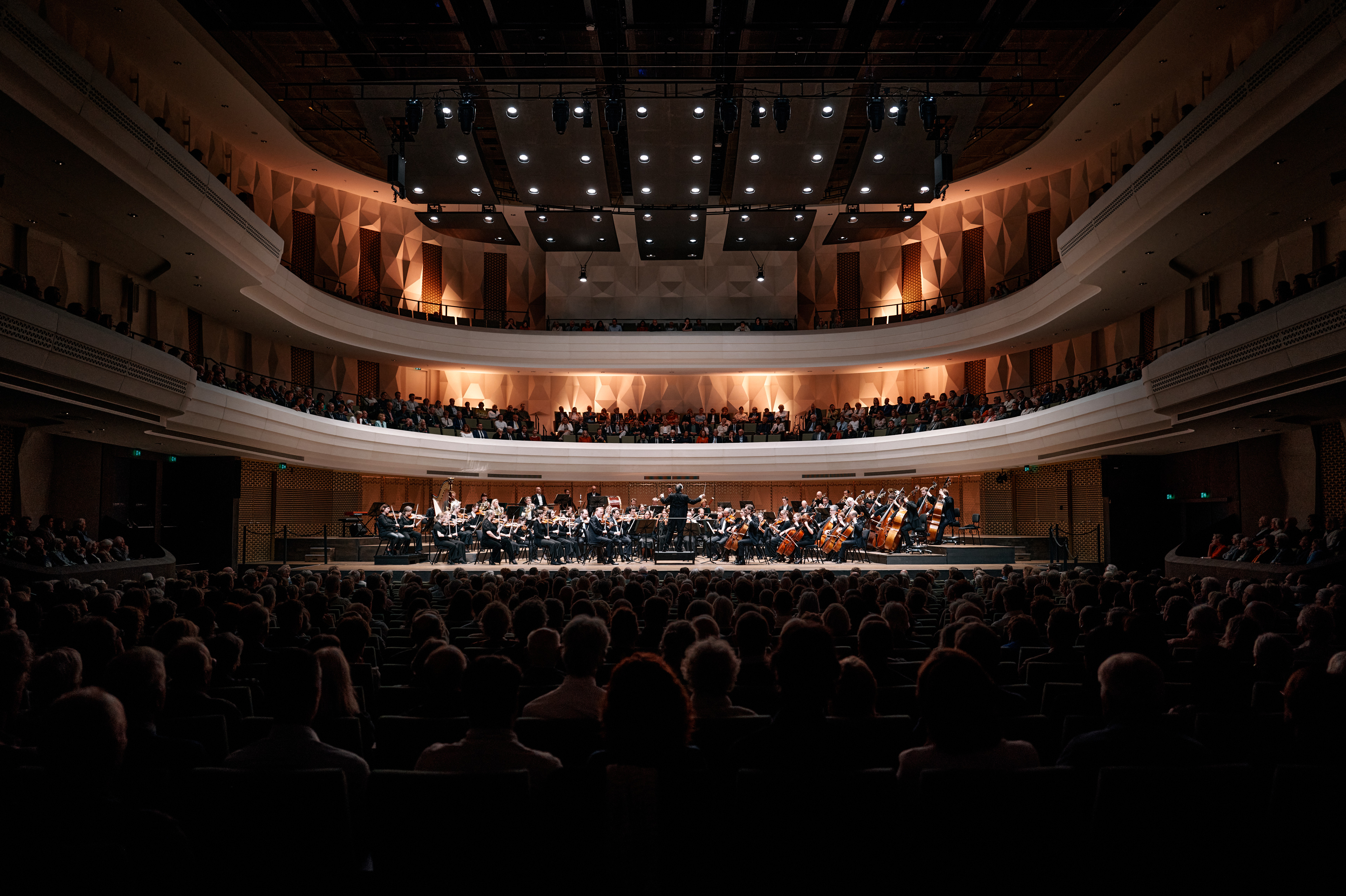
Residentie Orkest The Hague
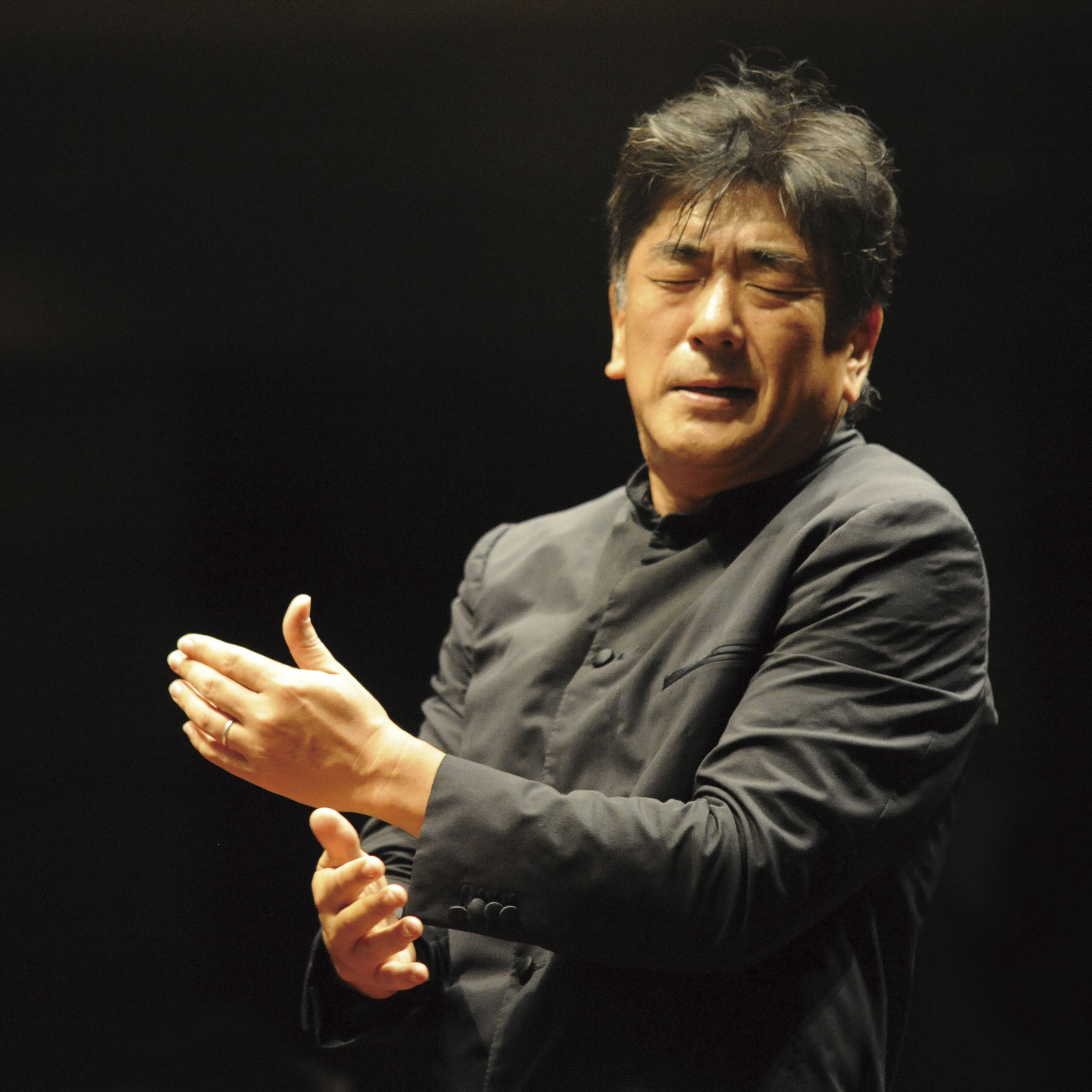
Yutaka Sado
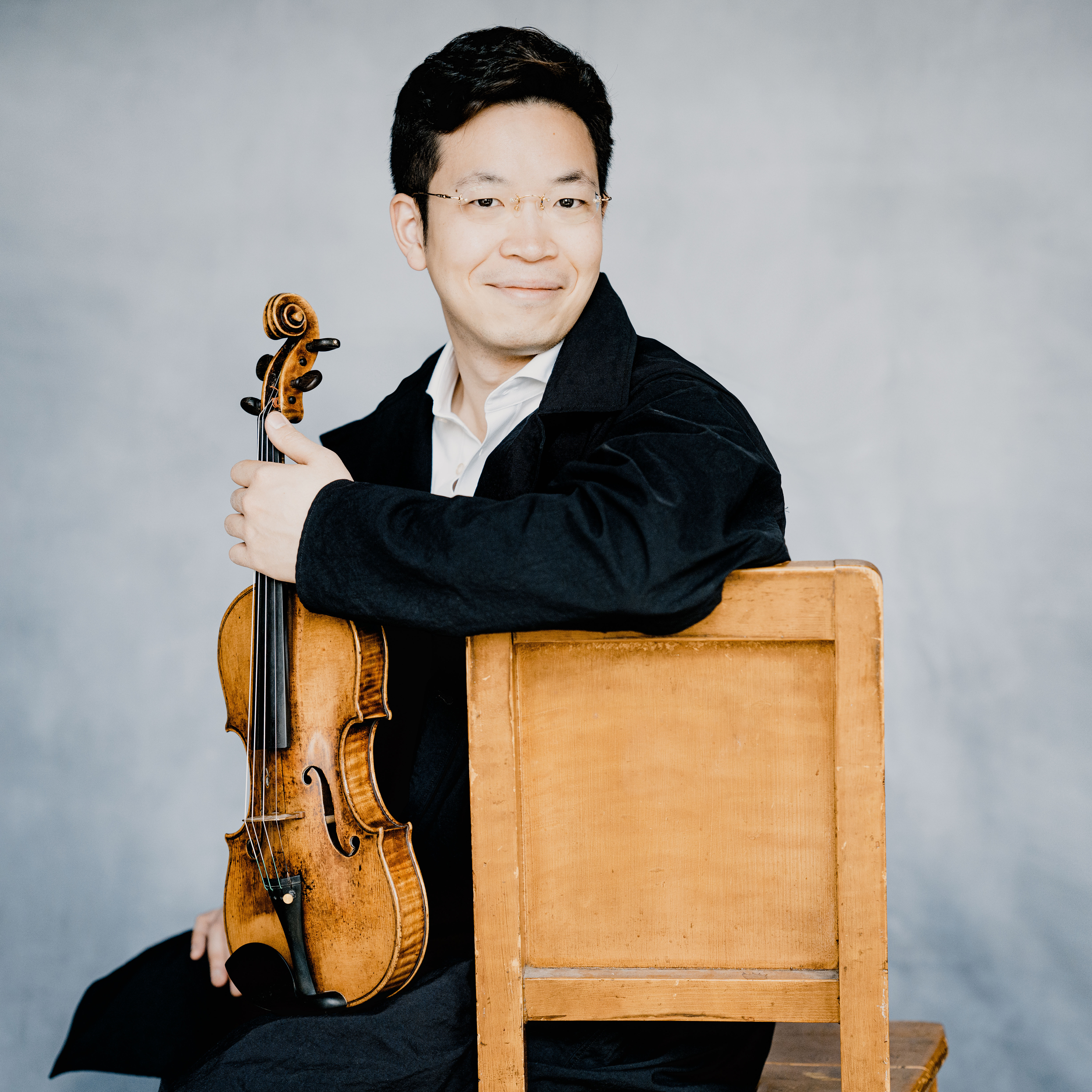
Paul Huang
Fun Fact
Since its founding in 1904, the Residentie Orkest has collaborated with countless world-renowned conductors, soloists, and composers. When the orchestra celebrated its 50th anniversary in November 1954, congratulations poured in from all corners of the world. Among them was Dmitri Shostakovich, who sent a telegram congratulating the orchestra on its anniversary.
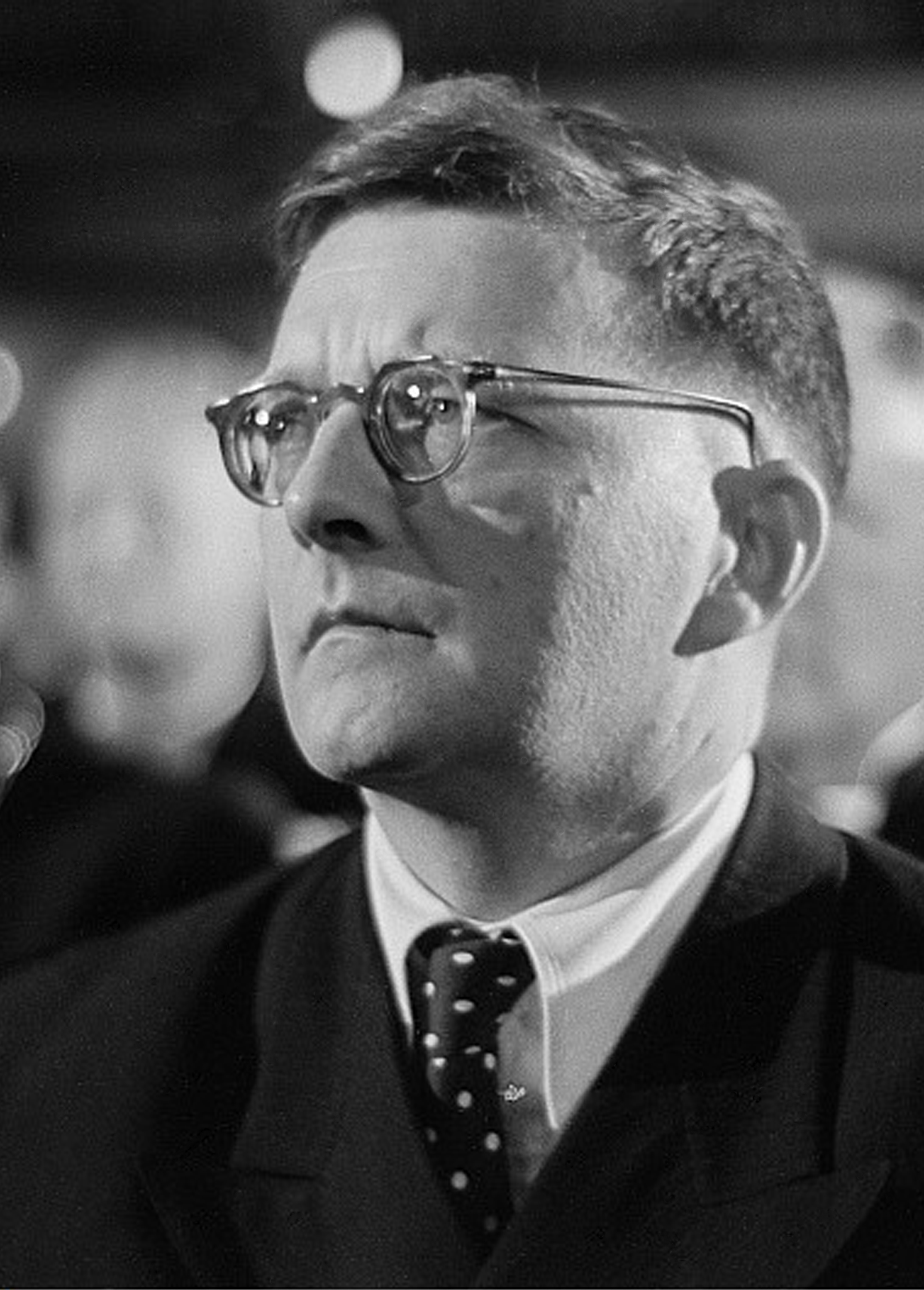
RO QUIZ
In addition to being a composer, Shostakovich was also…?-
Singer
Soccer fan
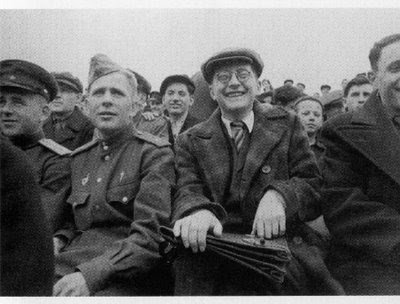
Shostakovich was a musical prodigy, as a pianist and composer. By age nine he was already taking piano lessons; four years later he was studying at the St. Petersburg Conservatory. As a 16-year-old, he played the piano in movie houses and vaudeville theaters to support his family. He also loved soccer and whenever he could, he would sit in the stands at his favorite soccer club: Zenit Leningrad.
-
Gardener
Soccer fan
Shostakovich was a musical prodigy, as a pianist and composer. By age nine he was already taking piano lessons; four years later he was studying at the St. Petersburg Conservatory. As a 16-year-old, he played the piano in movie houses and vaudeville theaters to support his family. He also loved soccer and whenever he could, he would sit in the stands at his favorite soccer club: Zenit Leningrad.
-
Soccer fan
Soccer fan
Shostakovich was a musical prodigy, as a pianist and composer. By age nine he was already taking piano lessons; four years later he was studying at the St. Petersburg Conservatory. As a 16-year-old, he played the piano in movie houses and vaudeville theaters to support his family. He also loved soccer and whenever he could, he would sit in the stands at his favorite soccer club: Zenit Leningrad.
Soccer fan
Shostakovich was a musical prodigy, as a pianist and composer. By age nine he was already taking piano lessons; four years later he was studying at the St. Petersburg Conservatory. As a 16-year-old, he played the piano in movie houses and vaudeville theaters to support his family. He also loved soccer and whenever he could, he would sit in the stands at his favorite soccer club: Zenit Leningrad.
Help The Hague get music!
Support us and help reach and connect all residents of The Hague with our music.
View all program booklets
Be considerate of your neighbors and turn down your screen brightness.