Program Booklet
Rachmaninoff & Glass
Friday October 2
8:15 p.m.
until approximately 10:30 p.m.
A cinematic premiere of Glass and Rachmaninoff’s warm romanticism: a unique evening where intensity, energy and nostalgia come together.
📳
Please put your phone on silent and dim the screen so as not to disturb others during the concert. Taking photos is allowed during applause.
Programme
Jim van der Steege (1997)*
* *One Minute Symphony: Two* (2026)
Sergei Rachmaninoff (1873–1943)
Symphony No. 3 in A minor, Op. 44 (1935–36)
Lento – Allegro moderato
Adagio ma non troppo – Allegro vivace
Allegro
Philip Glass (1937)
Mishima Concerto for Piano and Orchestra (2023, Dutch premiere; arr. M. Riesman)
Mishima Concerto for Piano and Orchestra by Philip Glass.
Arranged by Michael Riesman.
From the Original Motion Picture Score for *Mishima* by Philip Glass.
Commissioned by Klavier-Festival Ruhr, MDR Symphony Orchestra, Brno Philharmonic, * Residentie Orkest * The Hague, and Dennis Russell Davies.
The concert ends around 10:30 p.m.
What are you going to listen to?
Today we present a very special Dutch premiere: Philip Glass’s *Mishima Concerto* for piano and orchestra, a cinematic and mesmerizing journey. Pianist Maki Namekawa, Glass’s close musical collaborator, takes the lead. You’ll also hear Rachmaninoff’s Third Symphony, a passionate blend of nostalgia and modern flair. A program full of contrast, energy, and emotional richness.
But the opening piece is this season’s first One Minute Symphony, written by composition student Jim van der Steege. About his work *Twee*, he says: “In music, numbers are of inestimable importance, and it is in numbers that I find my creative ideas. Numbers help me identify and design connections. In this new work for the “ Residentie Orkest ,” the number two appears in many forms, and I try to focus on a single phenomenon: the blurring that arises when two adjacent notes are played together, contrasted by the clarity of a single note.”
Rachmaninoff
He was a pianist when he really should have been a composer. He had been living for seventeen years in a country where he didn’t belong, a Russian in exile in Hollywood. And it was 1936—a time brimming with the energy and tension of modernism. Everything was turned upside down—the arts, music—nothing was in its Last . Schoenberg, Stravinsky, Debussy: they had turned everything upside down—rhythm, melody, harmony, and form. The world, too, was in turmoil: a new war loomed, while the wounds of the previous one still burned. Nothing was the same anymore…
There stood Sergei Vasilievich Rachmaninoff with his new symphony, his Third. He had all but stopped composing. An uprooted artist. Rachmaninoff, the quintessential representative of the late nineteenth century. Raised on one of those decadent old Russian estates, in feudal conditions that had been ruthlessly swept away by the revolution. Educated at an old-fashioned conservatory. As a composer, he carried on the tradition of the Romantics Liszt and Tchaikovsky. Rachmaninoff, the epitome of a hopelessly bygone era, likely sidelined and perhaps for that very reason now a pianist (albeit one of the very greatest)… And now, a new symphony—no less than thirty years after the previous one: what could that possibly mean? “Does the composer, now 62, still have anything to say?” people wondered when the piece premiered in Philadelphia on November 6, 1936.
“An old man modestly asks for our attention…” This is how one of his biographers, Johan Andriessen, described the beginning of the new work. A delicate motto, ethereal, with a faintly otherworldly instrumentation for solo horn, two clarinets, and one cello con sordino. It is a perceptive observation. But… the rest of the symphony soon proves otherwise. For immediately, a frenzied scale in the violins shatters the mood; percussion, brass, woodwinds—everything is brought in: now that Rachmaninoff has captured our attention, he is ready to show us something. What follows is a symphony, as grand as it is compact, as melodious as it is angular. Rachmaninoff may be 62—in years, perhaps—but he approaches his music with far greater decisiveness than before. Ideas are no longer drawn out at length. The orchestration is crystal-clear and brilliant. Melancholy and gloom are suppressed. In his second-to- Last , Rachmaninoff is more decisive and uncluttered than ever.
What did people think of it? “A strange work—not satisfying, but certainly important,” an English critic would write after the European premiere in London. Rachmaninoff’s colleague Nikolai Medtner was startled by the piece; this unexpected “modernism” from his friend kept him awake all night. Others found this same “modernism”—which amounts to little more than Rachmaninoff chipping away at the flow of Romantic melodies and introducing a mass of percussion—far too tame. But then, when the symphony was performed in Russia, there was also the Pravda: “[Rachmaninoff’s Third] is a lyrical poem about Russia, inspired by a warm love for the homeland, filled with romantic memories of youth, and crafted with the experience of a mature artist.”
Glass
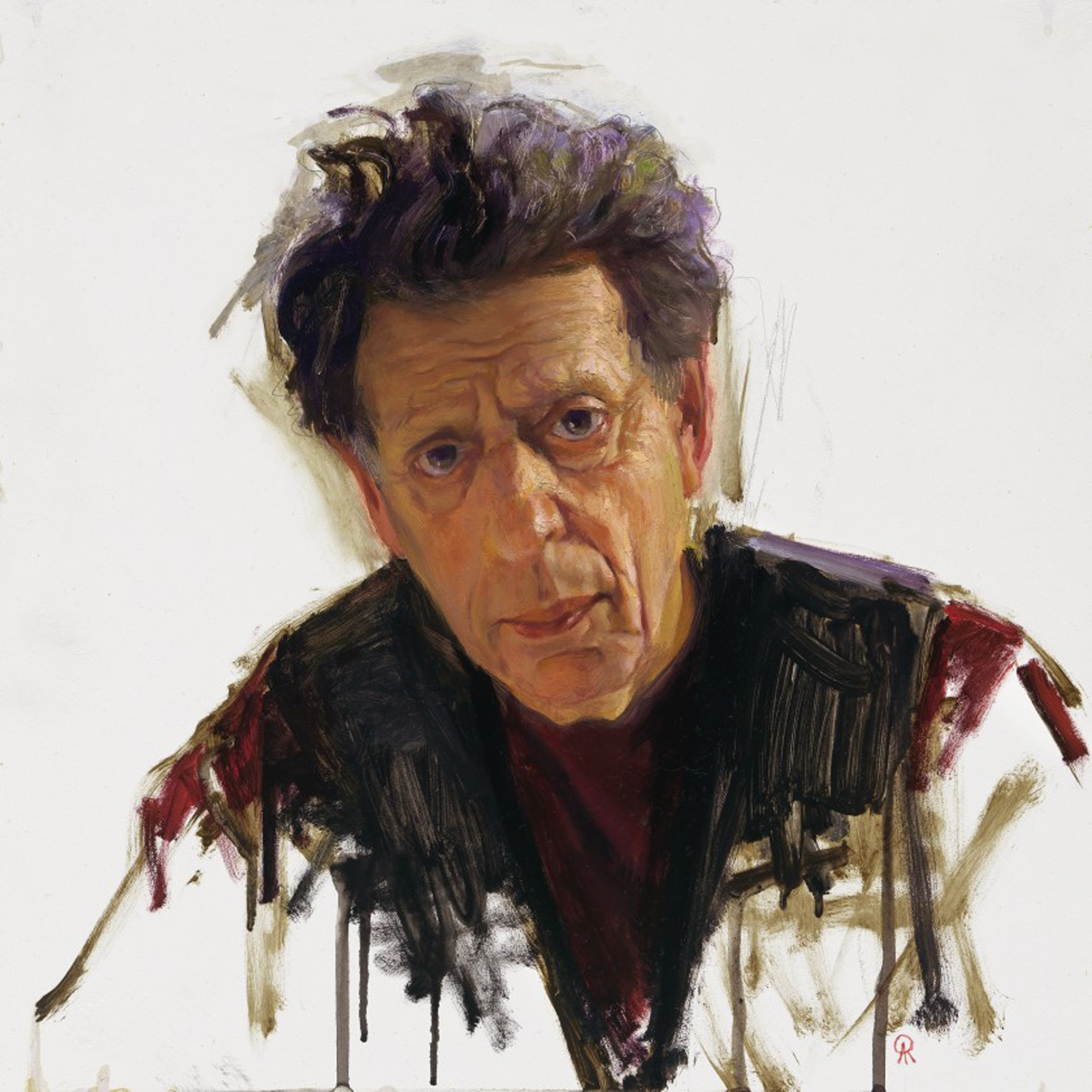
Is there any composer more beloved and popular than the now 89-year-old American Philip Glass? Is there anyone who doesn’t know even a single note of his music? Glass is a composer who fills concert halls. Opera houses around the world stage his operas *Einstein on the Beach* and *Satyagraha*, and not a single seat goes unfilled. Among his many film scores, *Koyaanisqatsi* became particularly well-known; it was the most radical and innovative soundtrack since Disney’s *Fantasia *. Minimalism is the name of the style in which Glass—and others, such as Steve Reich—compose. He doesn’t like the term. He himself prefers to refer to it as “music with repetitive structures.”
Philip Glass was born in 1937 in Baltimore, Maryland. He studied at the University of Chicago, the Juilliard School, and in Aspen with Darius Milhaud. Dissatisfied with what was then considered modern in America, he sought guidance in Europe from the renowned teacher Nadia Boulanger. Back in New York in 1967, he founded the Philip Glass Ensemble. The Mishima Concerto for piano and orchestra is an arrangement by Michael Riesman of Glass’s score for Paul Schrader’s film *Mishima *. Yukio Mishima was the most famous Japanese writer of the twentieth century. He became famous primarily for novels such as *The Golden Pavilion * and the four-part cycle *The Sea of Fertility*. In 1970, at the age of just 45, he took his own life in a spectacular act of seppuku, a ritual suicide involving the disembowelment of the abdomen.
Stephen Westra
Prefer it on paper? Download a condensed printable version of this program.
Biographies
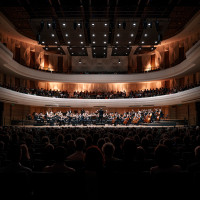
Residentie Orkest The Hague
-1790706708.webp/d4adba71400d57850d11e67aeb088abb.webp)
Dennis Russell Davies
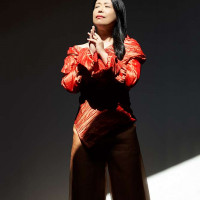
Maki Namekawa
Tonight, the “ Residentie Orkest ” will present the conductor and soloist with a linocut by artist Marije Hage.
Fun Fact
Did you know that the music from Mishima began in 1985 as a film score by Philip Glass? In 2023, pianist Maki Namekawa brought that music back to life in a piano version created especially for her. The Dutch premiere will be heard tonight!
RO QUIZ
Has Rachmaninov been to The Hague?-
Yes
Right answer: yes
Rachmaninov also visited The Hague on his many tours. In October 1928, he arrived with his wife, his piano tuner and two grand pianos at the Hague State Railway Station, today's Central Station. The sold-out main hall of the Gebouw voor Kunsten en Wetenschappen was nearly demolished after the concert, and Rachmaninov thanked his audience with no fewer than three encores.
-
No
Right answer: yes
Rachmaninov also visited The Hague on his many tours. In October 1928, he arrived with his wife, his piano tuner and two grand pianos at the Hague State Railway Station, today's Central Station. The sold-out main hall of the Gebouw voor Kunsten en Wetenschappen was nearly demolished after the concert, and Rachmaninov thanked his audience with no fewer than three encores.
-
Alone on the beach
Right answer: yes
Rachmaninov also visited The Hague on his many tours. In October 1928, he arrived with his wife, his piano tuner and two grand pianos at the Hague State Railway Station, today's Central Station. The sold-out main hall of the Gebouw voor Kunsten en Wetenschappen was nearly demolished after the concert, and Rachmaninov thanked his audience with no fewer than three encores.
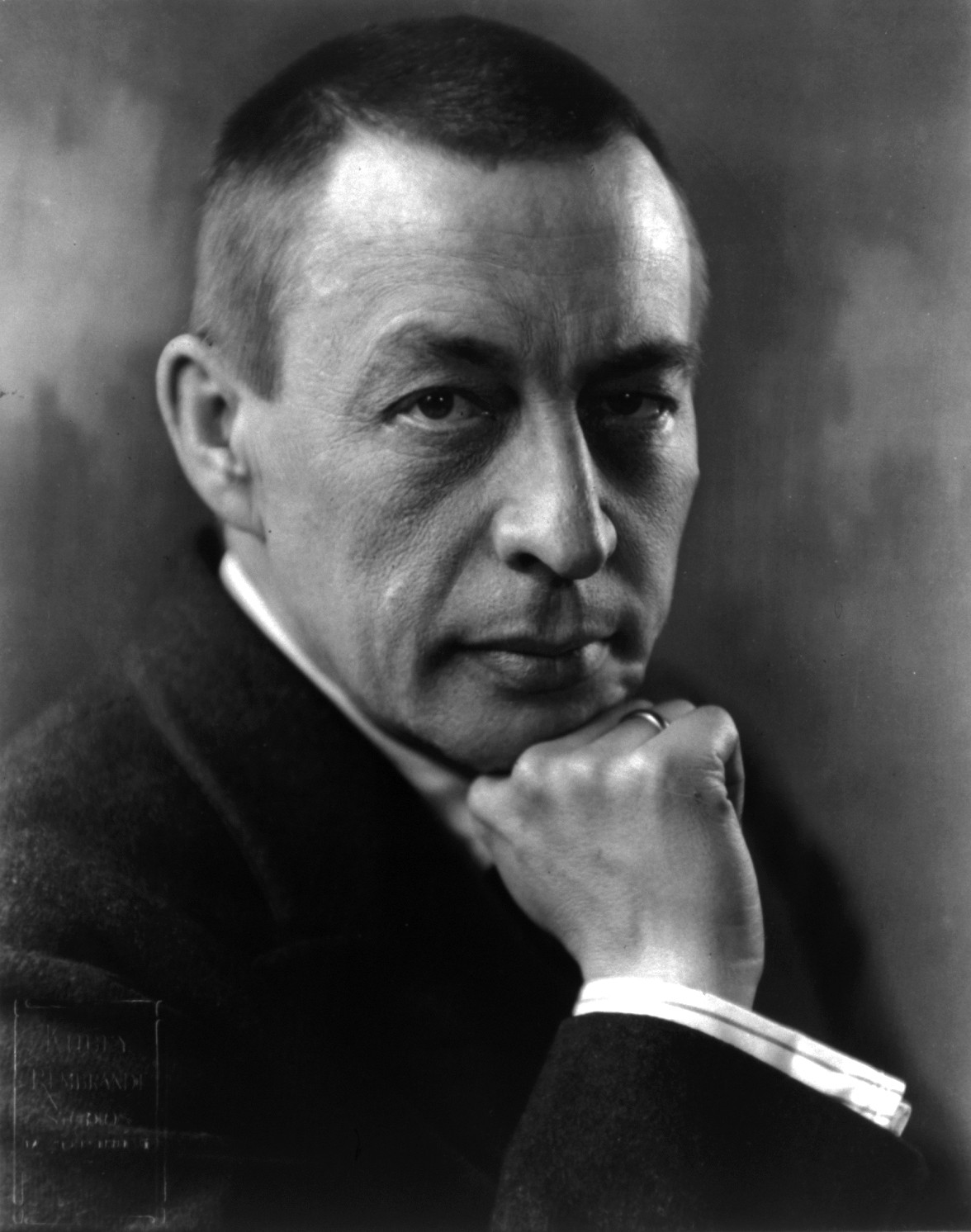
Right answer: yes
Rachmaninov also visited The Hague on his many tours. In October 1928, he arrived with his wife, his piano tuner and two grand pianos at the Hague State Railway Station, today's Central Station. The sold-out main hall of the Gebouw voor Kunsten en Wetenschappen was nearly demolished after the concert, and Rachmaninov thanked his audience with no fewer than three encores.


Help The Hague get music!
Support us and help reach and connect all residents of The Hague with our music.

View all program booklets
Be considerate of your neighbors and turn down your screen brightness.