Program Booklet
Prinsjesdag Concert
Tuesday September 15
8:15 p.m.
to approximately 9:45 p.m.
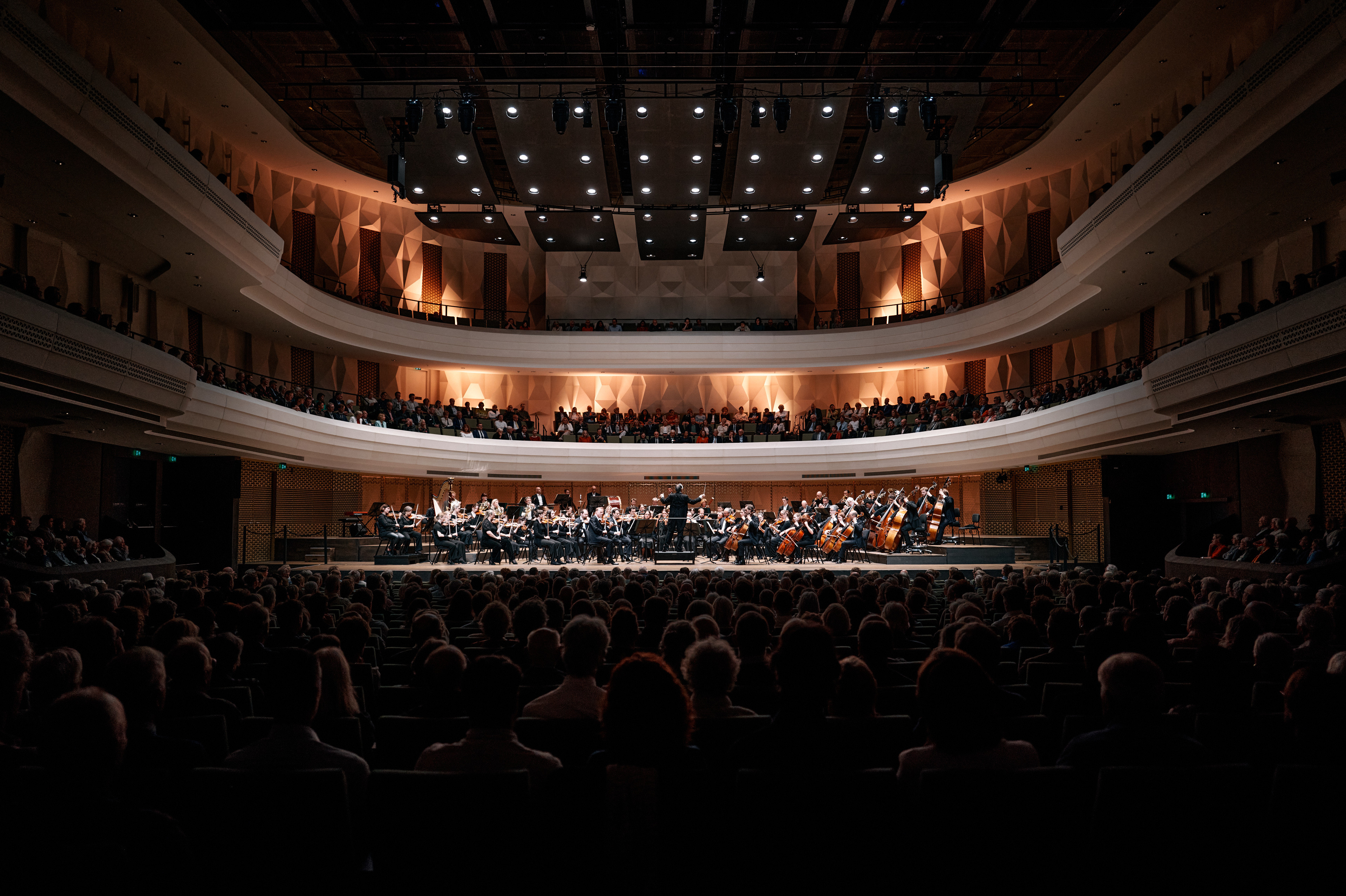
Celebrate the start of the new musical season at our festive Prinsjesdag Concert. Noa Wildschut shines in Saint-Saëns’ melodious Violin Concerto No. 3, followed by dramatic scenes from Bizet’s Carmen.
📳
Please put your phone on silent and dim the screen so as not to disturb others during the concert. Taking photos is allowed during applause.
Programme
Sergei Prokofiev(1891–1953)
Dance of the Knights from “Romeo and Juliet,” Op. 64 (1935–38, arr. Hugo Bouma)
The Residents Academy, The Residents City Orchestra, students from the Johan de Witt School Group, and Residentie Orkest.
Camille Saint-Saëns(1835–1921)
Violin Concerto No. 3 in B-flat minor, Op. 61(1880)
Allegro non troppo
Andantino quasi allegretto
Molto moderato e maestoso - Allegro non troppo
Georges Bizet(1838–1875)
From Suites Nos. 1 and 2 from “Carmen”(1875, arr. Guiraud 1885/1887)
The Bullfighters
Prélude
Aragonaise
Habañera
The Dragons of Alcalá
Interlude
Smugglers' Market
Chanson du Toréador
Séguedille
Danse Bohème
The concert ends around 9:45 p.m.
What are you going to listen to?
Prinsjesdag was once the name given to the day on which the “ Last ” (the Dutch East India Company) celebrated the birthday of its stadtholder, Prince William V, at the end of the 18th century. At court, as with most of the nobility in Europe, the language of communication was French. A French program to bring this year’s “ Prinsjesdag ” to a musical close is therefore a wonderful historical choice.
A Violin Concerto by a Piano Virtuoso
Camille Saint-Saëns was, as the Italians say, a true “uomo universale,” a man of many talents. He was a child prodigy on the piano, giving his first recital at the age of five after having written his first notes on paper two years earlier, when he was just a three-year-old toddler. And it didn’t stop there. As a schoolboy, he learned several languages, including Latin and Greek at an advanced level, immersed himself in French literature, and studied theology, philosophy, mathematics, astronomy, and archaeology. But music remained his greatest love, and he went on to become a successful composer, concert pianist, and organist.
The music therefore presented few challenges for Saint-Saëns, but when they did arise, he tackled them with great enthusiasm. For him, the violin was a relatively unfamiliar instrument, one he knew mainly from the orchestra. He didn’t stop there. In 1859, he met the Spanish violin legend Pablo de Sarasate. De Sarasate taught him all the possibilities—and limitations—of his instrument, which Saint-Saëns eagerly absorbed. This led to his first two violin concertos, which, though not yet perfect, showed great promise. He brilliantly fulfilled that promise with hisThird Violin Concerto. Once again, Sarasate was his rock and support. Sarasate later recalled how he had spent many pleasant hours with the composer perfecting this composition.
The violin concerto is a magnificent blend of bravura and compositional craftsmanship, in which Saint-Saëns also takes into account De Sarasate’s Romani roots. The opening, for instance, sounds like a passionate introduction to a csardas, and the finale is a rondo in the form of a whirling gypsy dance. But the most beautiful part is the gently swaying barcarolle of the middle section. A striking feature of this section is a passage toward the end in which the violin, in high flageolet tones, and the clarinet, in low notes, play in unison. It is a unique example of orchestration in which Saint-Saëns integrates virtuosity into a special harmony with the orchestra.
Spanish femme fatale
GeorgesBizet’sopera*Carmen*wasn’t exactly an unqualified success. He was very pleased to receive a commission for a new opera from the Opéra Comique in Paris. But his choice of the raw story of the gypsy and femme fatale Carmen, based on the novel by Prosper Mérimée, was actually a step too far for a theater that primarily staged fairly lighthearted operas. The audience at the premiere on March 3, 1875, was therefore quite shocked, though they were still able to appreciate some of the music. Although the opera ran for 48 performances, it was mostly performed to half-empty houses. Bizet barely lived to see any of it. He died of a heart attack three months after the premiere, at the age of 36, halfway through the run.
Bizet’s friend Ernest Guiraud, himself a reasonably successful opera composer, realized that the opera certainly had great potential, but understood that the spoken dialogues—which were mandatory at the Opéra-Comique—stood in the way of the work’s continued success. For a series of performances at the Vienna Court Opera, he reworked the spoken dialogues into sung recitatives, turning it into an entirely sung opera. He also improved upon some of the opera’s weaker points. In this new form,*Carmen*was a huge successinVienna. Brahms, who lived in the city, claimed to have seen it no fewer than twenty times. It marked the beginning of*Carmen*’sworldwide triumph, whichhas never ceased.
But Guiraud did even more. He felt that the opera was full of catchy melodies that also had potential in a “ Concert Hall.” That is why he arranged some of the most compelling scenes for orchestra, thereby compiling two suites for concert performance. And here, too, he had a prophetic vision. For both of theseCarmen Suites arestill among Bizet’s most frequently performed works. In that regard, he owes a great deal posthumously to his good friend Guiraud.
Kees Wisse
Prefer it on paper? Download a condensed printable version of this program.
Biographies

Residentie Orkest The Hague

Andrew Grams
.jpg/6c7f42fe0ff3aa7bf97c484ea206a2dc.jpg)
Noa Wildschut


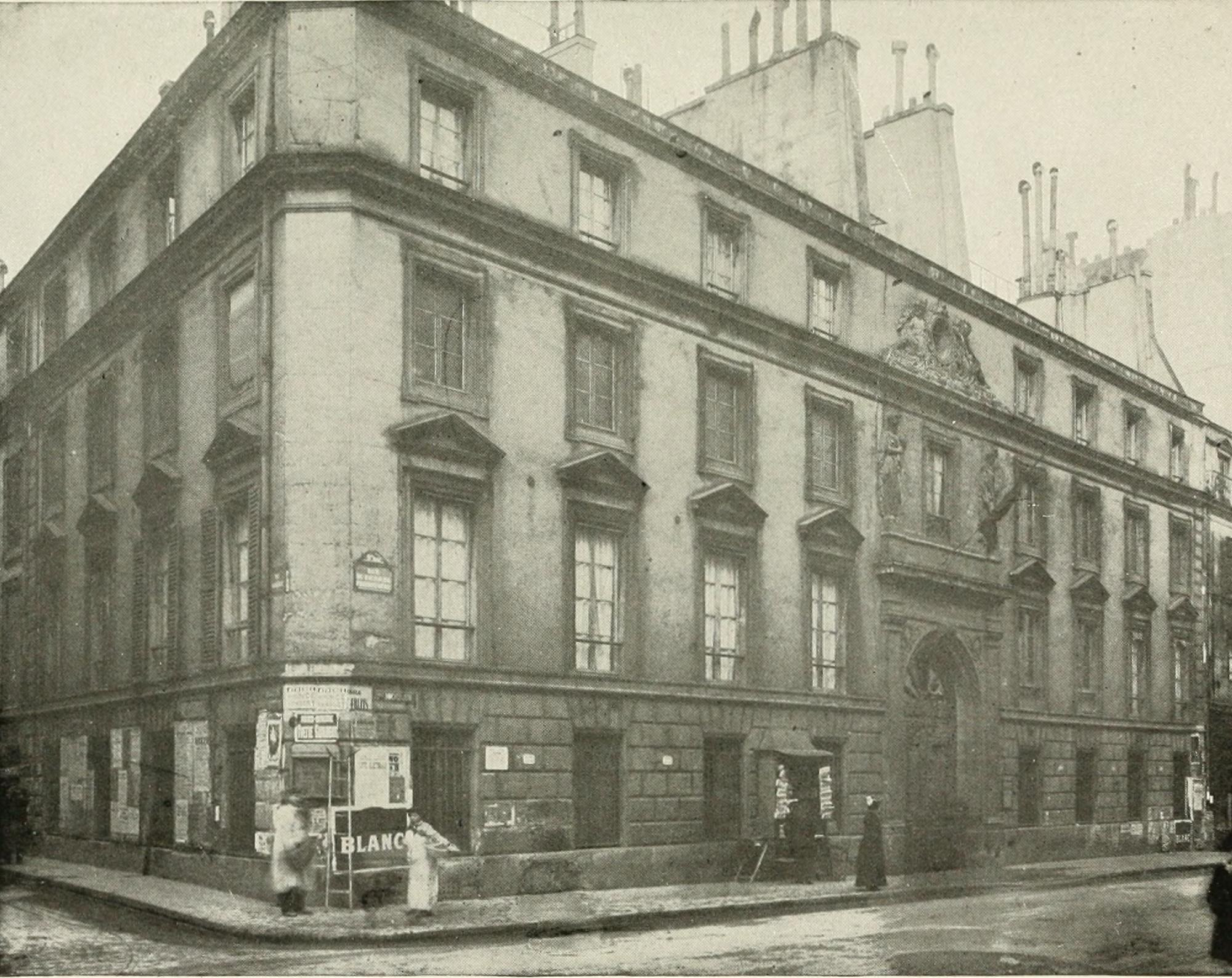
Contemporaries Georges Bizet and Camille Saint-Saëns were French musical prodigies who were admitted to the Paris Conservatory at a very young age (see photo). They also became friends there. Saint-Saëns admired Bizet’s music and even spoke up in defense of *Carmen* after its premiere, even though the opera was by no means appreciated by everyone at the time.
RO QUIZ
In what year did the first Prinsjesdag Concert take place?-
1904
1949
The Prinsjesdag Concert has been the opening of the Residentie Orkest's new season for over 75 years. The very first Prinsjesdag Concert took place on September 20, 1949 in the Houtrusthallen in The Hague. It was initiated by the newly appointed chief conductor Willem van Otterloo. Since then, the concert has been an integral part of the orchestra's programming.
-
1949
1949
The Prinsjesdag Concert has been the opening of the Residentie Orkest's new season for over 75 years. The very first Prinsjesdag Concert took place on September 20, 1949 in the Houtrusthallen in The Hague. It was initiated by the newly appointed chief conductor Willem van Otterloo. Since then, the concert has been an integral part of the orchestra's programming.
-
1975
1949
The Prinsjesdag Concert has been the opening of the Residentie Orkest's new season for over 75 years. The very first Prinsjesdag Concert took place on September 20, 1949 in the Houtrusthallen in The Hague. It was initiated by the newly appointed chief conductor Willem van Otterloo. Since then, the concert has been an integral part of the orchestra's programming.
1949
The Prinsjesdag Concert has been the opening of the Residentie Orkest's new season for over 75 years. The very first Prinsjesdag Concert took place on September 20, 1949 in the Houtrusthallen in The Hague. It was initiated by the newly appointed chief conductor Willem van Otterloo. Since then, the concert has been an integral part of the orchestra's programming.
Help The Hague get music!
Support us and help reach and connect all residents of The Hague with our music.

View all program booklets
Be considerate of your neighbors and turn down your screen brightness.