Program Booklet
Sunday morning: Mendelssohn & Ravel
Sunday
11:00 a.m.
to approximately 12:15 p.m.
Today, Mendelssohn's boldness and inventiveness meet Ravel's love of colour and rhythm. A thrilling morning full of youthfulness and flair, captured in refined technique.
Programme
Maurice Ravel (1875–1937)
Piano Concerto in G(1929–1931)
Allegramente
Adagio assai
Presto
Felix Mendelssohn Bartholdy (1809–1847)
Symphony No. 1 in C minor, Op. 11(1824)
Allegro di molto
Andante
Menuetto
Allegro con fuoco
What are you going to listen to?
Folk melodies
"In my opinion, the music of a solo concerto should be lighthearted and brilliant, and should not strive for depth or dramatic effects." That was Maurice Ravel's idea of the ideal solo concerto. He himself rarely applied this idea, with only two piano concertos in his entire oeuvre. He certainly kept hisPiano Concerto in Glighthearted, allowing himself to be influenced by a variety of musical styles. As early as 1914, he had worked on a composition for piano and orchestra in which he used Basque folk melodies to emphasize his Basque roots. He reused parts of this in thePiano Concerto in G. Jazz also plays a modest role. This is not surprising either. Since many black American soldiers had been on leave in Paris during the First World War, it had become the jazz capital of Europe. Virtually all 'classical' composers were influenced by jazz to some extent, and Ravel was no exception, especially since he had also experienced jazz during a tour of America. He himself called the end result a nice crossover between Mozart and Saint-Saëns. He had even originally plannedtocall the pieceDivertissementto emphasize its lighthearted character.
Not only did Ravel believe that a solo concerto should be lighthearted, but also brilliant. And hisPiano Concerto in Gwasundoubtedlybrilliant. However, this proved to be quite challenging. He had set his sights on performing as a soloist himself, but that was no easy task. To improve his technical skills, he even used the difficult études by Czerny and Chopin as study material. But in the end, it proved too ambitious and he asked his friend Marguerite Long to take over the solo part. He did, however, conduct the orchestra during the premiere on January 14, 1932, in Paris. It turned out to be a golden combination. In the months that followed, they went on anextensivetour throughout Europe with thePiano Concerto in G.
True symphony
At just fifteen years of age, Felix Mendelssohn already had a large number of compositions to his name, including piano music, chamber music, choral works, various solo concertos, and even small operas, which he had performed with great success in his family circle. Particularly noteworthy were his twelve symphonies for string orchestra, in which the young composer demonstrated his perfect mastery of various musical forms. In 1824, Mendelssohn added his first 'real' symphony, written for a full symphony orchestra. It was a mature work that was received with approval by his usually strict teacher Carl Zelter. Mendelssohn enthusiastically displays his symphonic knowledge and experience. And although he was inspired by predecessors such as Haydn and Mozart, as well as contemporaries such as Weber and Beethoven, it is clearly a work by Mendelssohn, in which the maturity of his later symphonic works is already clearly discernible.
The premiere ofSymphony No. 1 tookplace in November 1824 among family members in honor of his sister Fanny's nineteenth birthday. The symphony was publicly performed a few years later in 1827 at the Gewandhaus in Leipzig and received a favorable review.
But the audience went completely wild when Mendelssohn conducted it two years later in London for the Philharmonic Society, where he replaced the minuet with an orchestral arrangement of the scherzo from hisOctet for Strings.
Prefer it on paper? Download a condensed printable version of this program.
Biographies
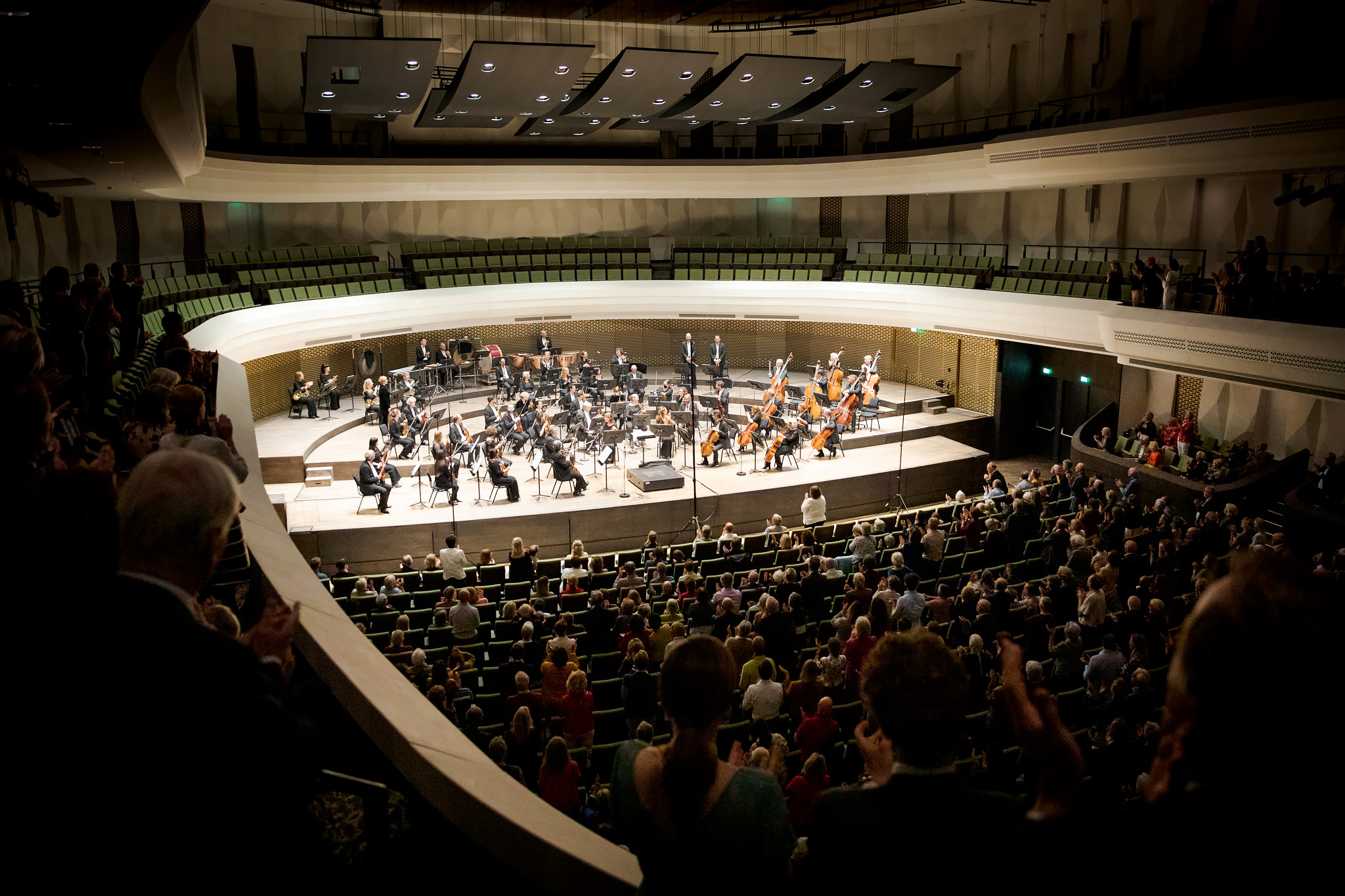
Residentie Orkest The Hague
.jpg)
Otto Tausk
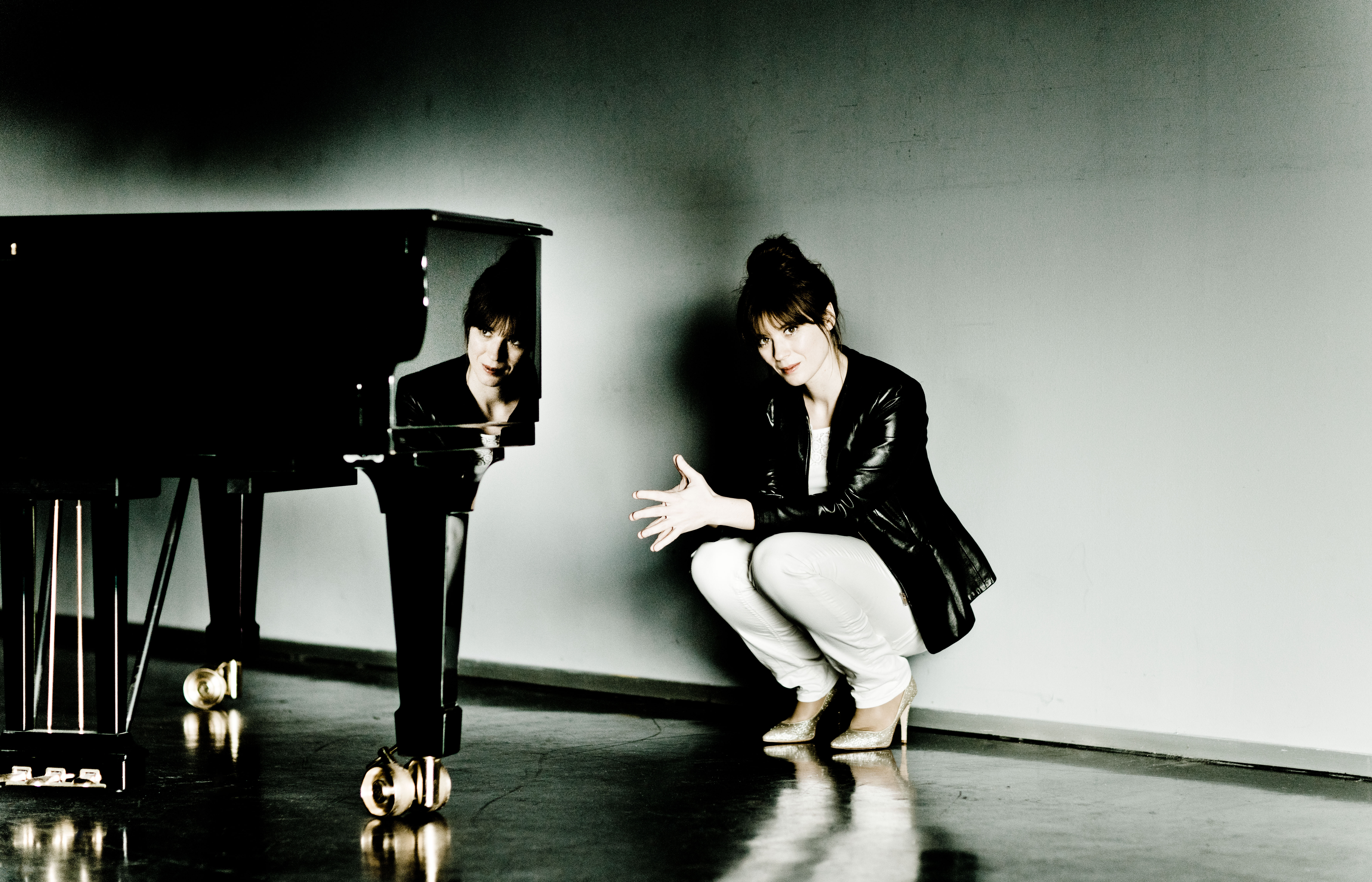
Anna Fedorova
Fun Fact
A walking music library
For learning to compose, young Felix Mendelssohn had a large amount of study material at his disposal. His father bought almost all the music printed by the various music publishers at that time and thus possessed one of the largest collections of music of his time. Backed by his enormous memory, Mendelssohn already knew the symphonies and piano concertos of Beethoven, Mozart and Haydn by heart.
RO QUIZ
What was typical of Ravel?-
He only composed at night.
Correct answer: He always wore perfectly tailored suits.
Maurice Ravel was very fashion conscious and always well dressed. The right suit, the right shoes, and the right tie. According to Ravel himself, he had the finest collection of ties in Paris. We see him neatly dressed in a suit in the photo taken during his one-off performance with the Residentie Orkest 1923: (from left to right) concertmaster Sam Swaap, chief conductor Peter van Anrooy, Maurice Ravel, violist Jean Devert, cellist Charles van Isterdael, violinist Adolphe Poth, and impresario Géza de Koos.
-
He always wore perfectly tailored suits.
Correct answer: He always wore perfectly tailored suits.
Maurice Ravel was very fashion conscious and always well dressed. The right suit, the right shoes, and the right tie. According to Ravel himself, he had the finest collection of ties in Paris. We see him neatly dressed in a suit in the photo taken during his one-off performance with the Residentie Orkest 1923: (from left to right) concertmaster Sam Swaap, chief conductor Peter van Anrooy, Maurice Ravel, violist Jean Devert, cellist Charles van Isterdael, violinist Adolphe Poth, and impresario Géza de Koos.
-
He couldn't play the piano.
Correct answer: He always wore perfectly tailored suits.
Maurice Ravel was very fashion conscious and always well dressed. The right suit, the right shoes, and the right tie. According to Ravel himself, he had the finest collection of ties in Paris. We see him neatly dressed in a suit in the photo taken during his one-off performance with the Residentie Orkest 1923: (from left to right) concertmaster Sam Swaap, chief conductor Peter van Anrooy, Maurice Ravel, violist Jean Devert, cellist Charles van Isterdael, violinist Adolphe Poth, and impresario Géza de Koos.
.jpg)
Correct answer: He always wore perfectly tailored suits.
Maurice Ravel was very fashion conscious and always well dressed. The right suit, the right shoes, and the right tie. According to Ravel himself, he had the finest collection of ties in Paris. We see him neatly dressed in a suit in the photo taken during his one-off performance with the Residentie Orkest 1923: (from left to right) concertmaster Sam Swaap, chief conductor Peter van Anrooy, Maurice Ravel, violist Jean Devert, cellist Charles van Isterdael, violinist Adolphe Poth, and impresario Géza de Koos.



Help The Hague get music!
Support us and help reach and connect all residents of The Hague with our music.
View all program booklets
Be considerate of your neighbors and turn down your screen brightness.