Program Booklet
Smetana & Schulhoff
Friday
8:15 p.m.
to approximately 10:30 p.m.
Is there a greater source of inspiration than nature? Composers Schulhoff and Smetana both drew from the landscapes of their homelands to compose their own musical tributes.
📳
Please put your phone on silent and dim the screen so as not to disturb others during the concert. Taking photos is allowed during applause.
Programme
Prior to this concert, there will Starter a Starter at 7:30 p.m. This is a lively and informal pre-concert program featuring live performances by our own musicians and interviews with soloists and conductors. The Starter free of charge and takes place in the Swing foyer next to the cloakroom.
Antonín Dvořák(1841–1904)
From Slavonic Dances, Op. 46(1878)
Dumka
Furiant, presto
Ludwig van Beethoven(1770-1827)
Rondo a capriccio ‘Die Wut über den verlorenen Groschen’(1794-1795, arranged for orchestra by Erwin Schulhoff in 1940)
Erwin Schulhoff(1894–1942)
Landschaften, Op. 26(1918–1919)
The doors are blown shut.
All women cry
Demut faltet den Raum
Many paths are small, bygone
The Golden Wind
During the break, we will serve a complimentary beverage.
Bedřich Smetana(1824–1884)
Selection from Má Vlast(1874–1879)
Vyšehrad (The High Castle)
Vltava (The Moldau)
Šárka
Blaník
What are you going to listen to?
Composers depict landscapes not with paint and brush, but with instruments and notes. Today, you will hear three of them bring the nature, traditions, and myths of their homeland to life.
The German music publisher Simrock was well aware of the great popularity of folk music. Having already persuaded Brahms to write a series of Hungarian dances, he now set his sights onSlavonic dancesby Antonín Dvořák. In 1878, Dvořák completed his first series of dances for piano four hands, which were popular in amateur circles and were soon followed by an orchestral version. Few people noticed that seven of the eight dances were Bohemian rather than Slavic.
Erwin Schulhoff
In 1901, Dvořák discovered a seven-year-old piano prodigy from the German-Jewish community in Prague: Erwin Schulhoff. On Dvořák's recommendation, young Erwin was prepared for a thorough musical education and soon began composing music in the style of Mahler, Zemlinsky, and Berg, with their expressive harmonies. During World War I, Schulhoff was called up for military service in the Austrian army. In the meantime, he continued to compose chamber music and developed his ideas for his orchestral song cycleLandschaften. After the war, when he left Prague for Dresden, Schulhoff felt he needed to take a different musical path. He found inspiration in the artistic circles of anti-bourgeois artists, the Berlin Dadaists, and American jazz, as well as in twelve-tone music.However, he completedLandschaftenin his old idiom. He used poems by Theodor Kuhlemann and dedicated it to a friend from his student days who had been killed in the war. It deals with human existence and exudes a late Romantic atmosphere of musical images of nature. For a long time, the work was thought to have been lost, but years later it resurfaced and premiered in 1999.
Schulhoff returned to Prague in 1923 and became captivated by communist ideals. After the German occupation of Czechoslovakia in 1939, he was severely opposed in his own hometown as both a Jew and a communist, and gradually lost all his sources of income. Schulhoff was forced to perform under pseudonyms and made frantic attempts to emigrate to the Soviet Union. During these years, he wrote hisRondo a capriccio'Die Wut über den verlorenen Groschen' (The Rage over the Lost Penny). It is a spirited orchestration of theCapriccio op. 129that Beethoven wrote for piano in 1794-1795. The nickname mentioned was added to Beethoven's manuscript by a later hand.
In the end, Schulhoff, penniless and ill, was unable to complete the formalities for his emigration and was arrested and deported to the Wülzburg concentration camp. There he died of tuberculosis.
Bedřich Smetana
The year 1874 was a dramatic one for Bedřich Smetana. It began in the spring with headaches, but was soon followed by severe deafness. The worst thing a composer could imagine. In the same year, he began diligently composing a series of musical tableaux about his native Bohemia:Má Vlast(My Fatherland). In a letter to his publisher, Smetana vividly described his six-part symphonic poem. Accompanied by harps, the legendary bard Lumír sings the history of Vyšehrad, a castle on top of a high rock near Prague. It was the scene of glory, tournaments, love, wars, and decline, which repeatedly surface throughoutMá Vlast.
The most famous part depicts a journey down the Moldau (Vltava) River. High in the Bohemian forests, two streams converge to form a mighty river that flows through the mountains, where hunters pursue game with their hunting horns. The river passes a village with a cheerful peasant wedding and a local polka, and as night falls, the water nymphs play longingly in the waves. A rapid leads the listener past the previously heard Vyšehrad Castle, before reaching the city of Prague triumphantly as a wide river with much splashing.
The fairy tale about Šárka, heroine of the Bohemian Maiden War, takes us back to the history of the Bohemian people. After the murder of Princess Libuše, about whom Smetana also wrote an opera, Šárka swears revenge. As bait, she allows herself to be tied to a tree and waits for Prince Ctirad to come and rescue her and fall in love with her (note the duet between clarinet and solo cello). After they are married, Šárka puts all the murderers into a deep sleep (heard in the bassoon) and blows the hunting horn, whereupon her Amazon army appears and kills everyone.
The symphonic poemMá Vlastconcludes with Blaník, which takes place during the fifteenth-century religious wars surrounding the Bohemian reformer Jan Hus. Driven back to Mount Blaník, the Hussites once fell into a deep sleep, waiting for the signal to fight for their homeland again. That sleep continues to this day, but anyone who recognizes the chorale melody of a shepherd boy playing his flute on the mountain slopes knows that the knights are still ready to continue their struggle. To emphasize this, Smetana brings back the theme of the once mighty Vyšehrad castle at the end. The stories told in music, the images of Bohemian nature, and the folk music used madeMá Vlasta paragon of nineteenth-century nationalism in music.
Frans Boendermaker
Prefer it on paper? Download a printable version of this program.
Biographies
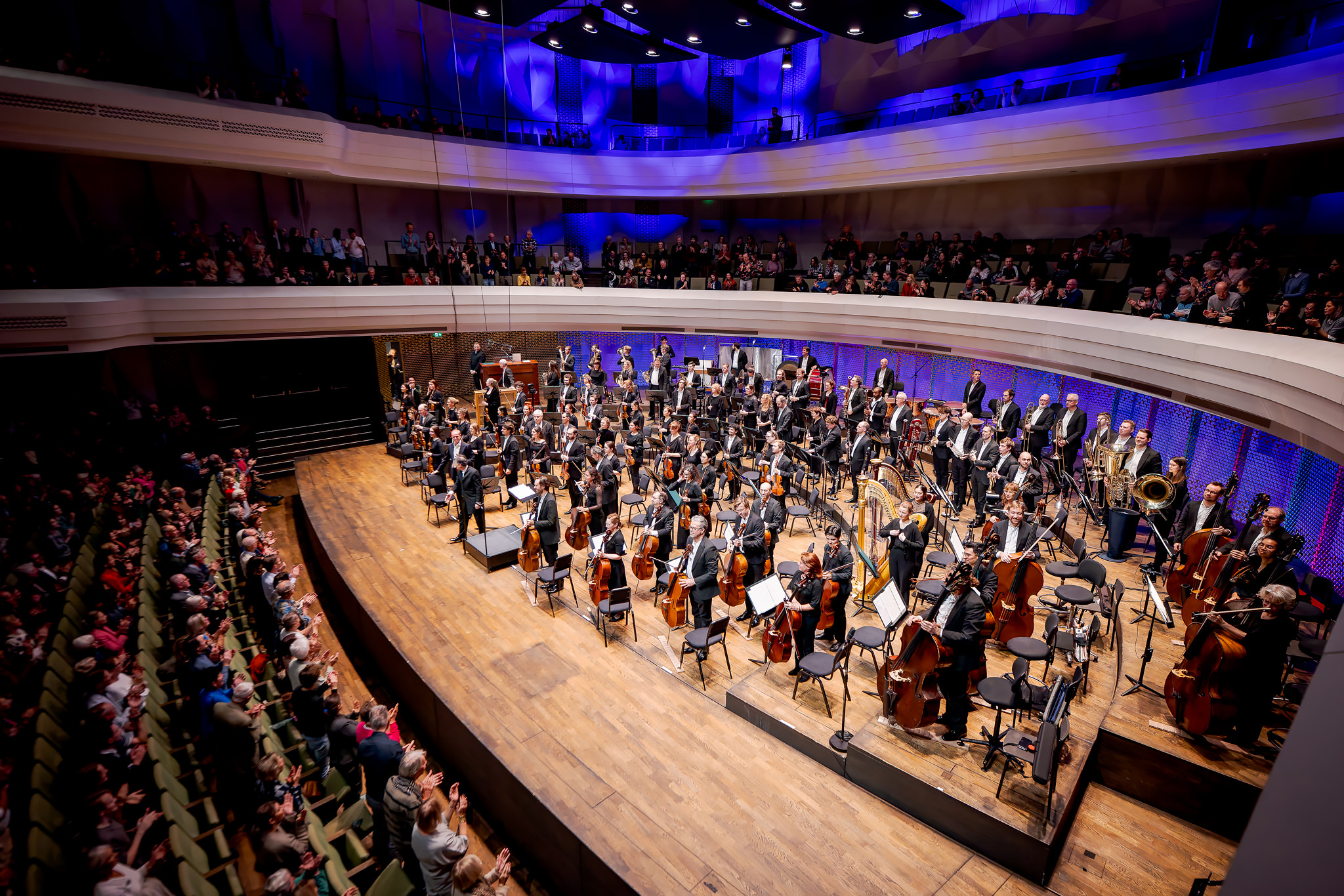
Residentie Orkest The Hague
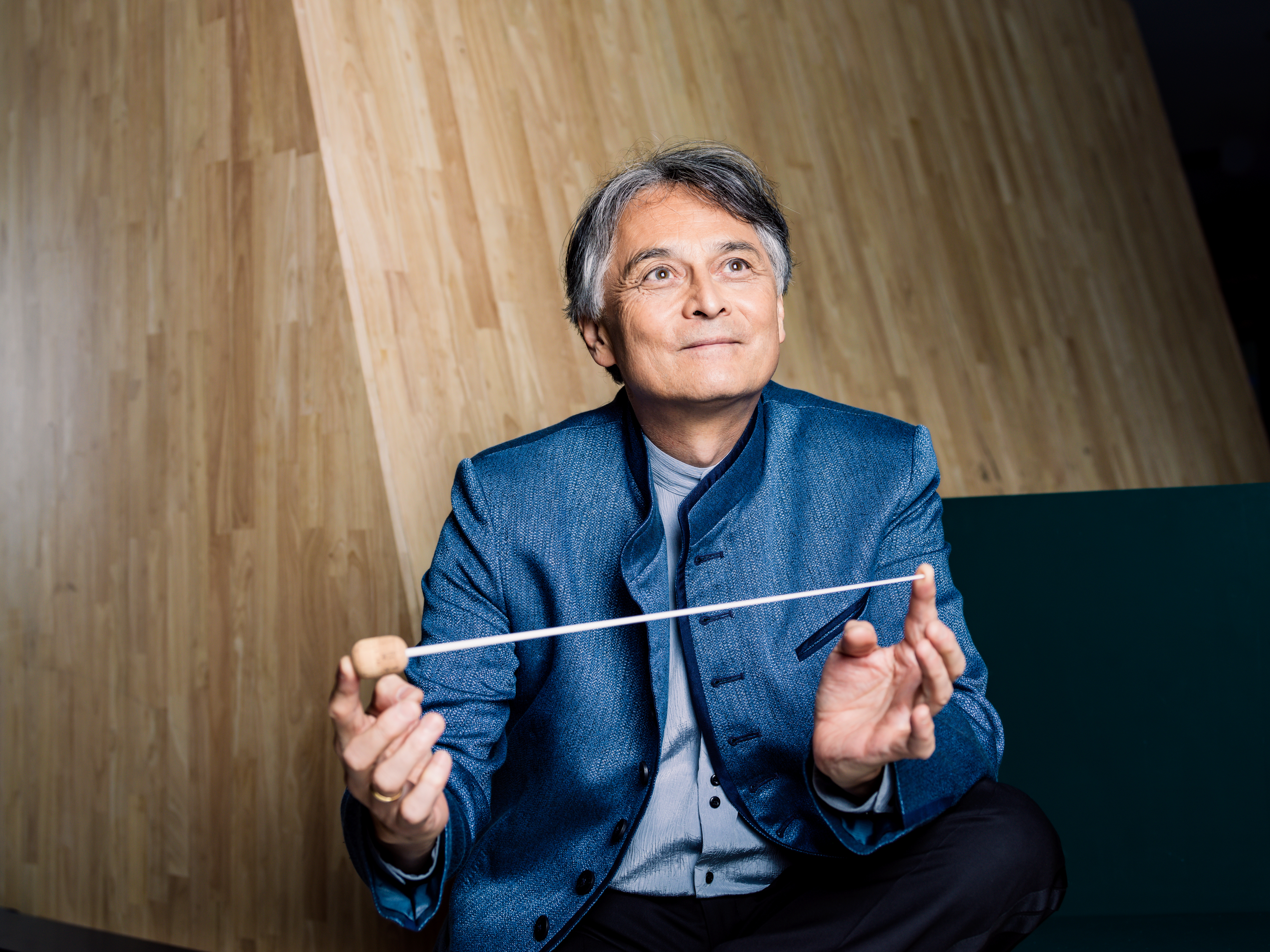
Jun Märkl

Barbara Kozelj
Would you like to read the lyrics of Schulhoff's "Landschaften"? Download them here!
Fun Facts
Musical world traveler
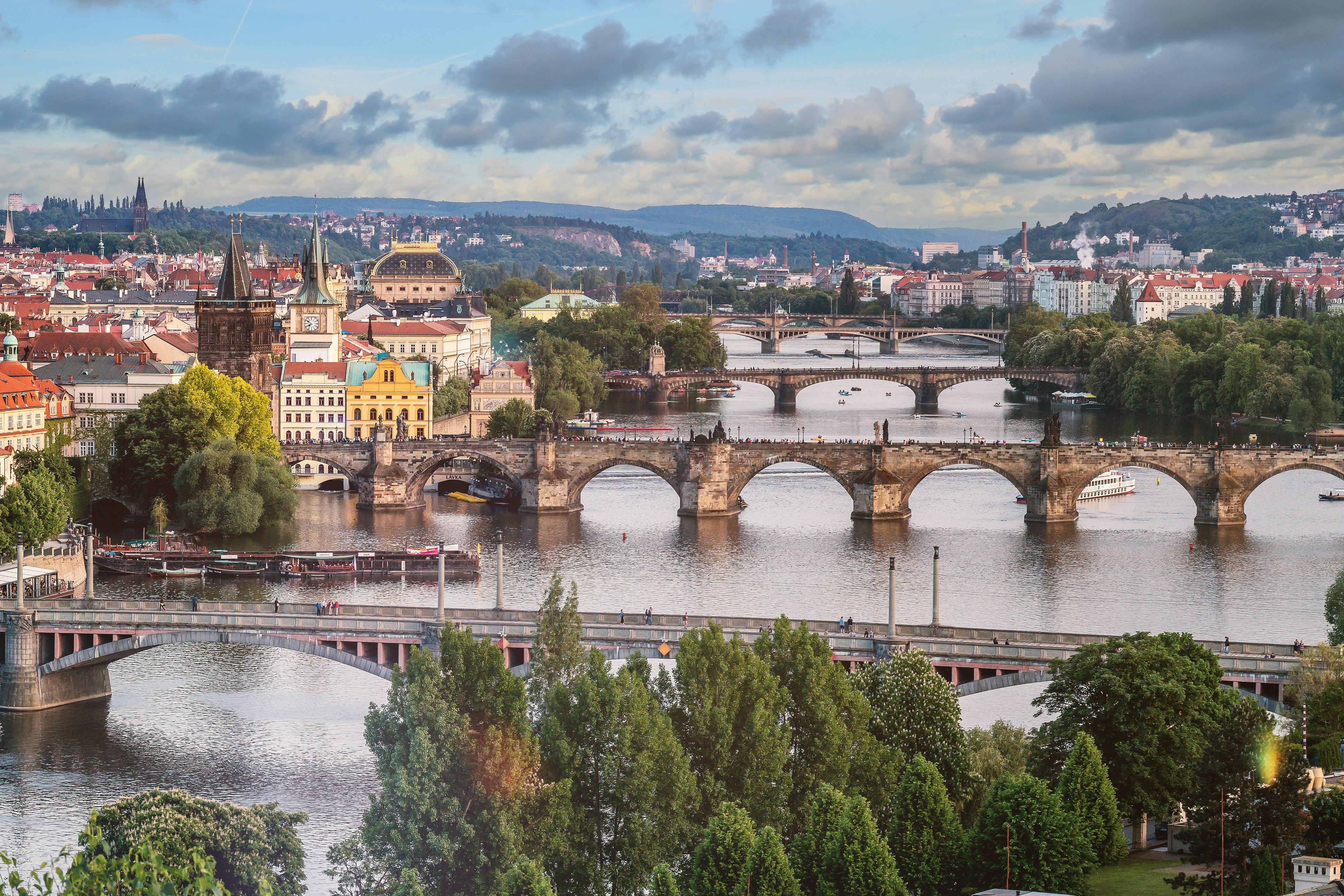
The world-famous theme from Smetana'sThe Moldauis actually a musical globetrotter. The melody began as the Renaissance songLa Mantovana(ca. 1600) by Italian tenor Giuseppe Cenci, appeared in a Czech children's song (Kočka leze dírou), became the basis for the Israeli national anthemHatikvah, and even appeared in jazz classics such as Stan Getz'sDear Old Stockholm. In the seventeenth century, it was also heard in Flanders with the lyrics 'Ik zag Cecilia komen' (I saw Cecilia coming). One melody, half a world's history.
Silence in music
In 1919, Erwin Schulhoff wrote bothLandschaften—still audibly indebted to Debussy, Scriabin, and Richard Strauss—andIn futurumfromFünf Pittoresken: a piano piece consisting entirely of rests. Not a single note is heard, but the score is full of bizarre time signatures and hyper-precise rhythms, with instructions to 'play' it 'with expression and feeling, until the end'. More than thirty years before John Cage made this idea famous, Schulhoff had already composed silence.



Help The Hague get music!
Support us and help reach and connect all residents of The Hague with our music.
View all program booklets
Be considerate of your neighbors and turn down your screen brightness.