Program Booklet
Tchaikovsky & Strauss
Friday October 9
8:15 p.m.
until approximately 10:15 p.m.
One hundred musicians on stage and an exceptionally demanding violin part: the Residentie Orkest performs Tchaikovsky and Strauss.
📳
Please put your phone on silent and dim the screen so as not to disturb others during the concert. Taking photos is allowed during applause.
Programme
Prior to this concert, “ Starter ” will take place at 7:30 p.m. It’s a lively and informal pre-concert program featuring live performances by our own musicians as well as interviews with soloists and conductors. “ Starter ” is free to attend and takes place in the Swing Foyer next to the “ cloakroom.”
Floris van Ballegooijen ( 2005)
One Minute Symphony: Closer (2026)
Hui-Chen Shao
One Minute Symphony: Glimpses of Time ( 2025)
Pyotr Ilyich Tchaikovsky ( 1840–1893)
Violin Concerto in D, Op. 35 ( 1878)
Allegro moderato
Canzonetta: Andante
Finale: Allegro vivacissimo
We'll serve a free drink during the break.
Richard Strauss ( 1864–1949)
Ein Heldenleben, Op. 40 ( 1897–1898)*
The Hero
The Hero's Adversary
The Hero's Companion
The Hero's Battlefield
Des Helden Peace Projects
The Hero's Escape from the World and Fulfillment
* Violin solo: Wouter Vossen
End of concert approximately 10:15 p.m.
What are you going to listen to?
The stage is bursting with energy today. Stefan Jackiw, violinist and our artist-in-residence at 26/27 Season, takes on Tchaikovsky’s exuberant Violin Concerto—a lyrical, demanding, and irresistibly expressive work. Afterward, principal conductor Jun Märkl continues his grand German Romantic journey this season with Strauss’s monumental *Ein Heldenleben*. An orchestra of more than a hundred musicians, rich colors, and intensity in every measure: unforgettable.
Tonight’s opening features not one but two One Minute Symphonies. Principal Conductor Jun Markl was so enthusiastic about the project that it has taken on an international dimension this season. The “ Residentie Orkest ” and the Taiwan Philharmonic are exchanging compositions by young composers. In this way, musical ideas travel between The Hague and Taipei—with Principal Conductor Jun Märkl serving as the connecting link. For example, in 2025, Hui-Chen Shao wrote *Glimpses of Time*: in this work, various scenes and sounds flash by like images out of the corner of your eye—moving tree shadows, a vibrating phone, sudden laughter. The musical fragments overlap, collide, and fade, together forming an ever-changing soundscape of structured chaos. Floris van Ballegooijen drew inspiration from the theme of peace. Different melodies each follow their own rhythm and path. They contrast, sometimes rubbing against one another, yet still find a way to sound together. In this way, differences give rise to a polyphonic unity.
By all accounts, Pyotr Ilyich Tchaikovsky fell for men. To stay ahead of rumors about his orientation, he married one of his former conservatory students, Antonina Miliukova, in 1877. A happy marriage it did not become. Although the couple would never officially divorce, the pair separated after barely three months, after which the composer fell prey to a severe depression.
To shake off all history, Tchaikovsky traveled in March 1878 to Clarens, a Swiss spa resort near Lake Geneva. There he was joined by his composition student (and alleged lover) Iossif Kotek, an excellent violinist with whom he spent the days making music. When the pair played through an excerpt from Édouard Lalo's Symphonie espagnole one afternoon, Tchaikovsky was thoroughly impressed by the notes. 'This music is fresh, light and full of piquant rhythms and beautiful, excellently harmonized melodies,' the composer wrote to his patron Nadezhda von Meck. 'Lalo does not seek depth at all costs, but carefully avoids routine. He looks for new forms, and pays more attention to musical beauty than to established traditions.'
It is tempting to think that Tchaikovsky was laying out the blueprint for his own concerto here, because, inspired by Lalo, he immediately began writing a major work for violin and orchestra. With the help of Kotek, who advised the composer on technical aspects of performance, the task was completed in no time. Less than a month later, the Violin Concerto in D major — —was fully orchestrated and on paper. While Lalo drew inspiration from Spanish folk music in his *Symphonie espagnole*, Tchaikovsky returns to his Russian roots in his Violin Concerto . The lyrical melodic material of, for example, the first movement is illustrative of this. The harmonies of the Canzonetta, based on folk scales, and the clear nods to Russian folk music in the finale also speak volumes.
If there is one composer who used his music autobiographically, it is Richard Strauss. Throughout his entire body of work, one regularly encounters compositions that, directly or indirectly, paint a picture of his own life. His *Sinfonia Domestica* is a masterpiece in which he lovingly describes his daily family life. In his opera *Intermezzo* , he humorously depicts a heated argument he’d had with his wife Pauline some time earlier. And while the grandiose *Tod und Verklärung* (Death and Transfiguration ) from 1889 may be intended to symbolize the death and redemption of an artist in general, it is clear that Strauss is referring to himself, with the still-young composer fantasizing about his own apotheosis.
This list also includes *Ein Heldenleben* , which he completed in 1898. In this piece, Strauss unabashedly places himself at the center of attention. And why not? “I don’t see why I shouldn’t compose a symphony about myself. I find myself just as interesting as Napoleon or Alexander the Great,” he claimed with a touch of wit. Those who knew Strauss certainly did not see him as a hero in the classical sense of the word—as if he were a great man who performed courageous deeds. He was rather a skilled musician who worked hard for a living and, above all, enjoyed the coziness of his home life. For the most part, he sought his heroes—good or bad—outside himself. In the years prior, he had set them to music in various symphonic poems: *Don Juan*, *Macbeth*, *Till Eulenspiegel*, *Thus Spoke Zarathustra*, and *Don Quixote*. And all too often, he portrayed those heroes in a very human light.
He does the same with himself in *Ein Heldenleben *. He divides the piece into several episodes, which he also names—although he later removed those titles. And indeed, in the opening he introduces himself in a heroic manner—convincing and triumphant. But when he then shows what he does as a hero, it’s not all that impressive. He argues with the critics, whom he considers petty; he enjoys spending time with his wife, even if things aren’t always smooth sailing. And when, in the rest of the piece, he marches into battle like a true general against all who are hostile toward him, it sounds more like a farcical fanfare than heroic war music. The true hero isn’t found on the outside at all, Strauss observes later in the piece; he is found much more on the inside and in his music. He quotes a number of his earlier works in a section he titles “Des Helden Friedenswerke” (The Hero’s Works of Peace). And the apotheosis is not a “ Last ” tour de force but rather a sense of resignation. Strauss withdraws from the world and remains with his loved ones and his muse—the things that truly matter in his life.
In some respects, *Ein Heldenleben* is a testament from the composer, who, after 33 years of life, is taking stock of his achievements so far. He had received a solid musical education and had become famous for his symphonic poems. But that era was nearly over; now he had to look ahead. The opera, which he had already dabbled in, would become his new calling. In the years to come, he would truly immortalize himself through his operas.
Archive Residentie Orkest / Kees Wisse
Prefer it on paper? Download a condensed printable version of this program.
Biographies
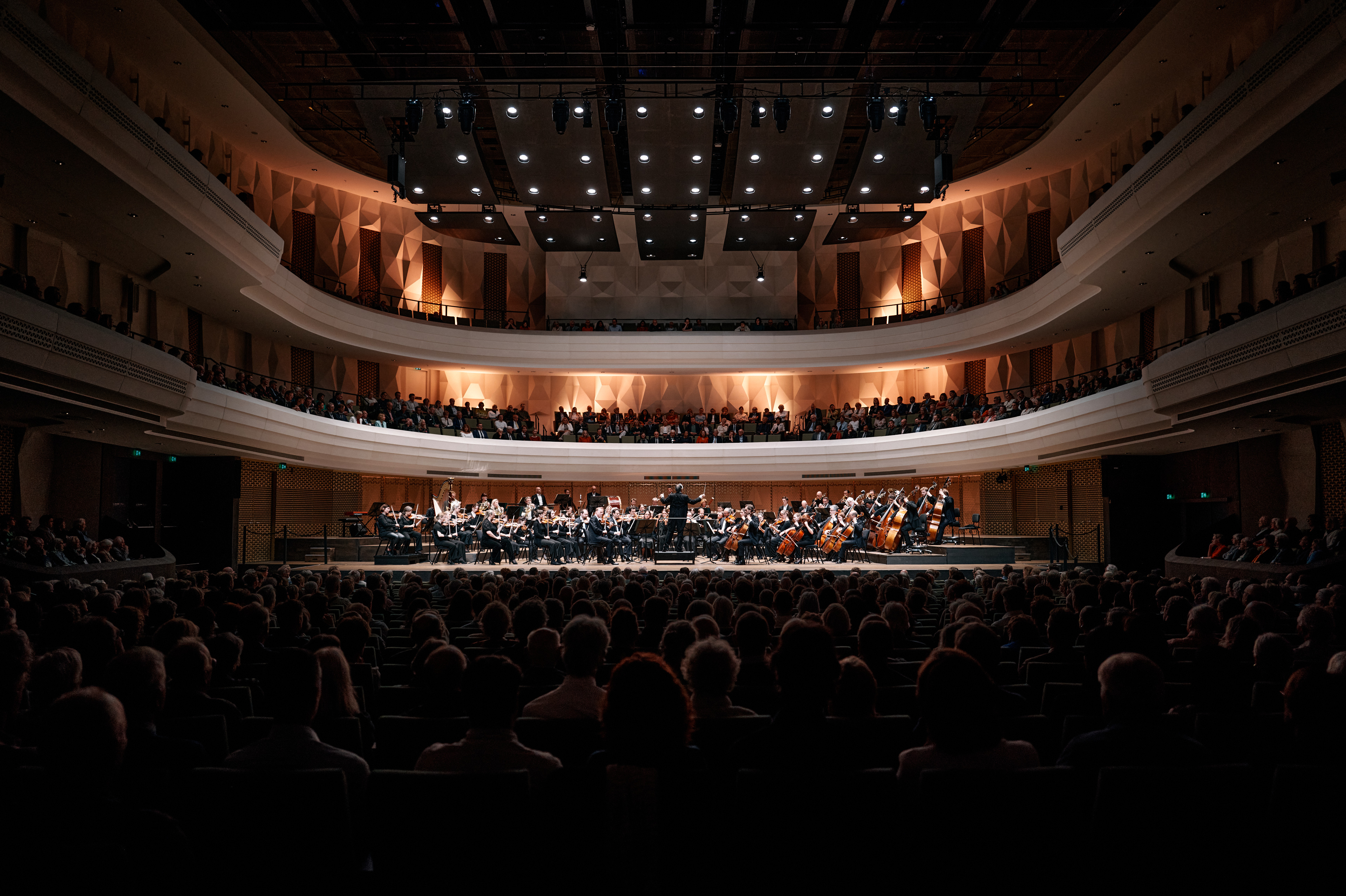
Residentie Orkest The Hague
.jpg)
Jun Märkl
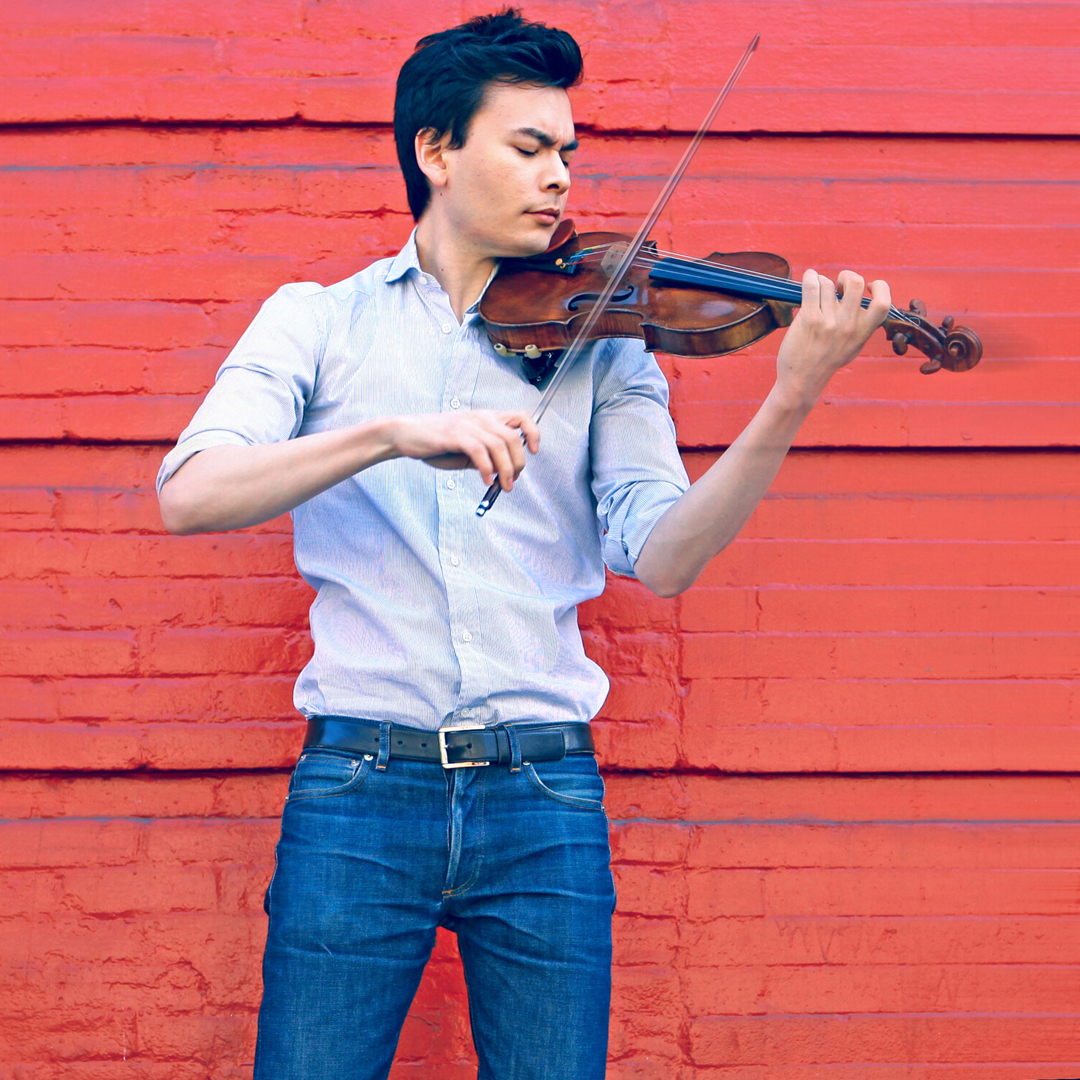
Stefan Jackiw
Read more about Stefan Jackiw, artist-in-residence at the Residentie Orkest:
Fun Fact
Strauss x RO
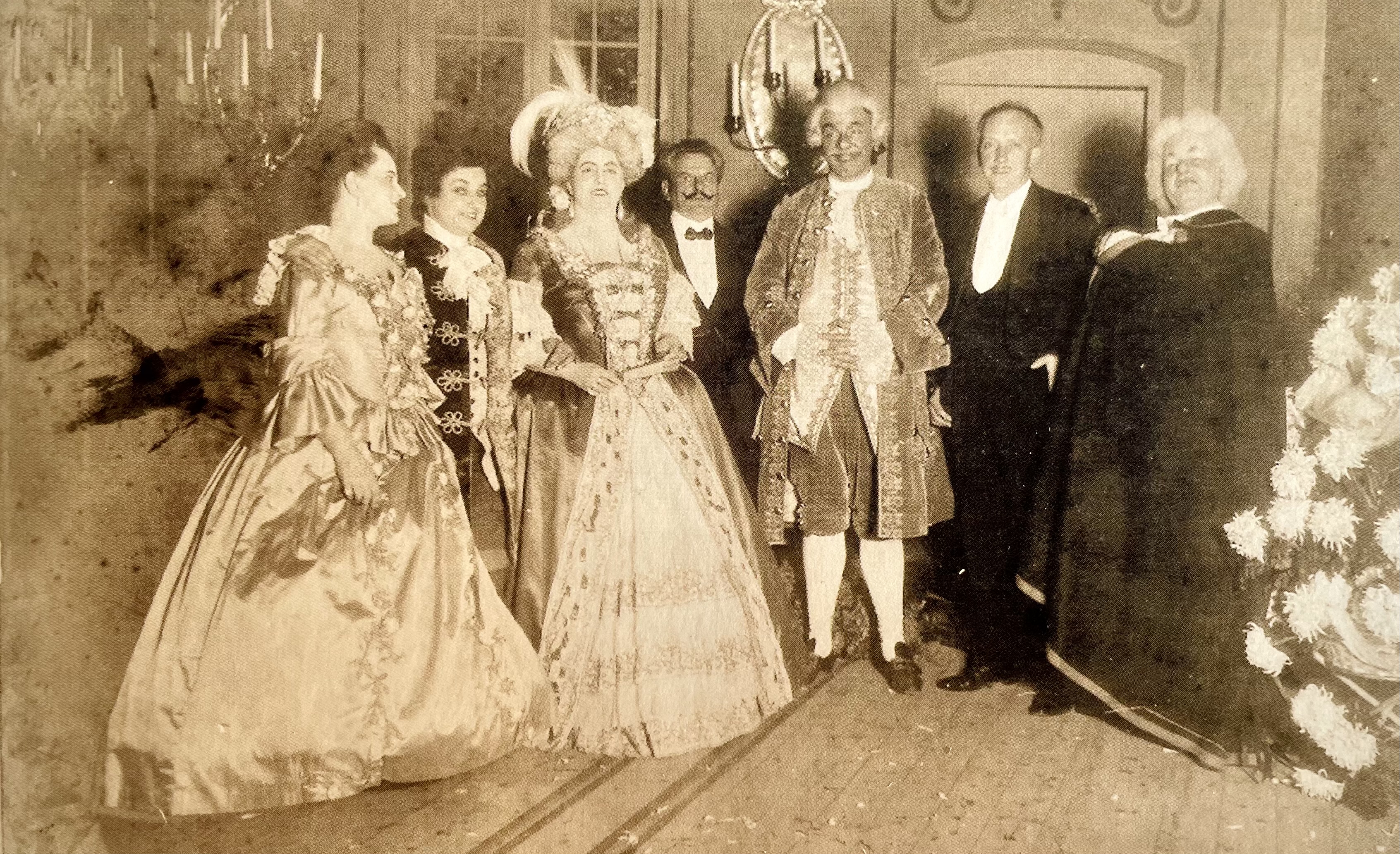
Did you know that Richard Strauss’s music has been performed in The Hague ever since the founding of the “ Residentie Orkest ” (November 1904)? Founder Henri Viotta had great admiration for him, and many of Strauss’s major works even had their Dutch premieres in The Hague, often quite soon after their world premieres. It was therefore only natural that the German composer and conductor would eventually visit the royal city. In November 1911, he was a guest for no fewer than ten days during a grand musical celebration in honor of his compositions. The composer conducted the operas, while the symphonic concerts were alternately conducted by Strauss and Viotta. Ein Heldenleben was also on the program, conducted by Strauss himself.
In the photo, we see Richard Strauss (second from the right) at the performance of *Der Rosenkavalier* the day before.
RO QUIZ
Tchaikovsky was a composer and...-
Violinist
Good answer: conductor
Tchaikovsky was world-famous as a conductor in his day. In 1891, he even had the honor of inaugurating Carnegie Hall in New York with a series of opening concerts. That year would also have nearly included the Concertgebouw and the newly formed Concertgebouw Orchestra but that tour was cut short. A second chance came two years later, when Tchaikovsky wrote to principal conductor Willem Kes that he believed he could come to Amsterdam. But that debut also fell through because Tchaikovsky died a few days after writing the letter.
-
Conductor
Good answer: conductor
Tchaikovsky was world-famous as a conductor in his day. In 1891, he even had the honor of inaugurating Carnegie Hall in New York with a series of opening concerts. That year would also have nearly included the Concertgebouw and the newly formed Concertgebouw Orchestra but that tour was cut short. A second chance came two years later, when Tchaikovsky wrote to principal conductor Willem Kes that he believed he could come to Amsterdam. But that debut also fell through because Tchaikovsky died a few days after writing the letter.
-
Pianist
Good answer: conductor
Tchaikovsky was world-famous as a conductor in his day. In 1891, he even had the honor of inaugurating Carnegie Hall in New York with a series of opening concerts. That year would also have nearly included the Concertgebouw and the newly formed Concertgebouw Orchestra but that tour was cut short. A second chance came two years later, when Tchaikovsky wrote to principal conductor Willem Kes that he believed he could come to Amsterdam. But that debut also fell through because Tchaikovsky died a few days after writing the letter.
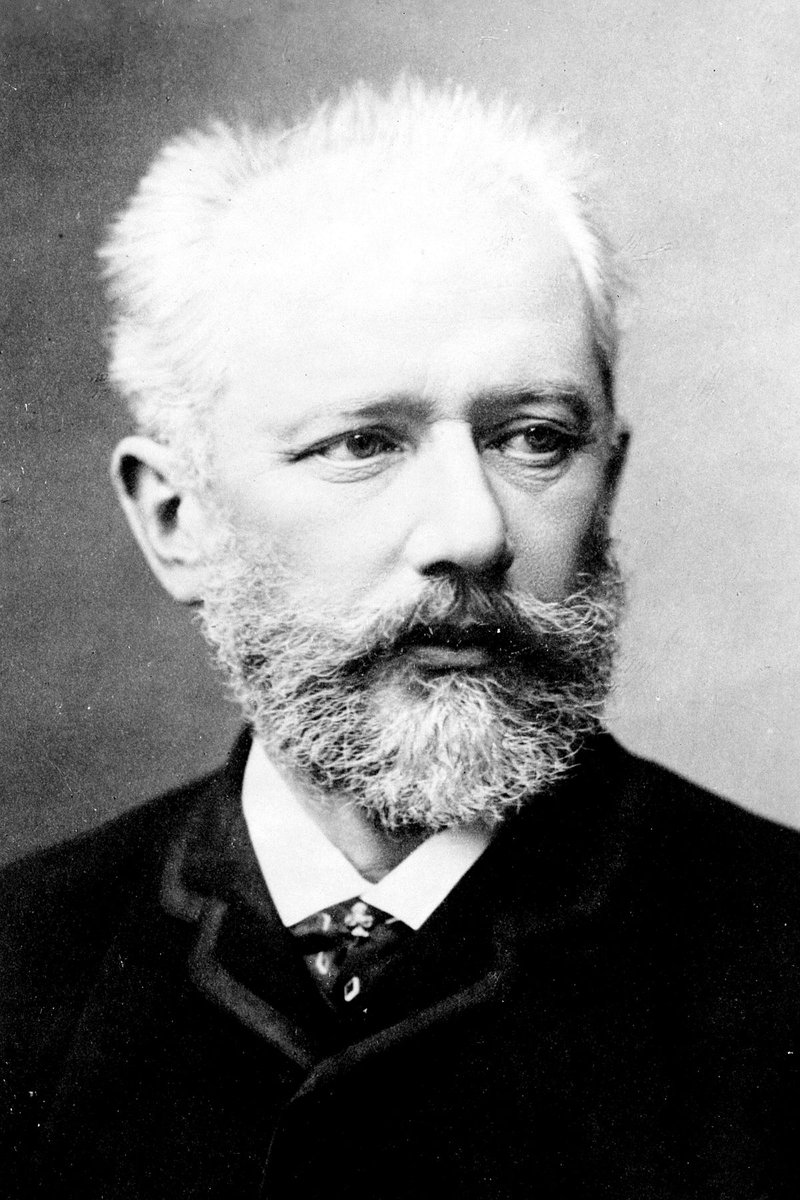
Good answer: conductor
Tchaikovsky was world-famous as a conductor in his day. In 1891, he even had the honor of inaugurating Carnegie Hall in New York with a series of opening concerts. That year would also have nearly included the Concertgebouw and the newly formed Concertgebouw Orchestra but that tour was cut short. A second chance came two years later, when Tchaikovsky wrote to principal conductor Willem Kes that he believed he could come to Amsterdam. But that debut also fell through because Tchaikovsky died a few days after writing the letter.
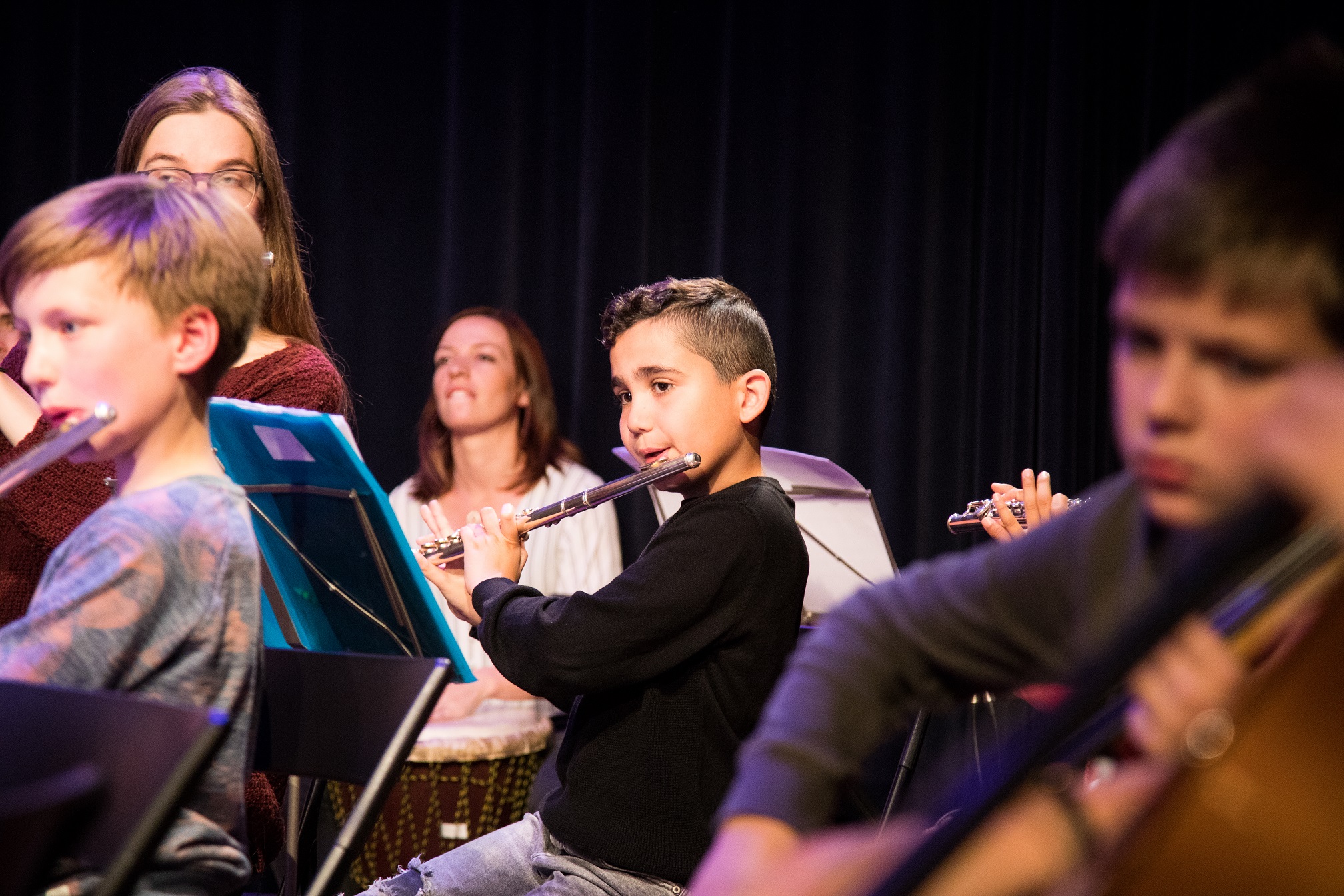
Help The Hague get music!
Support us and help reach and connect all residents of The Hague with our music.
View all program booklets
Be considerate of your neighbors and turn down your screen brightness.