Program Booklet
Nikola Meeuwsen performs Prokofiev
Friday September 11
8:15 p.m.
until approximately 10:30 p.m.
A concert full of power and mystery: Nikola Meeuwsen performs Prokofiev, and the orchestra shines in Elgar’s elusive“Enigma Variations.”
📳
Please put your phone on silent and dim the screen so as not to disturb others during the concert. Taking photos is allowed during applause.
Programme
Prior to this concert, there will be an " Starter ." You can attend this event at the Swing, located to the left of the " cloakroom " on the first floor.
Max van Platen (1996)
Opmaat(2026, world premiere)
Sergei Prokofiev (1891–1953)
Piano Concerto No. 2 in G minor, Op. 16(1913, 1923)
Andantino – Allegretto
Scherzo: Vivace
Intermezzo: Allegro moderato
Finale: Allegro tempestoso
Edward Elgar (1857–1934)
Enigma Variations “Variations on an Original Theme,” Op. 36(1898–1899)
Theme (Andante)
Variation I (L'istesso tempo) "C.A.E."
Variation II (Allegro) "H.D.S.-P."
Variation III (Allegretto) "R.B.T."
Variation IV (Allegro di molto) "W.M.B."
Variation V (Moderato) "R.P.A."
Variation VI (Andantino) "Ysobel"
Variation VII (Presto) "Troyte"
Variation VIII (Allegretto) "W.N."
Variation IX (Adagio) "Nimrod"
Variation X (Intermezzo: Allegretto) "Dorabella"
Variation XI (Allegro di molto) "G.R.S."
Variation XII (Andante) "B.G.N."
Variation XIII (Romanza: Moderato) "***"
Variation XIV (Finale: Allegro Presto) "E.D.U."
The concert ends around 10:30 p.m.
What are you going to listen to?
A piano concerto that even its composer could barely play and a musical portrait of a friend take center stage in this program. As a prelude to this concert—the Residentie Orkest’s first of the season at Amare —there will be a world premiere by Max van Platen.
Unity in Diversity
Max van Platen is no stranger to the Residentie Orkest. In 2022, he made his debut with his*One Minute Symphony:Dance of the Magpie*and*Ode al vento* onthe occasion of * Prinsjesdag*. His latest work,*Opmaat*, can betaken literally. It serves as the opening of the first concert of the new season, and in it, Van Platen brings together—like a collage—everything the Residentie Orkest has to offer. For him, it was a challenge to unite ten minutes of diverse fragments under a single arc of tension. “Although these fragments contrast sharply with one another in terms of movement and dynamics, they share rhythmic and harmonic characteristics, allowing diversity to coalesce into unity,” according to the composer.
A Challenging Piano Concerto
As a student at the St. Petersburg Conservatory, Sergei Prokofiev was already known as headstrong, arrogant, and rebellious. And that was evident in his music. His piano compositions were downright avant-garde, and when he made a name for himself in 1912 with hisFirst Piano Concerto, the audiencewasthoroughly taken aback. But it could get even worse. HisSecond Piano Concerto, composed shortly thereafter,surpassedits predecessor in modernity. The premiere in September 1913 caused a major classical music scandal, with opponents whistling and jeering in outrage while supporters cheered him as the only Russian composer who could truly compose. Incidentally, he hadn’t made it easy on himself. The solo part was written with such challenge and virtuosity that he practiced four hours a day for weeks to master it.
Exactly what Prokofiev played on that infamous evening in 1913 will always remain a mystery. During the 1917 Revolution, the manuscript was lost in the turmoil. For a revival performance in Paris in 1924, he had to rewrite the piece entirely from memory. Opinions are still divided as to whether he did this as faithfully as possible or whether, now ten years older and wiser, he turned it into a more or less new piece. Even then, the composer practiced the piece endlessly. His roommates in the apartment where he was staying were driven crazy by the hours of pounding on the piano, so his landlord forbade him from playing any longer. In protest, he then pounded on a wooden box with a hammer until he was allowed to resume his practice. For years, thisSecond Piano Concertowas considered unplayable, and few dared to tackle the score. To this day, it remains a true challenge for any piano virtuoso.
Variations for Friends
With theEnigma Variations,Edward Elgar—who had been virtually unknown until then—becamea famous composer overnight. But he did leave classical music with a great mystery. He himself called the work a riddle, an enigma, and offered this cryptic hint: “The theme never appears.” The secret has still not been solved. But that would make you completely forget what the essence of this composition actually is. For in each variation, Elgar portrays one of his loved ones around him. Sometimes he does so with humor, as in the fifth variation. That one is about Richard Penrose Arnold, who loved to launch into philosophical ramblings that he would then suddenly interrupt with absurd ideas. In the music, the theme is presented solemnly, but is occasionally interspersed with whimsical little motifs. Or take Dorabella from the tenth variation. She stuttered a bit, which can be heard in the music as small rhythmic hiccups. But just as often, Elgar’s warm heart speaks through the music. The first variation is dedicated to his wife, whom he loved dearly. Every now and then, between the lines, you hear a little motif that rhythmically evokes the words with which he greeted her when he came home: “Alice, I’m home.” The famous “Nimrod” variation is dedicated to his best friend, August Jaeger. He would often take evening walks with him, during which they would ponder life’s deepest questions. In this way, the entire work exudes friendship and affection. Could that perhapsbethe overarching theme of theEnigma Variations?
Kees Wisse
Prefer it on paper? Download a condensed printable version of this program.
Biographies

Residentie Orkest The Hague

Andrew Grams
.jpg/1f5b49719a9b24f5cdc674296cf5595c.jpg)
Nikola Meeuwsen
In Elgar’s already enigmatic *Enigma Variations*, it is the penultimate variation that poses the greatest puzzle. “***,” the composer noted above the score. It might refer to Helen Weaver, to whom he was once engaged but who had emigrated to New Zealand in 1884. A quotation from Mendelssohn’s overture “Meeresstille und glückliche Fahrt” and the sound of ship engines in the variation reinforce this suspicion.
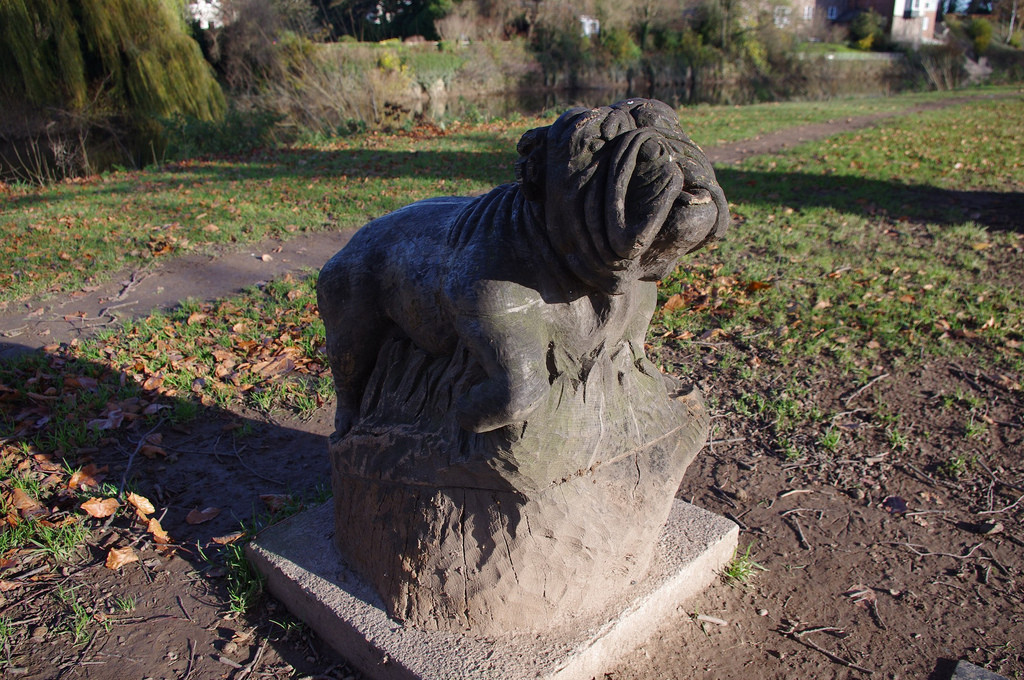
Incidentally, the eleventh variation, "G.R.S.," is a musical depiction of organist George Robertson Sinclair's bulldog, Dan, who fell into the River Wye while out for a walk.



Help The Hague get music!
Support us and help reach and connect all residents of The Hague with our music.

View all program booklets
Be considerate of your neighbors and turn down your screen brightness.