Program Booklet
Mozart's Jupiter
Friday November 13
8:15 p.m.
until approximately 10:00 p.m.
An evening of horn brilliance and classics: Klieser enchants, Egarr conducts, and Mozart’s Jupiter Symphony shines.
📳
Please put your phone on silent and dim the screen so as not to disturb others during the concert. Taking photos is allowed during applause.
Programme
Prior to this concert, “ Starter ” will take place at 7:30 p.m. It’s a lively and informal pre-concert program featuring live performances by our own musicians as well as interviews with soloists and conductors. “ Starter ” is free to attend and takes place in the Swing Foyer next to the “ cloakroom.”
Wolfgang Amadeus Mozart (1756–1791)
Horn Concerto No. 4 in E-flat, KV 495 (1786)
· Allegro maestoso
· Romanza: Andante cantabile
· Rondo: Allegro vivace
Ottorino Respighi (1879–1936)
The Birds (1928)
· Prelude
· La Colomba
· The Hen
· The Nightingale
· The Cuckoo
At intermission we will serve a free drink.
Richard Strauss (1864-1949)
Horn Concerto No. 1 in E-flat, Op. 11 (1882–1883)
· Allegro
- Andante
· Allegro
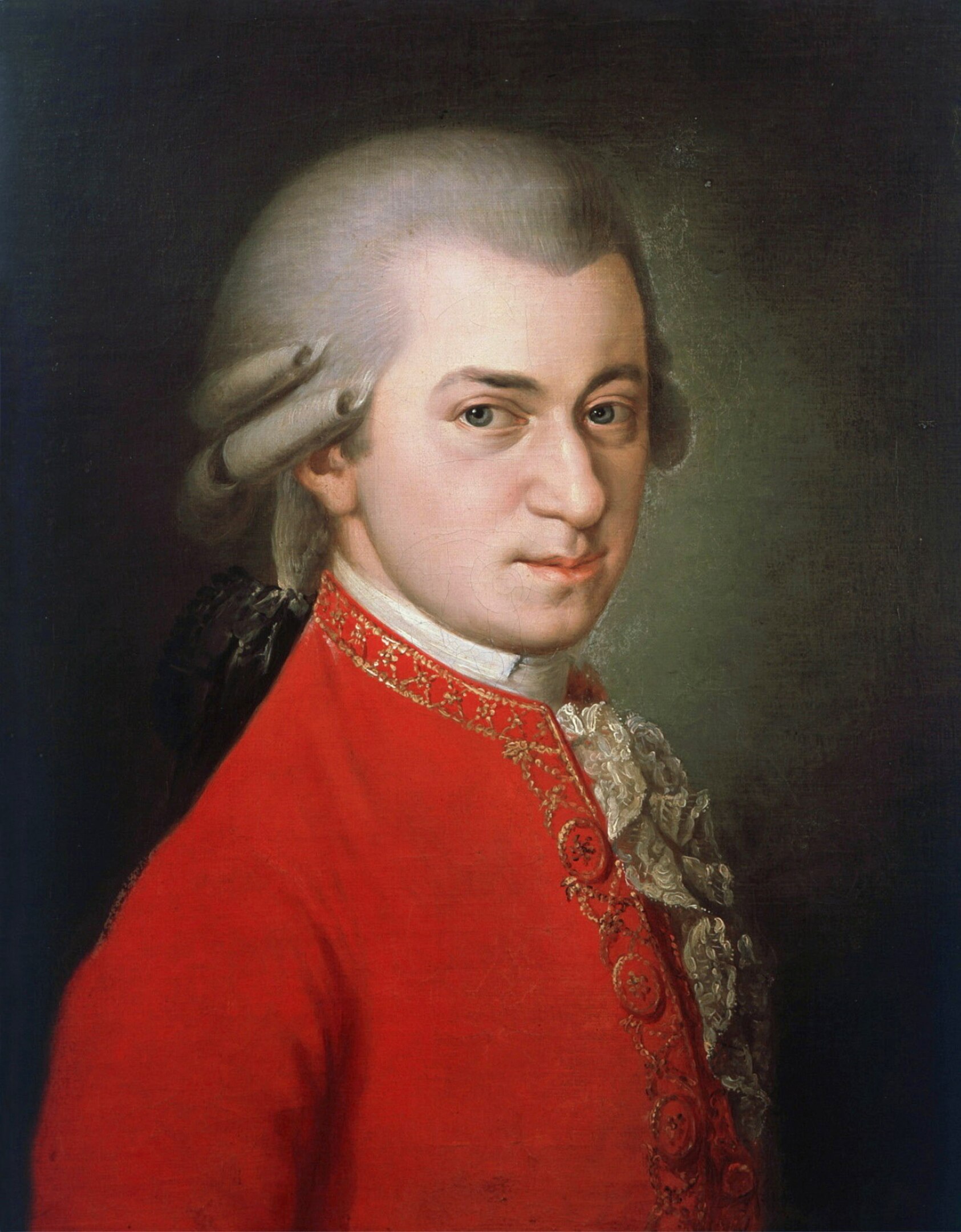
Wolfgang Amadeus Mozart
Symphony No. 41 in C, K. 551, “Jupiter” (1788)
- Allegro vivace
· Andante cantabile
· Menuetto
· Molto allegro
End of concert approximately 10 p.m.
What are you going to listen to?
“For you, Mr. Donkey,” “Ooh, how out of tune!” “Not done yet?” “Oh, a bleating sheep!” Performance notes in 18th-century manuscripts could sometimes take surprising forms. The musician to whom these exhortations were addressed was horn player Joseph Leutgeb; the sender was Wolfgang Amadeus Mozart.
At a young age, Mozart met Leutgeb—who was 24 years his senior—in Salzburg. Leutgeb must have made an impression on him early on, as evidenced by the horn parts in Mozart’s early symphonies. After Mozart moved to Vienna in 1781, his reunion with Leutgeb blossomed into a lasting friendship. In addition to running a small cheese shop in the capital, Leutgeb was regarded as the foremost horn player of his time. He was renowned for his virtuoso technique of “stopping”—the manipulation of natural tones with his right hand inside the bell of the instrument. The system of using valves to adjust the length of the tubing would not be introduced until some thirty years later.
Mozart wrote the aforementioned playful jibes directed at Leutgeb in an earlier horn concerto. The manuscript of the Fourth Horn Concerto stands out because it is written in different colors of ink. The reason for this is unknown, but there is no doubt that Mozart composed a colorful concerto. In the central Romanza, the soloist is given ample opportunity to showcase his lyrical skills, a specialty of Leutgeb. The Rondo concludes with the instrument’s traditional hunting horn character, full of playful and virtuosic ornamentation.
The Italian composer Ottorino Respighi was best known for his evocative orchestral music, in which he set landscapes, paintings, or cityscapes to music. In *Gli uccelli*, he drew inspiration from music of the distant past— . He selected works from the early Baroque period that shared the theme of “birds” and arranged them into a five-part orchestral suite.
Following an overture—a veritable aviary inspired by the Baroque composer Pasquini—Respighi incorporated into *La columba* music by the seventeenth-century French lutenist Gallot, in which the melancholic melody was intended to represent the song of a dove. The hen is heard in the third movement, which originally comes from a harpsichord suite by Rameau, and we discover the nightingale in an orchestrated song by the 17th-century recorder player Jacob van Eyck. Returning to Pasquini and his cuckoo, we’ve come full circle.
At the age of fourteen, Richard Strauss wrote his first compositions. These were true early works, dedicated to “his dear dad,” the principal horn player in the Bavarian Court Orchestra in Munich. It was during this period—when the influences of Wagner and the extreme chromaticism characteristic of Strauss’s later works still seemed unthinkable—that the First Horn Concerto (or, more accurately, the French Horn Concerto) was composed. Father and son—the latter now nineteen—rehearsed the piece at home but never performed it together. Later, the composer recalled the criticism: too many high notes.
It is indeed a virtuoso work that pushes both the instrument and its player to their limits. The characteristic French horn melody with open notes with which the hornist begins continues to develop throughout the other movements, but in such a way that it is now impossible to perform the concerto on a true French horn without valves.
There seems to be something remarkable about the three Mozart symphonies— Last . They flowed from Mozart’s pen in the summer of 1788, and although much of the composer’s comings and goings in Vienna is reasonably well documented, not a single source mentions the premieres of his Symphonies Nos. 39, 40, and 41 or a possible commissioner. In the usually bustling city of Vienna, that summer was marked by a tense silence. Aristocratic patrons of the arts had either followed Emperor Joseph II into the war with Turkey that had just broken out or had retreated to their country estates for vacation, and the Mozart family was mourning the death of their five-month-old daughter, Theresia. It was against this backdrop that the Symphony in C , was completed—a work that, two decades later, would be nicknamed “Jupiter” in London circles.
The work opens with a series of drum rolls that seem to herald something majestic and continues in the style of the so-called Viennese “trumpet overture.” These trumpet fanfares were an old tradition at the imperial court, as if the symphony were intended for a triumphant return from the front. Mozart alternates this ceremonial style with more operatic moments. One of the melodies is even a literal quote from Mozart’s own aria “Un bacio di mano.” Did the composer intend this hidden hand kiss in this symphony to reach a specific person?
After courtly middle movements—a sarabande and a minuet—Mozart introduces a four-note theme in the final movement, which unfolds as an impressive display of “ars combinatoria.” These four notes (C-D-F-E), the foundation of a grand fugue, have given many musicologists much food for thought in their quest to unravel the enigmatic origins of the Jupiter Symphony. Symphonies by Dittersdorf, the Haydn brothers, an aria from Handel’s opera *Judas Maccabaeus* (which, moreover, tells of the Temple of Jupiter), counterpoint exercises by Fux, or the *Credo* from one of Mozart’s own Salzburg Masses? Whatever Mozart intended to allude to, it remains a matter of speculation. Meanwhile, the fugue continually expands with an additional melody, until, as a grand finale, Mozart carries his “Jupiter”—with five themes sounding simultaneously—up to the Olympus of the symphonic world. A quiz
Frans Boendermaker
Prefer it on paper? Download a condensed printable version of this program.
Biographies
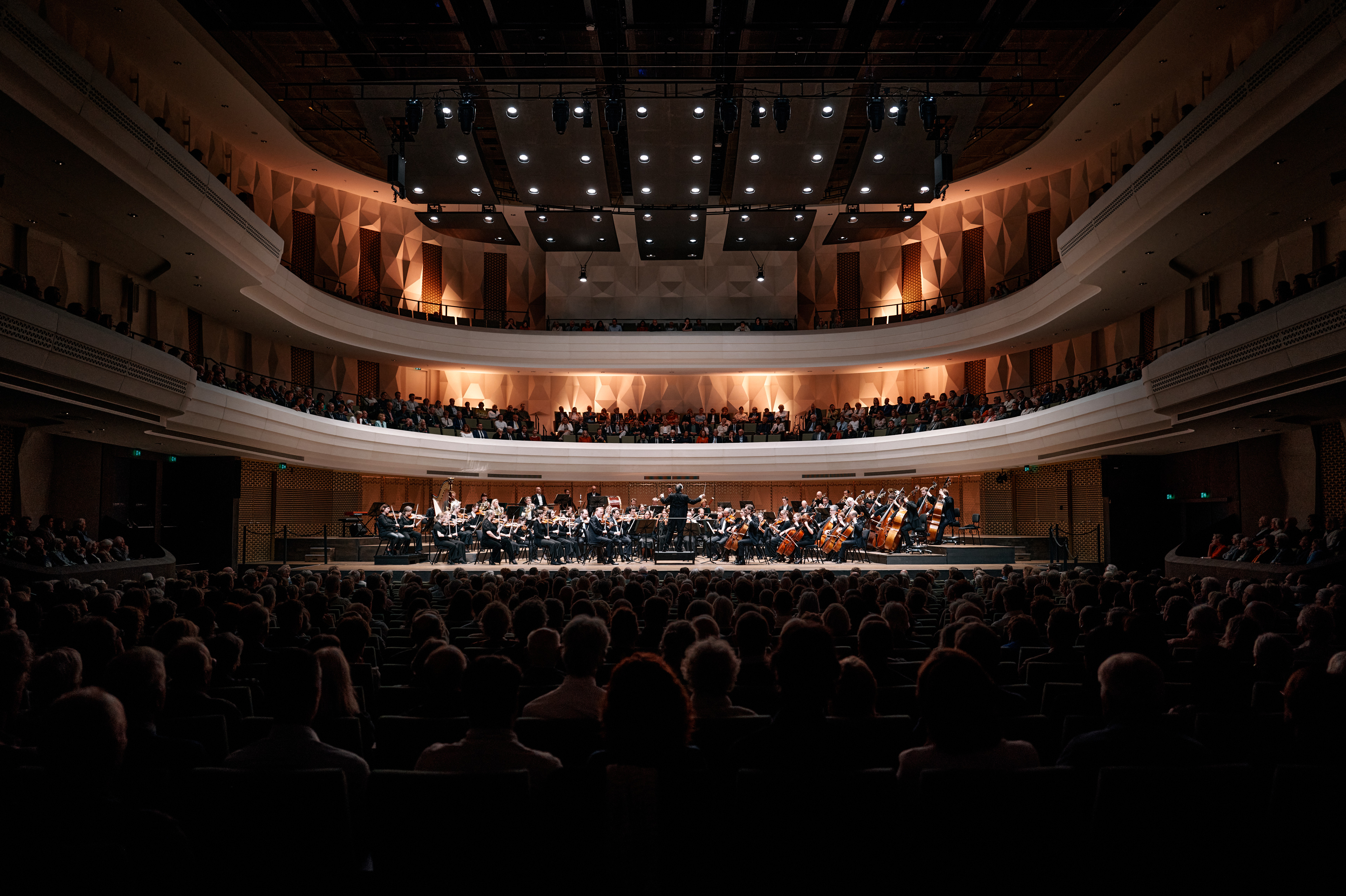
Residentie Orkest The Hague
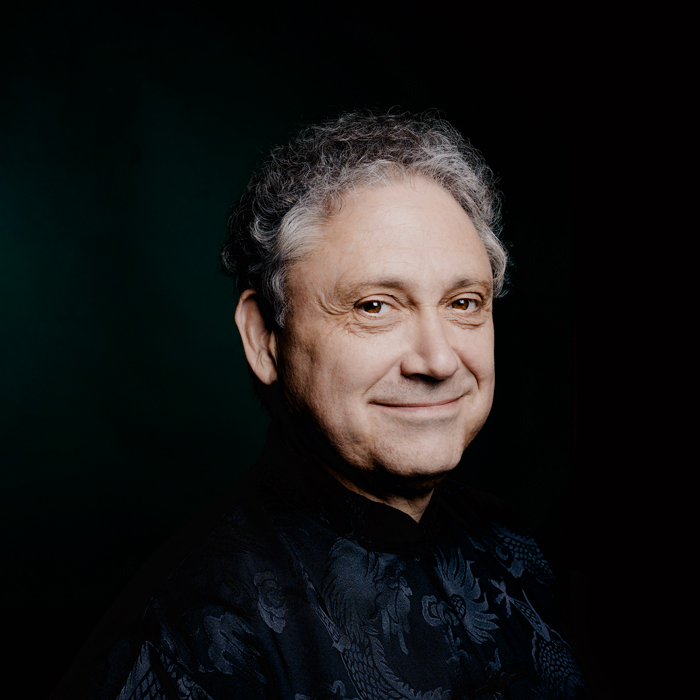
Richard Egarr
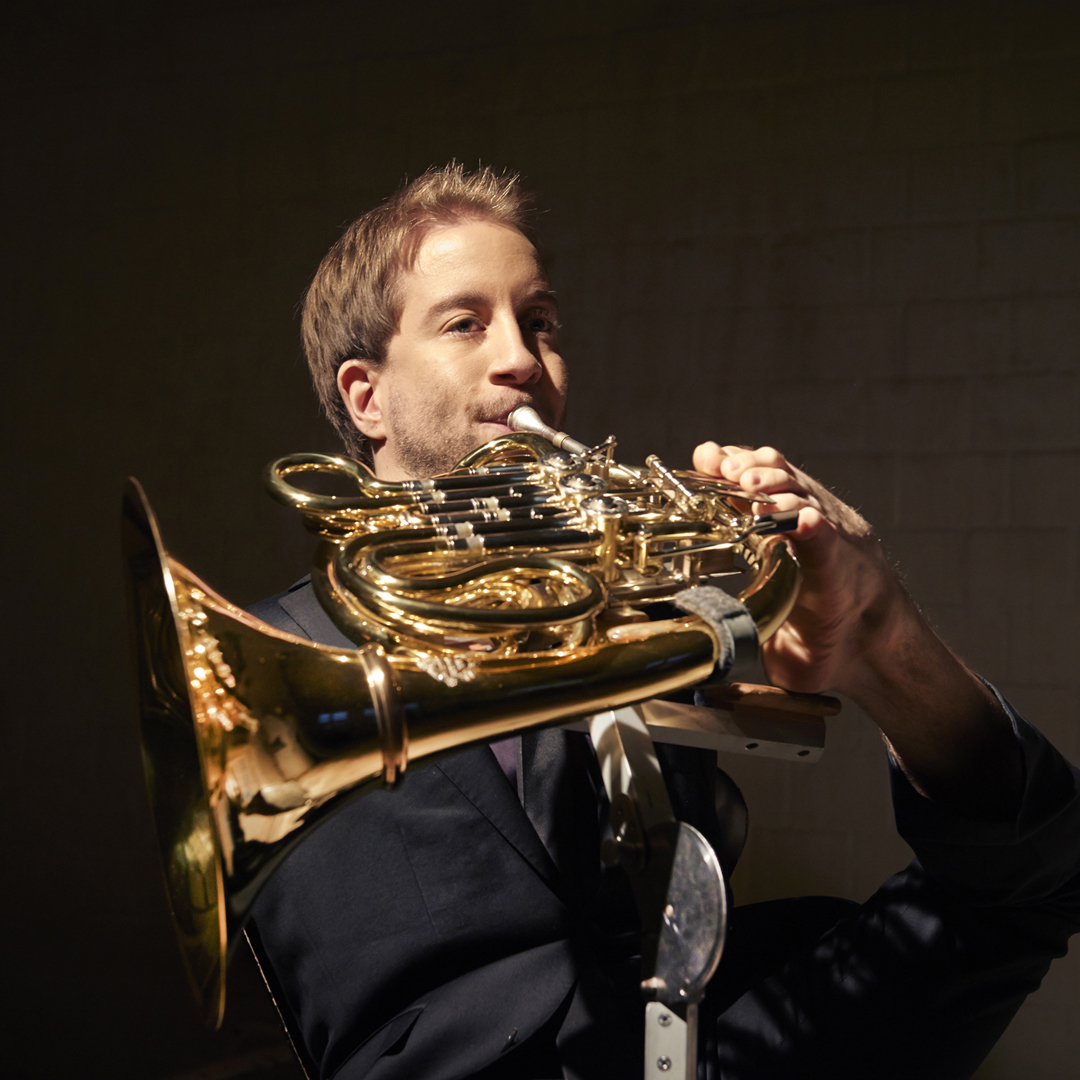
Felix Klieser
Fun Fact
Premiere?
It is unknown when the very first performance of both Mozart’s Fourth Horn Concerto and his Jupiter Symphony took place. The horn concerto was written for hornist Joseph Leutgeb and was presumably intended for the Viennese concert scene. As for the Jupiter Symphony, it is even uncertain whether Mozart ever heard the work performed himself. The symphony may have been part of a planned concert series in Vienna in 1788, but it is unknown whether this series actually took place. We do know, however, that the symphony was on the program in Leipzig in 1789.



Help The Hague get music!
Support us and help reach and connect all residents of The Hague with our music.
View all program booklets
Be considerate of your neighbors and turn down your screen brightness.