Program Booklet
Dvořák's Symphony No. 5
Friday October 16
8:15 p.m.
until approximately 10:15 p.m.
From Tsoupaki’s ethereal sense of time to Mahler’s intimate heart and Dvořák’s warm expansiveness – an evening that begins softly and ends in sunlight.
In collaboration with Dag in de Branding.
📳
Please put your phone on silent and dim the screen so as not to disturb others during the concert. Taking photos is allowed during applause.
Programme
A " Starter " will take place before this concert. You can attend it on the Tribunetrap.
Calliope Tsoupaki ( 1963)*
* *Falling* – *Sturm und Drang* for orchestra (2024)
Gustav Mahler ( 1860–1911)
Rückert Lieder ( 1901–1902)
Ich atmet' einen linden Duft
Blicke mir nicht in die Lieder!
Liebst du um Schönheit (orchestration Max Puttmann)
Um Mitternacht
Ich bin der Welt abhanden gekommen
Calliope Tsoupaki (1963)
*Thin Air* for orchestra (2021)
Antonín Dvořák (1841–1904)
Symphony No. 5 in F, Op. 76 (1875)
Allegro, ma non troppo
Andante con moto
Scherzo: Allegro scherzando
Finale: Allegro molto
End of concert approximately 10:15 p.m.
What are you going to listen to?
From Tsoupaki’s ethereal sense of time to Mahler’s intimate heart and Dvořák’s warm expansiveness – an evening that begins softly and ends in sunlight.
What happens when nothing seems certain anymore? In *Falling*, Calliope Tsoupaki explores the sensation of a world that shifts, tilts, and takes on new form. She wrote this approximately thirteen-minute orchestral work as a commission from Phion; it premiered in March 2024.
For Tsoupaki, the title has many meanings. You can fall in love —but you can also fall apart, surrender to something, or simply stop resisting. Night falls, silence falls, rain falls. All these associations find their way into the music. At times the orchestra sounds transparent and vulnerable; at others, full and menacing. Contrasts follow one another, without Tsoupaki attempting to capture them in a single, clear meaning.
In doing so, Falling touches on something that is characteristic of her: music doesn’t have to explain what’s happening, but can create space to listen and look differently. Familiar orchestral sounds blend with Tsoupaki’s own musical language. What emerges feels both familiar and elusive. It’s as if the ground shifts beneath your feet for a moment—and precisely because of that, space is created for something new.
During the winter months, Gustav Mahler led the busy life of an opera director, but in the summer he withdrew from the hustle and bustle of the city. High up in the solitude of the pine forests near Maiernigg, in August of the year 1901, the significant song “Ich bin der Welt abhanden gekommen” was composed—or so Gustav Mahler told Ernst Decsey, a music critic from Graz, who spoke with him a few more times during the last Last years of his life. The other songs being performed tonight were also composed that same summer, with the exception of “Liebst du um Schönheit,” which Mahler wrote exactly one year later. Even before the turn of the century, the powerful opera director had acquired a plot of land on Lake Wörthersee, where Brahms also loved to spend time. There, he could now compose in peace and quiet during the summer, free from the stress of the big city. After the folk-song-like poetry from the collection *Des Knaben Wunderhorn*, the texts by the German Romantic poet Friedrich Rückert (1788–1866) began to appeal to him more and more. Rückert’s romantic yet somber themes must have particularly resonated with him, even though everything seemed to be going his way. Not only professionally and artistically, but also in his personal life: in March 1902, he married the most beautiful girl in Vienna, Alma Schindler. He had met her for the first time in the fall of 1901, after that lonely summer among the fir trees. It had sealed his “return to the world” and his busy social life. It was not until a few years later, in 1905, that Mahler himself conducted the premiere of these songs in an orchestral setting.
Thin Air was created in 2020, in the midst of the COVID-19 pandemic. As Composer-in-Residence, Calliope Tsoupaki was asked by the Festivals for Compassion initiative to write a piece centered on solidarity and compassion. Her response was deliberately simple and open: a composition that could be played by virtually any musician on a wide variety of instruments. Just as compassion, according to Tsoupaki, can have a different voice for everyone, so too can this music take on a different form each time.
The first performances took place in June 2020, after which *Thin Air* traveled like a musical relay race through festivals and among musicians around the world. Since then, various instrumentations and arrangements have emerged. The composition thus evolved from a response to a single exceptional moment into a work with a much broader significance. In 2021, Tsoupaki received the Matthijs Vermeulen Prize for the work. The orchestral version had its world premiere in April 2021, performed by the Residentie Orkest , under then-chief conductor Nicholas Collon.
The music itself does not seek grand gestures. It unfolds thoughtfully, with space between the sounds and a strong sense of stillness. Its strength lies precisely in that vulnerability. *Thin Air* calls for attention: to the sound that fades away, to the silence surrounding it, and to one another. A work that emerged from a time of distance, but ultimately is, above all, about connection.
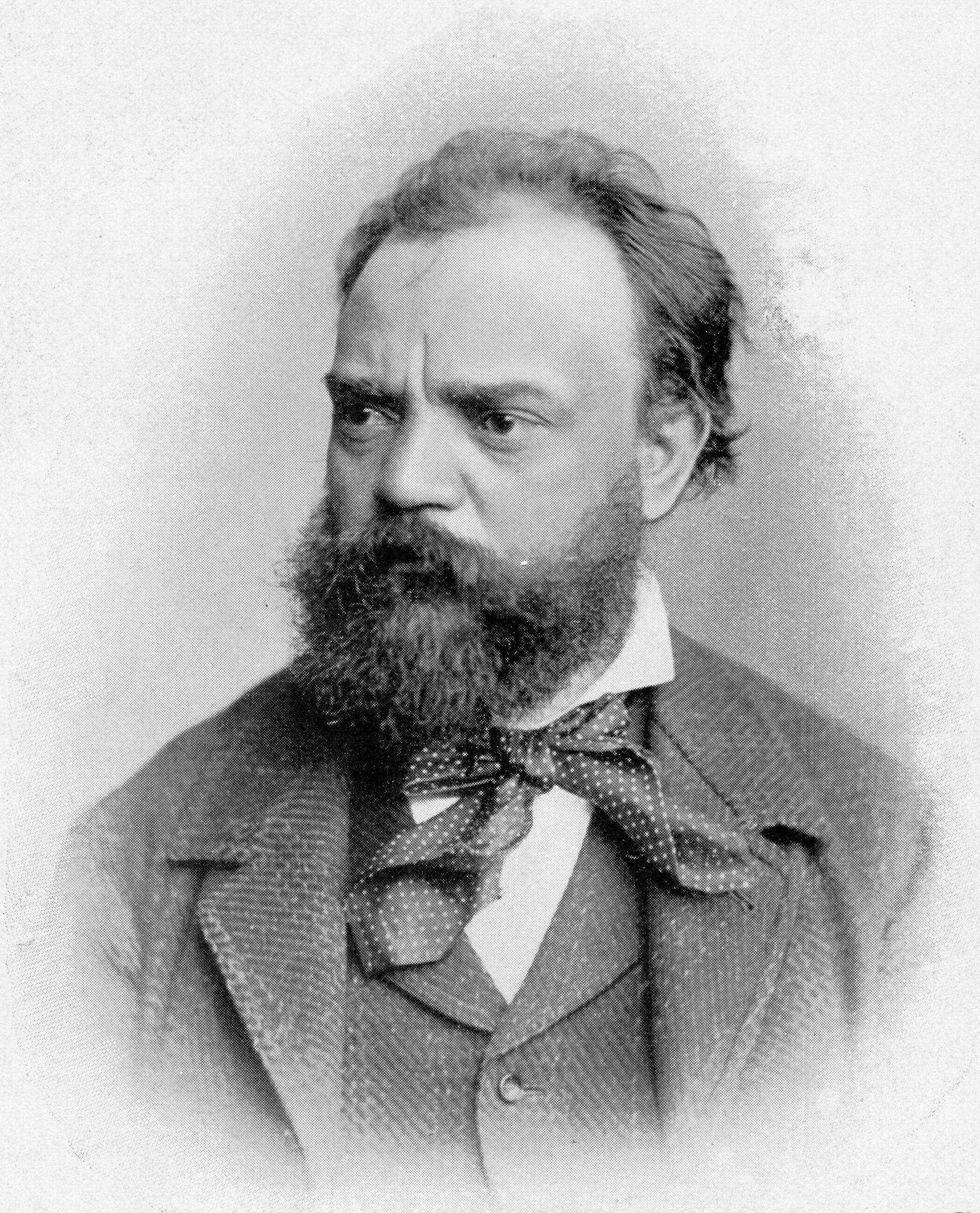
Growing up in the Bohemian village of Nelahozeves, a hamlet that had fewer than fifty houses in a landscape of vast fields, farmlands and gently rolling hills, Antonin Dvořák came into contact with music at an early age. His father ran a butcher shop and an inn but also played the zither excellently. From him, little Dvořák received his first music lessons, which were later continued at the village school. Making music was in the villagers' blood anyway, as Dvořák aptly described in an interview with the British Sunday Times in 1885: "All Slavs love music. They can work all day in the fields, but they are always singing, and the true musical spirit burns ardently in them. And how they also love to dance! On Sunday, when church is out, they start making music and dancing, often until early the next morning. Every village has an orchestra of about eight or ten musicians - I belonged to ours as soon as I could fiddle a little." Folk music was instilled in Dvořák with the mother's milk. Not surprisingly, as a composer he combined his expressive lyricism and powerful rhythms with elements of Slavic folk music. This style revealed itself particularly from the Fifth Symphony, which Dvořák put to paper in just five weeks in 1875. A symphony very different from the previous one, in which Wagner's influence is still very evident with lots of brooding drama, grand percussion and downright Wagner quotations. In the Fifth, Dvořák's Bohemian-expressive style breaks through: more relaxed, more fluid, more rural with delightful bird and hunting sounds and, of course, some Bohemian dances. That the pastoral symphony was created in the midst of nature may be audible.
Prefer it on paper? Download a condensed printable version of this program.
Would you like to read along with the lyrics? Download them here.
Biographies
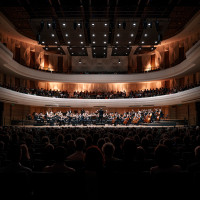
Residentie Orkest The Hague
.jpg/be4771d1b5677f0be2b4fabf60e7ea95.jpg)
Antony Hermus

Barbara Kozelj
Fun Fact
In his old age, Dvořák became a member of the Austrian Senate. On May 14, 1901, he accepted this honorary job, attended a meeting, took all the pencils from his desk because they were perfect for composing and never showed up again.
RO QUIZ
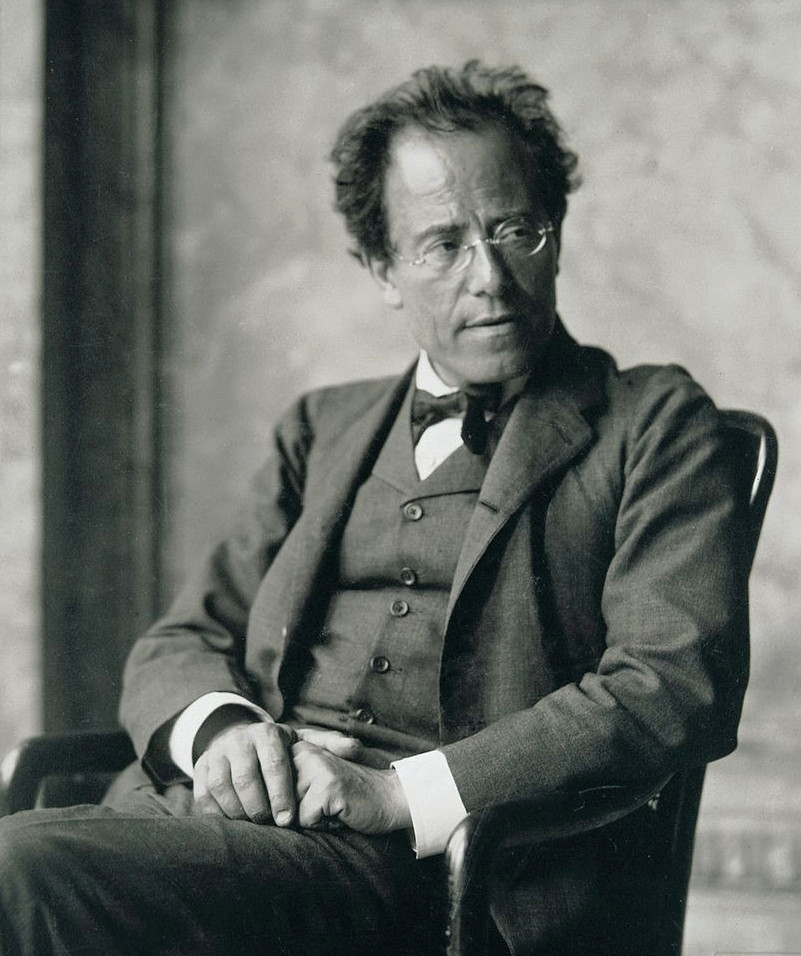
Has Mahler been to The Hague?-
Absolutely not
Yes indeed
Mahler visited The Hague once. On October 2, 1909, he attended the performance of his Seventh Symphony in the no longer existing Building for Arts and Sciences. By automobile, a luxury at the time, Mahler entered The Hague with conductor Willem Mengelberg and friend and composer Alphons Diepenbrock. From hotel De Oude Doelen, where Mahler was staying, they took a ride to Scheveningen for a walk on the beach. However, this was not a great success. "The dreary loneliness of the sea disappearing in the fog and the colorless, closed hotels made Mahler nervous," an eyewitness recounted. They returned immediately.
-
Yes indeed
Yes indeed
Mahler visited The Hague once. On October 2, 1909, he attended the performance of his Seventh Symphony in the no longer existing Building for Arts and Sciences. By automobile, a luxury at the time, Mahler entered The Hague with conductor Willem Mengelberg and friend and composer Alphons Diepenbrock. From hotel De Oude Doelen, where Mahler was staying, they took a ride to Scheveningen for a walk on the beach. However, this was not a great success. "The dreary loneliness of the sea disappearing in the fog and the colorless, closed hotels made Mahler nervous," an eyewitness recounted. They returned immediately.
-
Alone on the beach
Yes indeed
Mahler visited The Hague once. On October 2, 1909, he attended the performance of his Seventh Symphony in the no longer existing Building for Arts and Sciences. By automobile, a luxury at the time, Mahler entered The Hague with conductor Willem Mengelberg and friend and composer Alphons Diepenbrock. From hotel De Oude Doelen, where Mahler was staying, they took a ride to Scheveningen for a walk on the beach. However, this was not a great success. "The dreary loneliness of the sea disappearing in the fog and the colorless, closed hotels made Mahler nervous," an eyewitness recounted. They returned immediately.
Yes indeed
Mahler visited The Hague once. On October 2, 1909, he attended the performance of his Seventh Symphony in the no longer existing Building for Arts and Sciences. By automobile, a luxury at the time, Mahler entered The Hague with conductor Willem Mengelberg and friend and composer Alphons Diepenbrock. From hotel De Oude Doelen, where Mahler was staying, they took a ride to Scheveningen for a walk on the beach. However, this was not a great success. "The dreary loneliness of the sea disappearing in the fog and the colorless, closed hotels made Mahler nervous," an eyewitness recounted. They returned immediately.


Help The Hague get music!
Support us and help reach and connect all residents of The Hague with our music.

View all program booklets
Be considerate of your neighbors and turn down your screen brightness.