Program Booklet
Beethoven's Pastoral Symphony
Friday , April Friday
8:15 p.m.
to approximately 10:15 p.m.
Anna Clyne’s cello concerto*Dance*is paired with Beethoven’s *Pastoral*. Contemporary alongside classical, yet both offer a fascinating interplay of lyricism and energy.
📳
Please put your phone on silent and dim the screen so as not to disturb others during the concert. Taking photos is allowed during applause.
Programme
Mateusz Godlewski (2001)*
* *One Minute Symphony: After-images*(2026)
Wolfgang Amadeus Mozart(1756–1791)
Overture to *The Marriage of Figaro*, K. 492 (1786)
Anna Clyne(1980)
Dance for Cello and Orchestra(2019)
"when you're broken open"
"if you've ripped off the bandage"
"in the thick of the battle"
"in your blood"
"when you're completely free"
Ludwig van Beethoven (1770–1827)
Symphony No. 6 in F, Op. 68, “Pastoral”(1808)
The Awakening of Cheerful Feelings Upon Arrival in the Countryside (Allegro ma non troppo)
Scene by the Brook (Andante molto moto)
A Joyful Gathering of Country Folk (Allegro)
Thunderstorm, Storm (Allegro)
Shepherd's Song. Joyful and Grateful Feelings After the Storm (Allegretto)
End of concert approximately 10:15 p.m.
What are you going to listen to?
One-Minute Symphony
What happens when your eyes take in more than they can process? The phenomenon of an afterimage—a flash of light or color that lingers after the source has disappeared—is familiar to many. But what if those afterimages pile up? For composition student Mateusz Godlewski, this question served as the starting point for his *One Minute Symphony*.
The Triumph of Figaro
During his short life, Wolfgang Amadeus Mozart composed eighteen operas. But while he was celebrated during his lifetime for his dramatic theatrical works, it is primarily his cheerful operas that have become immortal today. The best known are the three Italian comic operas with librettos by Lorenzo Da Ponte. The librettist and composer formed a golden duo who worked closely together on text and music and enjoyed great success not only in Vienna but also far beyond. Their first collaboration was*Le Nozze di Figaro*in 1786,based ona French play. Because in this opera a nobleman was thoroughly humiliated by a servant, the Viennese nobility was not pleased with it. Initially, the success in Vienna was not particularly great, but the performances in Prague were a true triumph. Mozart himself wrote: “People here talk of nothing but Figaro; they play nothing else, they sing nothing else, they whistle nothing else but Figaro. It is truly a great honor for me.” After a week of being royally feted by Prague’s high society, Mozart made a public appearance during one of the performances at the opera house: “News of his presence quickly spread through the theater,” reported the press, “and as soon as the Last of the overture had faded, the audience erupted in applause to honor and welcome him.” Five days later, when Mozart conducted his own opera, the audience’s reaction was nothing short of tumultuous. “Prague is truly a very beautiful and pleasant city,” Mozart concluded.
Dancing with Sound
British composer Anna Clyne is one of the leading voices in contemporary music. She lives and works in the United States and composes both acoustic and electroacoustic music. Her work is performed worldwide by major orchestras and is known for its vivid imagery and inspiration drawn from other art forms, such as poetry, painting, and dance. WithDance(2019), Anna Clyne composed a compelling cello concerto in which poetry, emotion, and timbre converge. The work is inspired by a five-line poem by the thirteenth-century mystic Rumi; each line forms the basis for one of the piece’s five movements. In these five contrasting movements, the cello takes center stage as the narrator. The music moves from vulnerability and introspection to energy and liberation, as if the listener is embarking on an inner journey. Clyne combines influences from various styles—from Baroque and folk to minimalism—into her own colorful musical language.
Set of postcards
Although Ludwig van Beethoven’s Vienna may not have suffered from actual environmental pollution, it certainly wasn’t clean either. Just like many other major cities, Vienna was downright filthy. There was hardly any sewer system, the streets were littered with horse manure that turned into a foul sludge after a rainy spell, and everyone simply threw their trash onto the street. Especially in the summer, the stench was unbearable due to the heat, and anyone who could fled the city. The imperial family went to the Schönbrunn Palace or to the spa town of Baden near the city, where the rest of the nobility and wealthy bourgeoisie also enjoyed spending time. Beethoven, too, often left summery Vienna behind and spent several months in one of the villages surrounding the city. There he enjoyed the peace and took long walks through the woods and fields. It was inevitable that he would incorporate those impressions into a composition. It became hisSixth Symphony, whichhe aptly named the “Pastoral.” He described it as “Erinnerungen an das Landleben” (Memories of Country Life), and although he claimed it was “more expression than depiction,” it has the effect of a set of poetic postcards depicting rural life. The subtitles of the various movements leave nothing to be desired in terms of clarity. It begins in the first movement with a cheerful sunrise on a crisp morning. During a languid afternoon, Beethoven lies in the shade of a tree with his feet in a cool stream, enjoying the birdsong he literally brings to life in the wind section. This is followed by a village festival, which is, however, abruptly interrupted by a heavy thunderstorm. Here, the rugged side of Beethoven briefly rears its head. With impetuous passages and sometimes almost atonal harmonies, he bombards you with thunder and lightning. Once the Last has faded into the distance, the villagers thank the Almighty with a sweet, devout hymn as the sun sets.
Jan Jaap Zwitser and Kees Wisse
Prefer it on paper? Download a condensed printable version of this program.
Biographies

Residentie Orkest The Hague
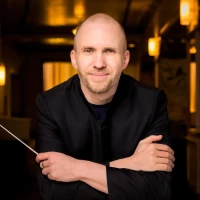
David Danzmayr
.jpg/b7508445f6288fb5c8ea812357fa676d.jpg)
Camille Thomas
Fun Fact
Beethoven by the stream
The second movement of Beethoven’sSixth Symphony depictsa scene by a stream. Not just any stream, but a small one that Beethoven remembered vividly. It is the Schreiberbach, which flows between Nussdorf and Grinzing, just north of Vienna. The stream still flows there, even though the surrounding area is now completely built up. However, there is a small section along the south bank known as the Little Beethoven Park, commemorating this beloved spot of the great composer.

RO QUIZ
Did Beethoven ever visit The Hague?-
Well
Yes indeed
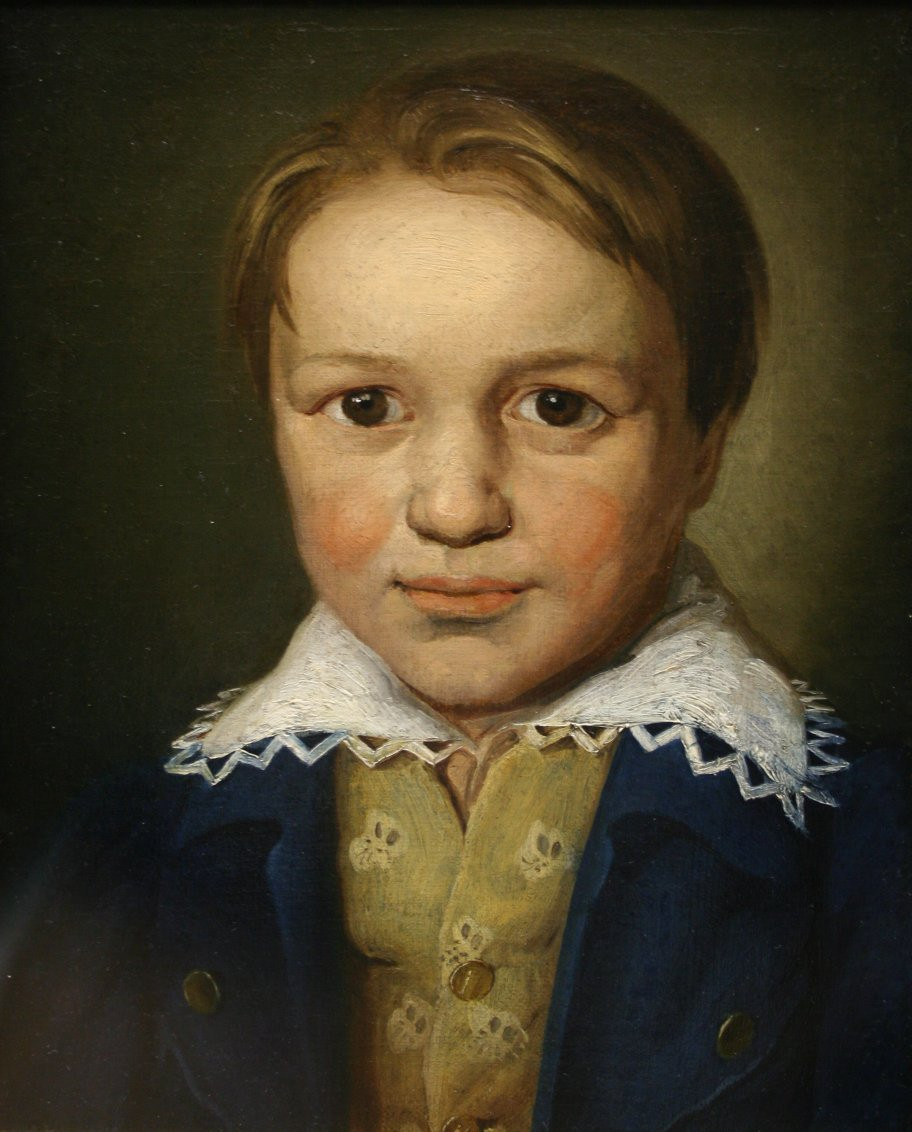
Beethoven visited the Netherlands once. In 1783, he was twelve years old at the time, he gave a performance for the court of Stadholder William V in The Hague. On his return to Bonn, he told his neighbor, "Those Dutch are real penny thieves, they only have an eye for money there. They won't see me back there!"
-
Only in transit
Yes indeed
Beethoven visited the Netherlands once. In 1783, he was twelve years old at the time, he gave a performance for the court of Stadholder William V in The Hague. On his return to Bonn, he told his neighbor, "Those Dutch are real penny thieves, they only have an eye for money there. They won't see me back there!"
-
Yes indeed
Yes indeed
Beethoven visited the Netherlands once. In 1783, he was twelve years old at the time, he gave a performance for the court of Stadholder William V in The Hague. On his return to Bonn, he told his neighbor, "Those Dutch are real penny thieves, they only have an eye for money there. They won't see me back there!"
Yes indeed
Beethoven visited the Netherlands once. In 1783, he was twelve years old at the time, he gave a performance for the court of Stadholder William V in The Hague. On his return to Bonn, he told his neighbor, "Those Dutch are real penny thieves, they only have an eye for money there. They won't see me back there!"


Help The Hague get music!
Support us and help reach and connect all residents of The Hague with our music.

View all program booklets
Be considerate of your neighbors and turn down your screen brightness.