Trombonist Tim Dowling bids farewell to the Residentie Orkest
“On stage, in front of a packed house: that’s what I’ll miss the most”
After nearly fifty years of playing in orchestras—including with the Residentie Orkest since November 1988—trombonist Tim Dowling is retiring this summer. He admits frankly that he finds the idea of retirement “quite exciting.” Not because he fears a void, but because the profession is so deeply ingrained in him. “From the age of fourteen or fifteen, I wanted nothing else but this. Being a musician is a calling.”
His move to The Hague was anything but planned. Dowling was working as Associate with the Sydney Symphony Orchestra and traveled to Europe in the summer of 1988 for an audition with the hr-Sinfonieorchester in Frankfurt. “I would have loved to work in Germany. I’d been in Australia for ten years and wanted to have seen something of the world before I turned thirty.” The audition didn’t go as hoped because of the flu. With two weeks off ahead of him, he rented a car and drove to The Hague, where he knew a trumpet player.
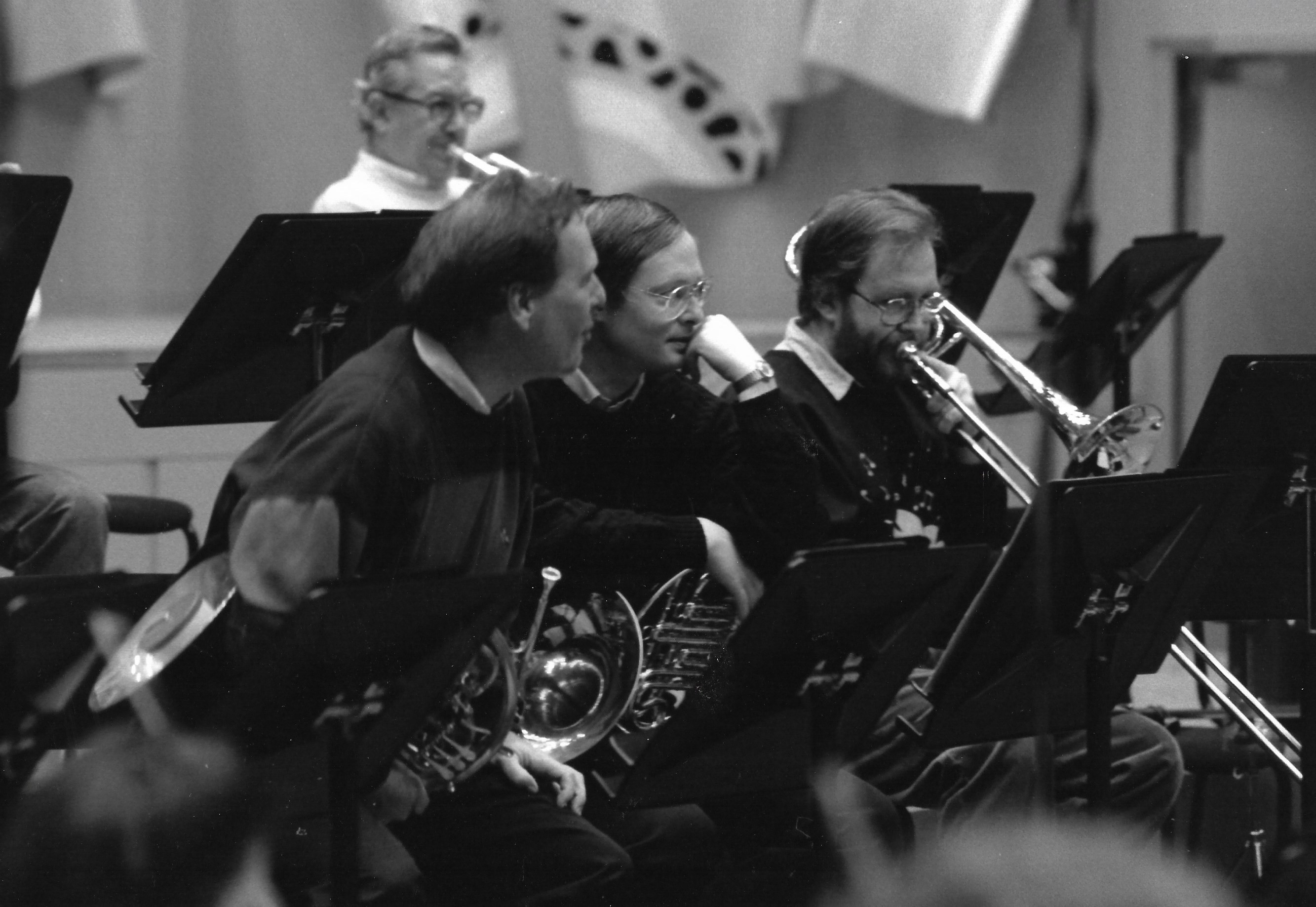
Residentie Orkest
On the evening of his arrival in The Hague, Malcolm Morton, the trumpet player with the Residentie Orkest, happened to drop by. “We went out for a beer. He told me there had just been a trombone audition, but that no one had been hired.” Within a few days, Dowling auditioned. “Then they offered me a one-year contract. So suddenly I was in The Hague.”
He still vividly remembers his first rehearsal, in November 1988. “It was a choral accompaniment with the ASAF Christian mixed choir. We played Dvořák’s Requiem; it was all a bit messy, and I thought, ‘What have I done?’ But shortly after that came the major symphonic programs, including performances with guest conductors Yoel Levi and Aldo Ceccato. “That’s when I realized this was a very special orchestra.”
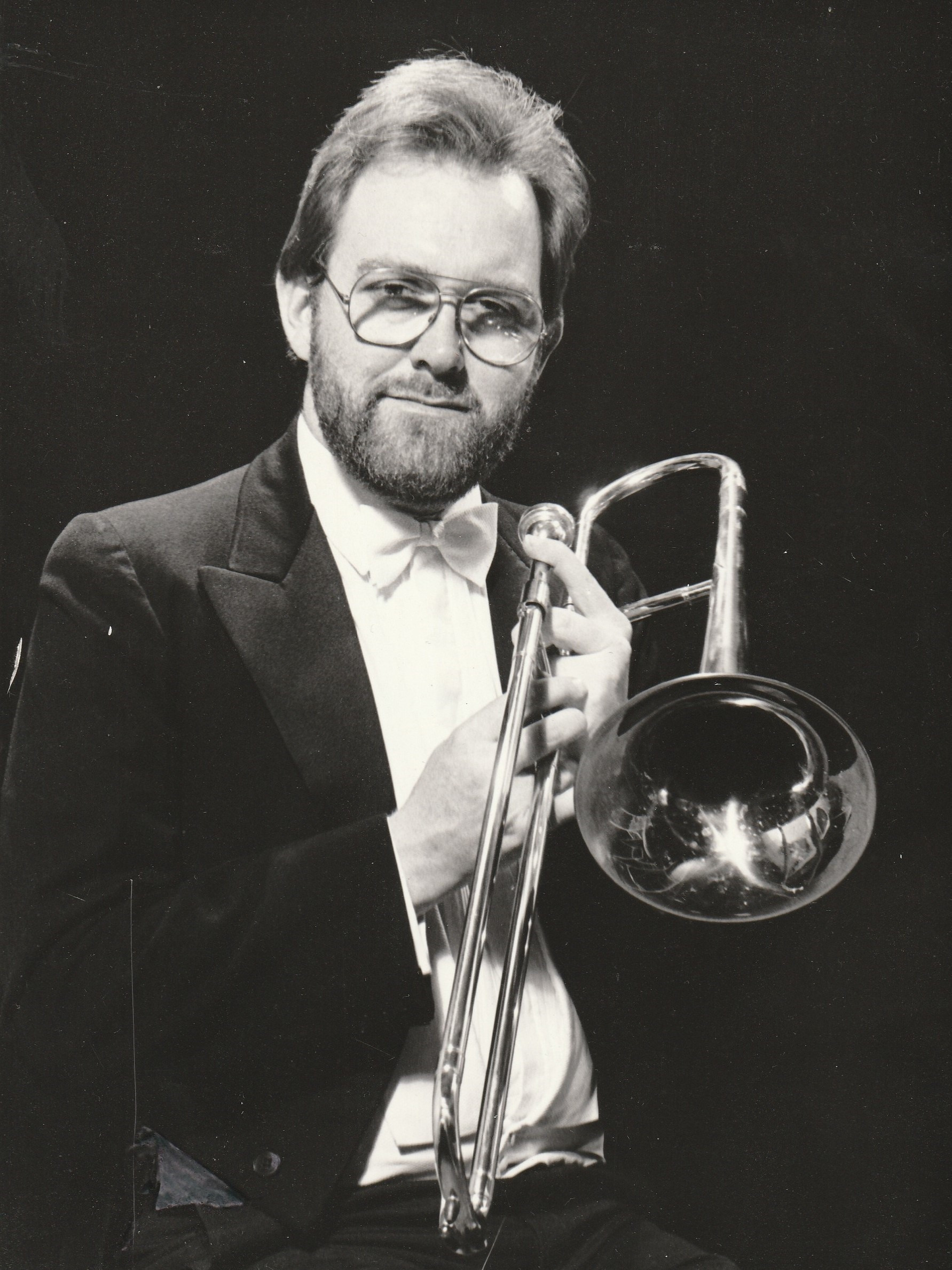
Getting used to
Things didn’t exactly go smoothly at first. The winter, the language, looking for a place to live—it took some getting used to. “I actually experienced quite a culture shock. But I was quickly welcomed into the orchestra.” He also met his future wife, Anna, through some Australian musicians. “Before long, I had a life here.”
Van Otterloo
A special connection has long linked Tim to the history of the Residentie Orkest: Willem van Otterloo. As a student in Melbourne, he heard Van Otterloo’s Last . “He was rehearsing Beethoven’s Ninth Symphony. I was scheduled to fill in the following week, so I slipped into the back of the old movie theater to listen for a bit. The next morning, I heard on the radio that Van Otterloo had been killed in a car accident that night.” It wasn’t until later, when Tim came to Residentie Orkest understand Van Otterloo’s significance to the Residentie Orkest , that that memory felt like a kind of foreshadowing.
In the decades that followed, he worked with great conductors, went on tours, and performed in major concert halls. Hans Vonk made a deep impression, despite the tensions that arose later within the orchestra. “Mahler’s Ninth Symphony with him was special. And Bruckner’s Eighth Symphony on tour in East Berlin, just after the fall of the Wall. The entire bus was still being searched. That concert was one of the best I’ve ever played.” He also mentions Yevgeny Svetlanov without hesitation. “His first rehearsal, Brahms No. 2, was a revelation. He hardly spoke, but his gestures conveyed exactly what he wanted.”
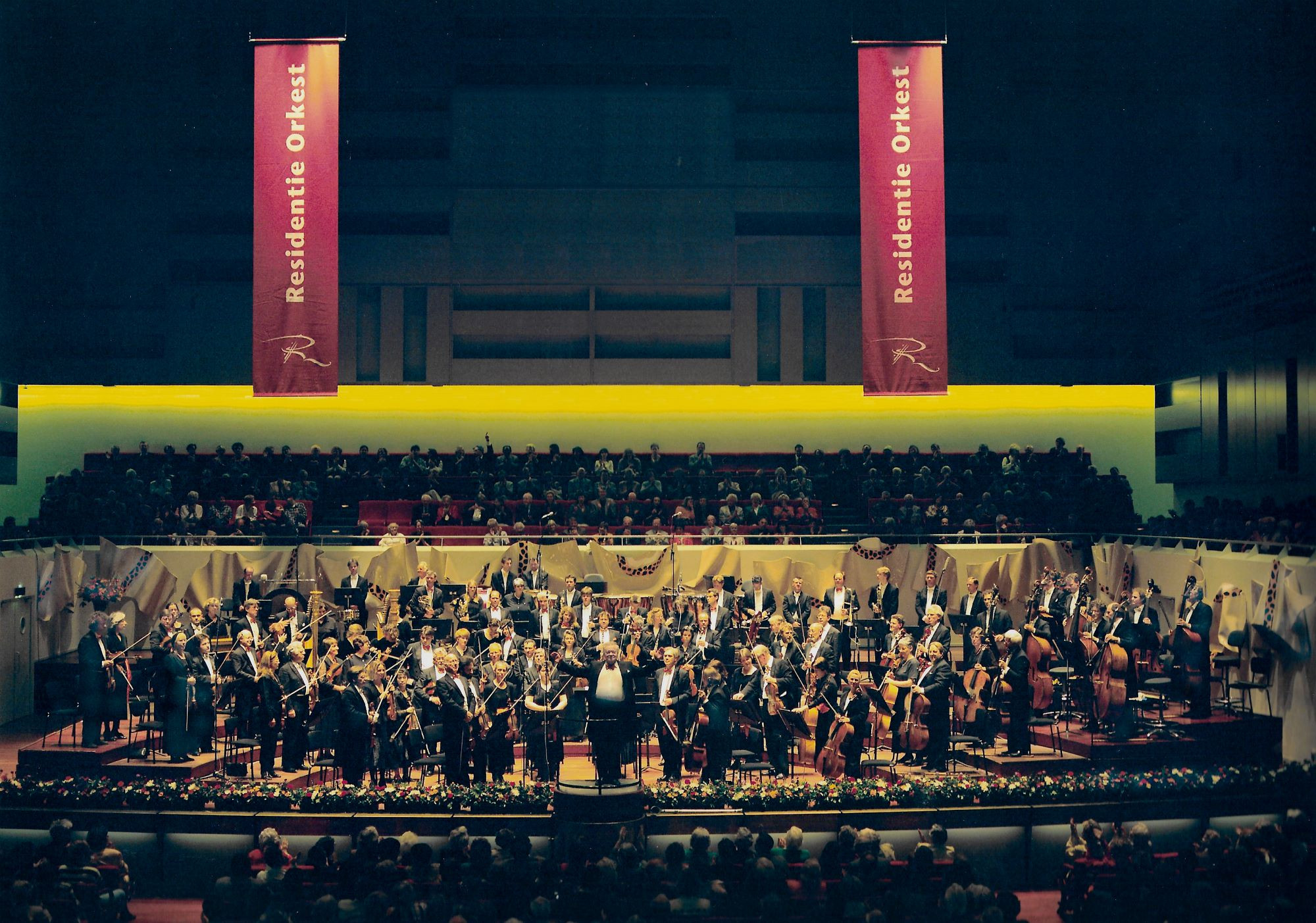
Change
The orchestra has undergone a radical transformation over the years. “Almost everyone is new, and yet the Residentie Orkest remains Residentie Orkest .” The sound has evolved along with the venues—from the somewhat muffled acoustics of the Dr. Anton Philipszaal to the Zuiderstrandtheater and finally Amare. “I’m very happy that I Amare experience this Concert Hall Amare . We play more relaxed there, less forcefully. It’s a good step forward.” What has remained, in his view, is the lyricism. “During rehearsals, things weren’t always efficient in the past, but the most beautiful things happened at the concert. That incredibly lyrical playing has always been a strong point of this orchestra.”
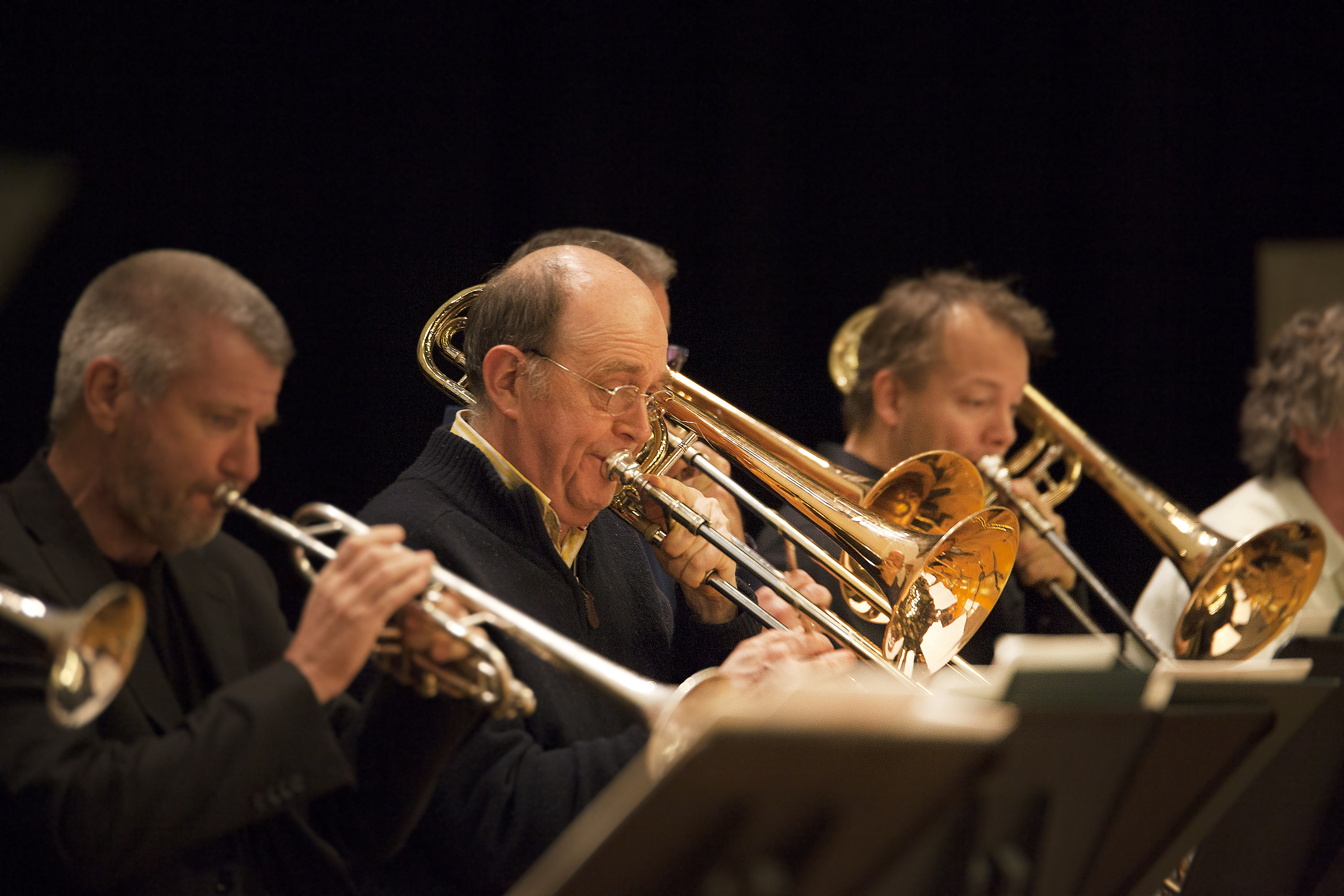
Brass Band
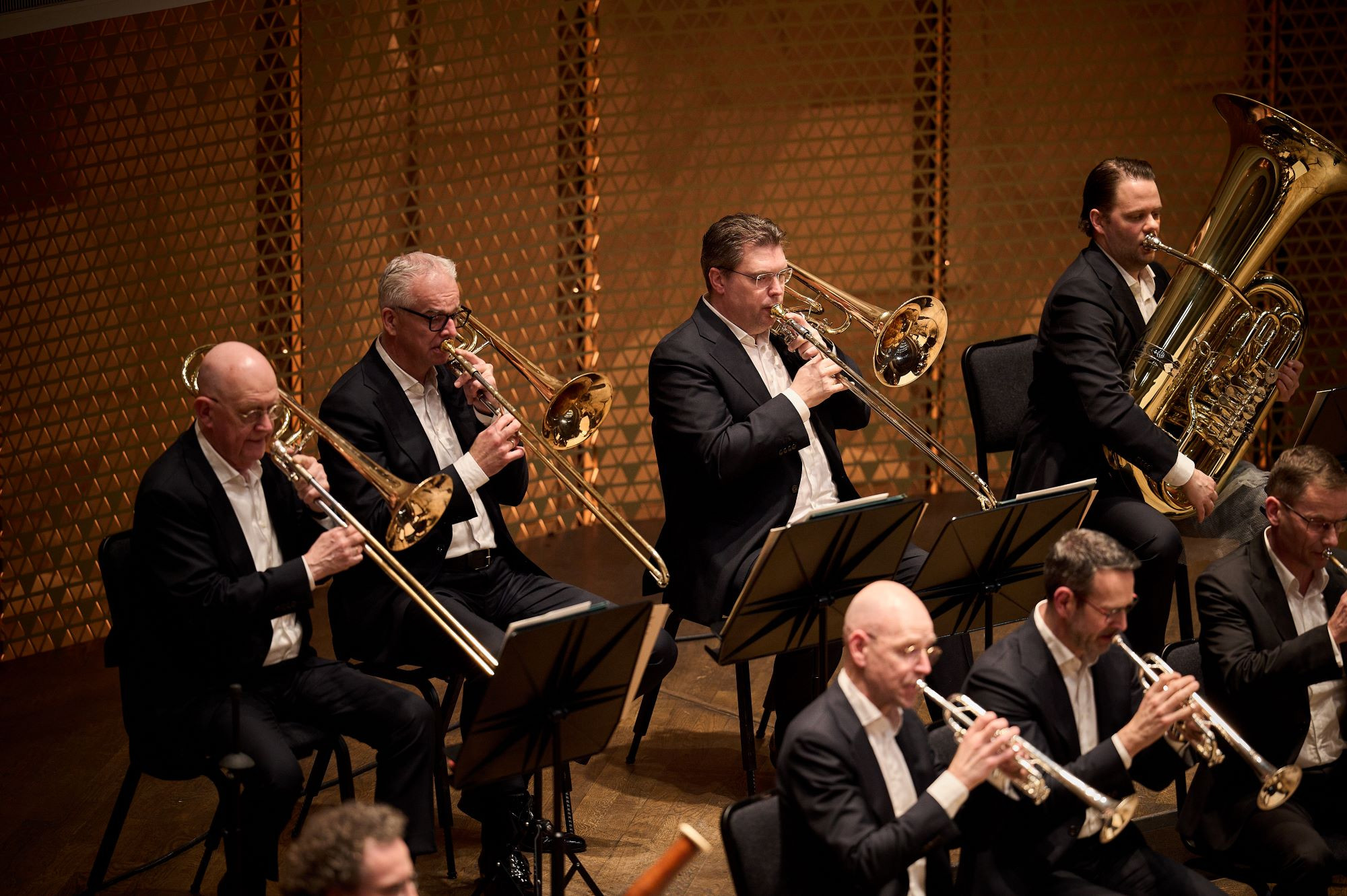
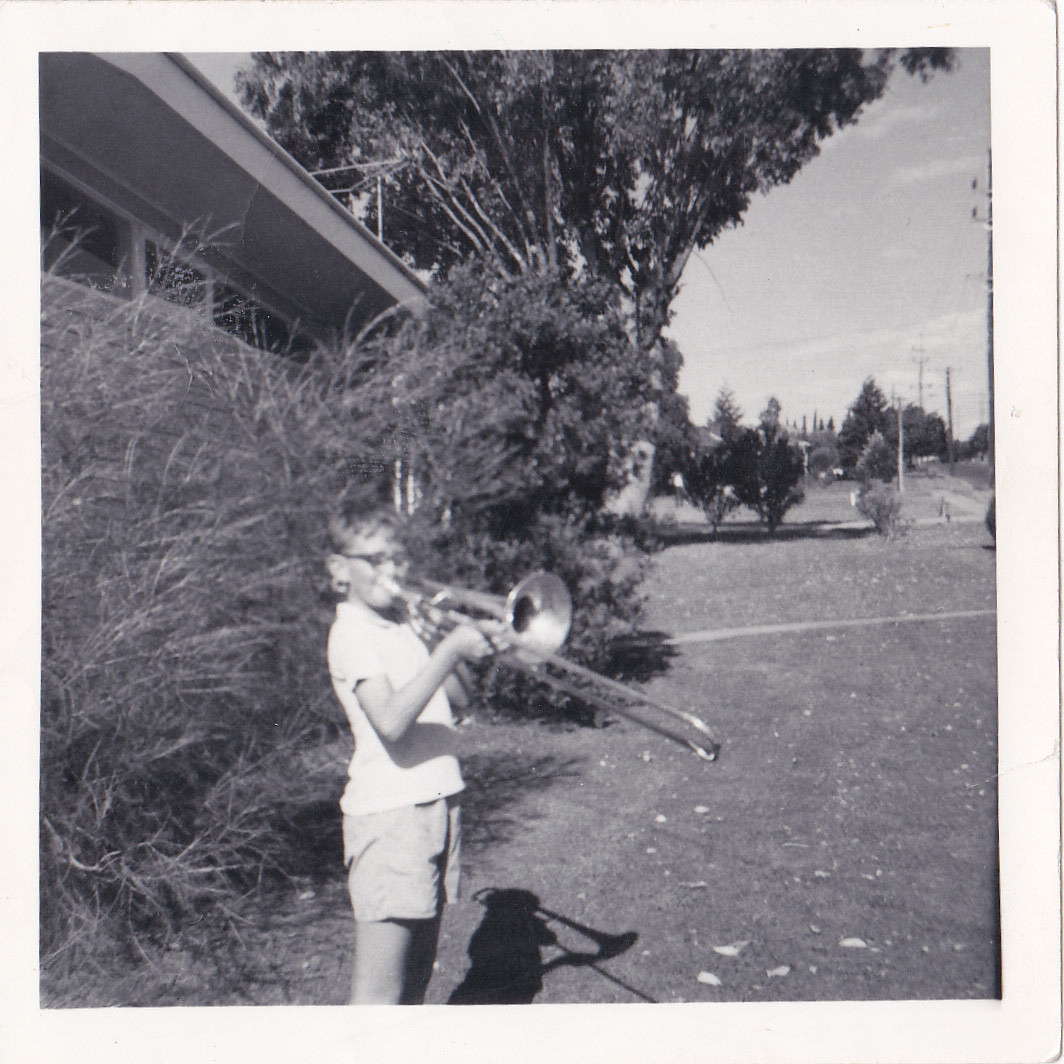
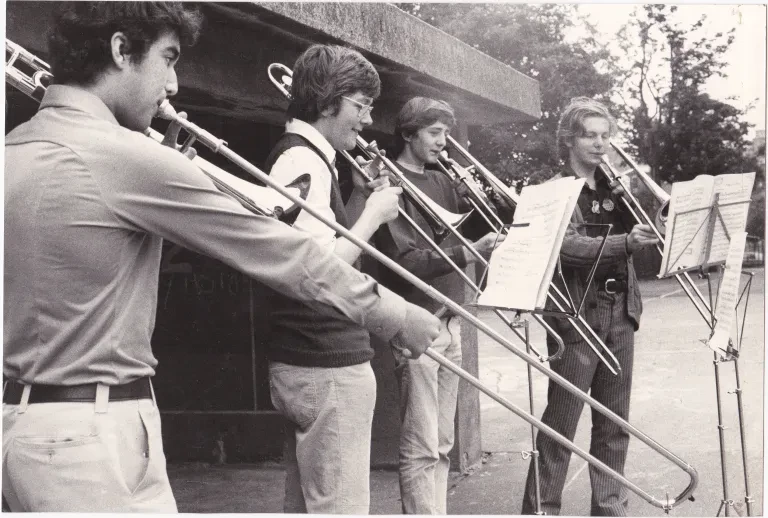
Tim knew from a young age that the trombone was meant to be his instrument. His father was an Anglican minister and a talented musician. Music was a natural part of life at home. “As a child, I saw a brass band marching and thought it was spectacular. I wanted to play the trombone, but I was still too small. That’s why I started on the trumpet.” At thirteen, he switched instruments, and his passion was truly ignited in youth orchestras. “Holst’sThe Planets, Ravel’s Boléro: that was everything to me.”
Although he also played the baroque trombone and taught, he feels most at home performing the symphonic repertoire. “In front of a full house, with a good conductor or soloist and an enthusiastic audience: that’s the rush. That’s what I’ll miss the most.” Nerves are part of the deal. “The Boléro or Mahler’s monumental Third Symphony remain particularly thrilling, but I can handle them better than I used to. No stage fright, just heightened tension. And then that release, from your colleagues and from the audience.”
Pitfalls
So retiring is bittersweet. “I didn’t really want to retire, but at 67, that’s just the way it is.” He notices that some aspects of playing require more effort than they used to. “Fast passages, lip strength—those things change. But I’ve learned to practice more strategically. I know all the tricky spots and pitfalls.”
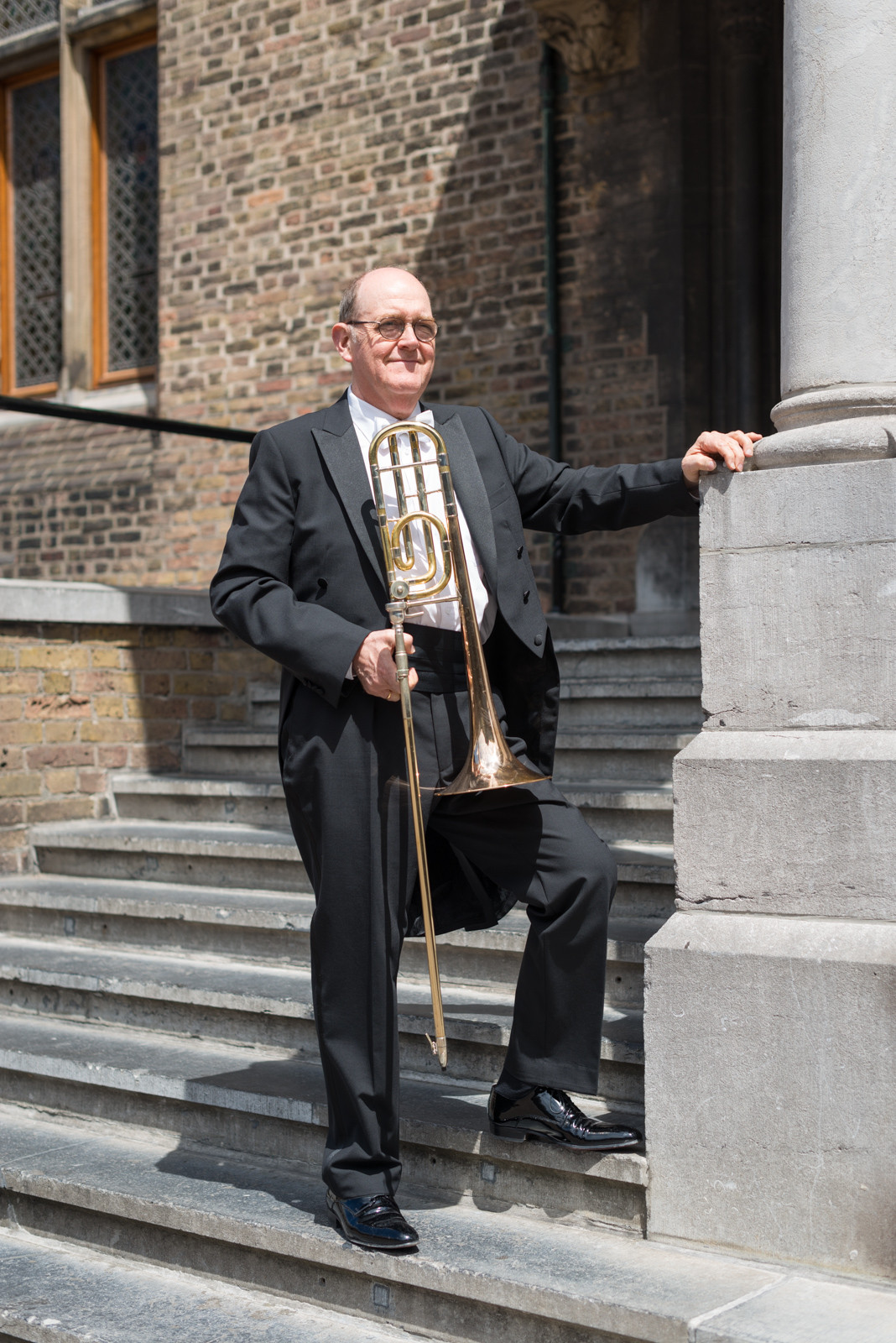
He doesn’t expect to hit a slump. Tim wants to keep playing, but also travel with his wife, go hiking and biking more, sing in a good amateur or project choir, read, and spend time with his children and grandchildren. He won’t be going back to Australia. “My life is really here.” Above all, he is grateful for what his musical career has brought him. “I’ve played in orchestras as a professional for nearly fifty years. I got my first job when I was nineteen. I haven’t missed a thing.”
Wine
And then there’s his passion for wine. Since a tasting around 2009, Tim’s interest has grown, especially in German wines. “Knowledge brings more enjoyment. I enjoy it, but not too much.” When asked if he’d like to pursue further wine education, he laughs: “No, I don’t think I have a knack for that. Let me just enjoy all the wonderful things that still lie ahead!”
Jan Jaap Zwitser