“I’m actually still having way too much fun to quit.”
After nearly forty years, Erik Reinders is leaving the Residentie Orkest
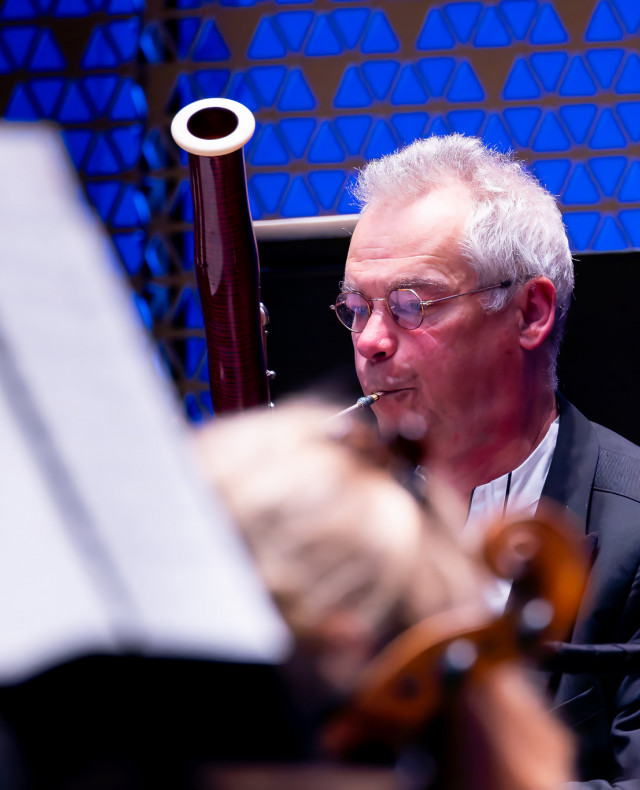
After nearly forty years, contrabassoonist Erik Reinders is bidding farewell to the Residentie Orkest. On November 1 at Sunday , he will perform his “ Last ” concert during Shostakovich’s Tenth Symphony at Amare. A fitting finale, he believes, because the contrabassoon has a wonderful part in this work. Erik looks back on four decades filled with memorable concerts, wonderful colleagues, and musical highlights. But he also reflects on a career that once began with a recorder and a telegram.
A Love for Low Tones
Erik’s musical career didn’t start right away with the bassoon. Like so many children, he first took recorder lessons. “My mom made me do it. You could take music lessons in elementary school, but I didn’t really enjoy it.” During an open house at the local music school, his eye (and ear) was caught by the bassoon. “I thought the sound was so beautiful; I kept walking back to it. Eventually, the teacher asked if I’d like to give it a try. My mom even said, ‘But that child is way too small, isn’t he?’ But they slung a bassoon around my neck, and the teacher said, ‘Just blow.’ And that’s basically what I’ve been doing ever since.”
His preference for low-pitched instruments has always remained. “I love a dark, warm sound. If I’d chosen a string instrument, it probably would have been a cello. And among the brass instruments, a French horn or trombone.”
During his time at the conservatory, Erik discovered the contrabassoon. “There was a very old one there, and nobody wanted to play it. But I thought it looked like a lot of fun.” With the help of bassoonist Maarten Vonk—who was then the contrabassoonist with the Ballet Orchestra—and later through lessons with Guus Dral of the Concertgebouw Orchestra, he continued to develop his skills. This eventually led to engagements with the Ballet Orchestra, the Netherlands Wind Ensemble, and the Rotterdam Philharmonic Orchestra. That was until the “ Residentie Orkest ” came along in 1987.
"The ' Residentie Orkest ' has such a great group of wind players; everyone was friendly, and the atmosphere was really pleasant. It's actually stayed that way ever since!"
- Erik Reinders
A Telegram and a Sandwich
Erik will never forget his first performance with the Residentie Orkest . At the time, he was playing as a regular substitute in Rotterdam when, upon returning home after a rehearsal, he found a telegram on the doormat: it asked him to call the Residentie Orkest immediately. “Their contrabassoonist had hurt his back and couldn’t play that evening. The program featured Ravel’s Piano Concerto for the Left Hand, which begins with a contrabassoon solo. Could I play that, and could I fill in?” There was one problem, however: Erik also had to play in Rotterdam that same evening. “Then the orchestra inspector suggested switching the order of the program in The Hague. That way, I could play Ravel first, and then he would quickly take me to Rotterdam”
There wasn’t much time to get nervous. “I’d been warned that conductor Alain Lombard would turn around while the audience was still applauding and start right away. Good to know, of course, but I was mostly worried about whether I’d get there on time.” After his performance, Peter van Renesse, the orchestra inspector at the time, was waiting outside with his car, engine running. “He’d even made me some sandwiches. I arrived in Rotterdam right on time.”
Not long after, a permanent position opened up at the Residentie Orkest. Erik auditioned and immediately felt at home. “It was like stepping into a warm bath. Such a wonderful wind section—everyone was nice, and the atmosphere was very pleasant. It’s actually stayed that way ever since.”
The Foundation of the Orchestra
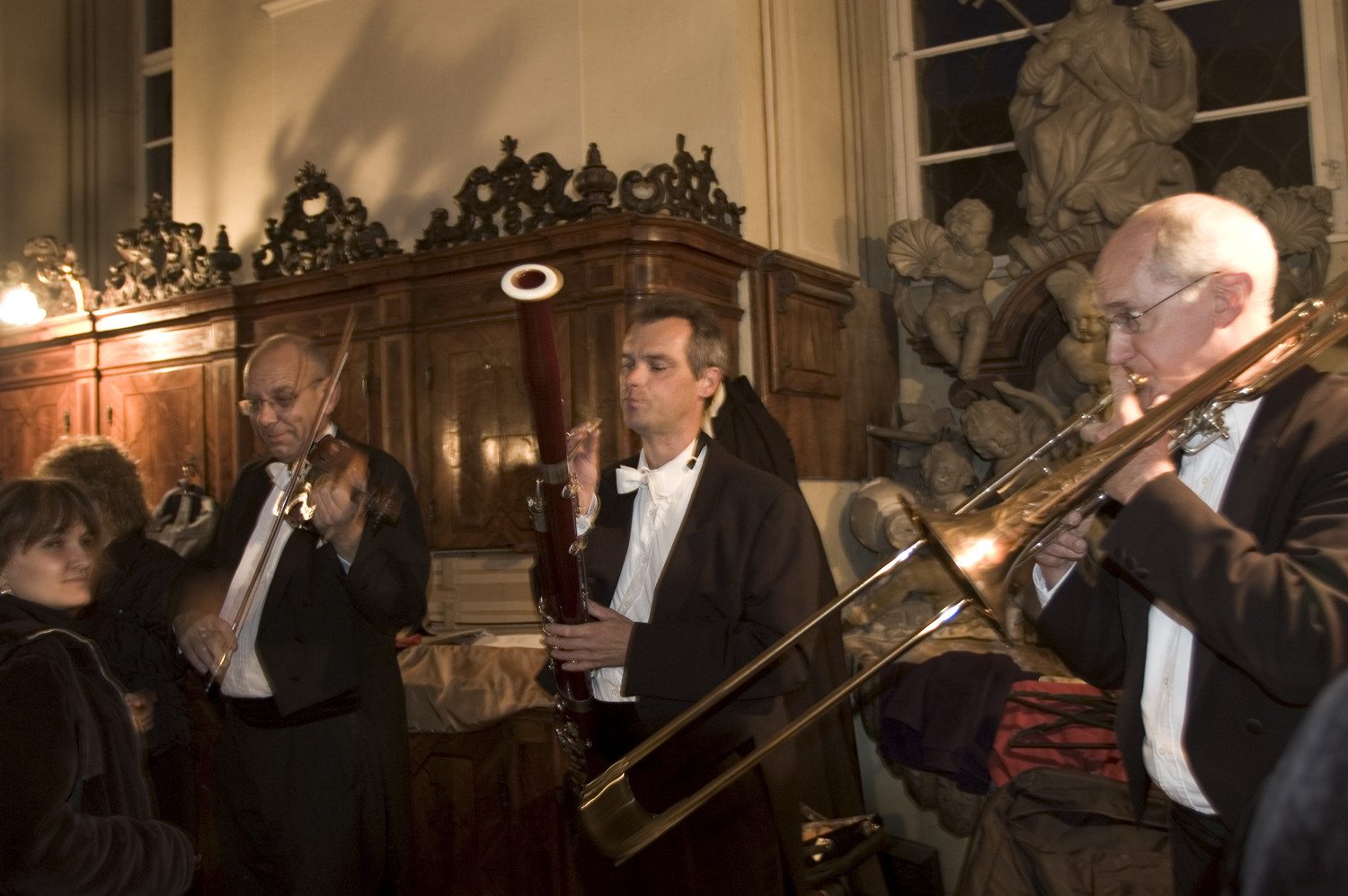
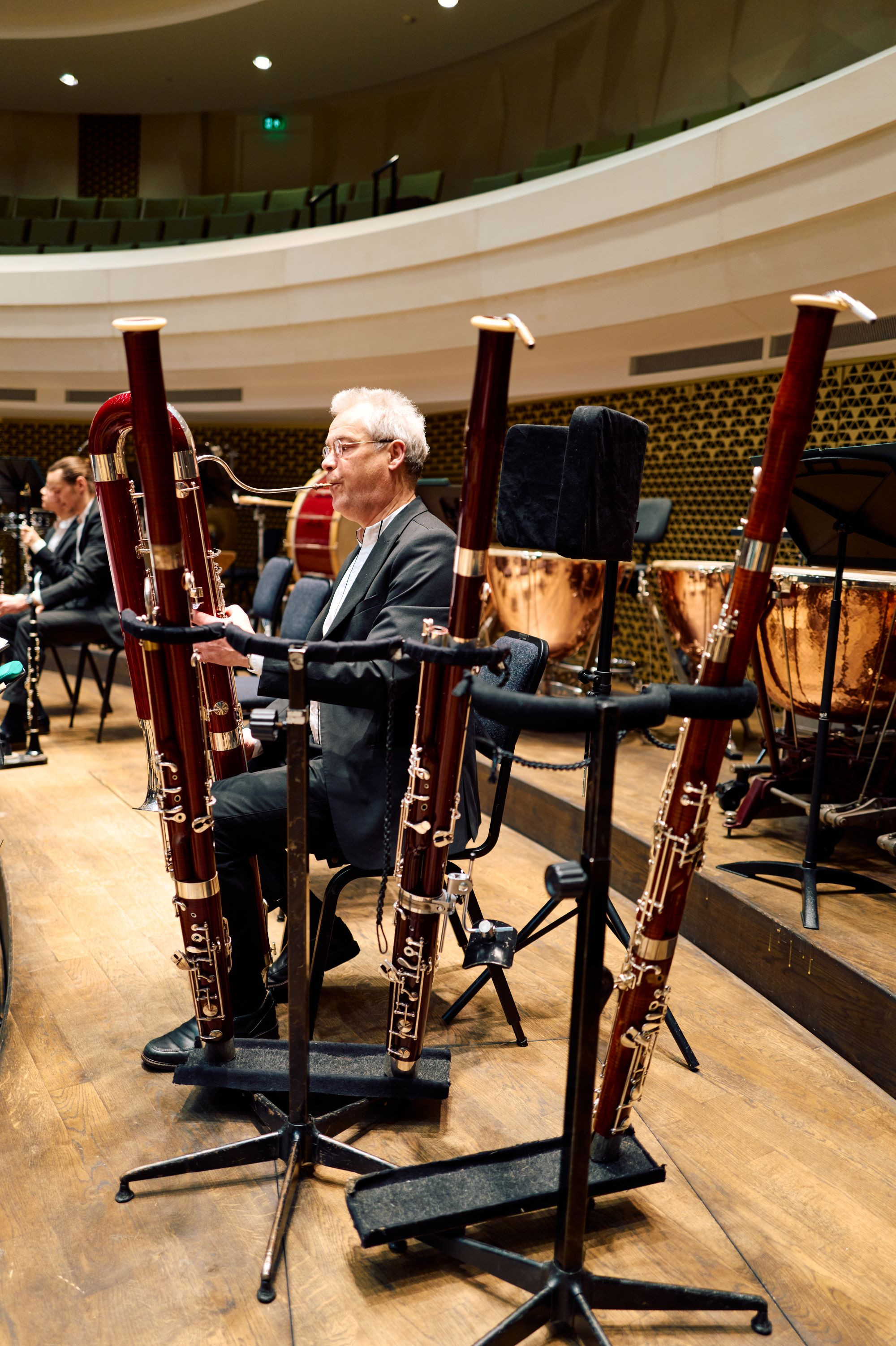
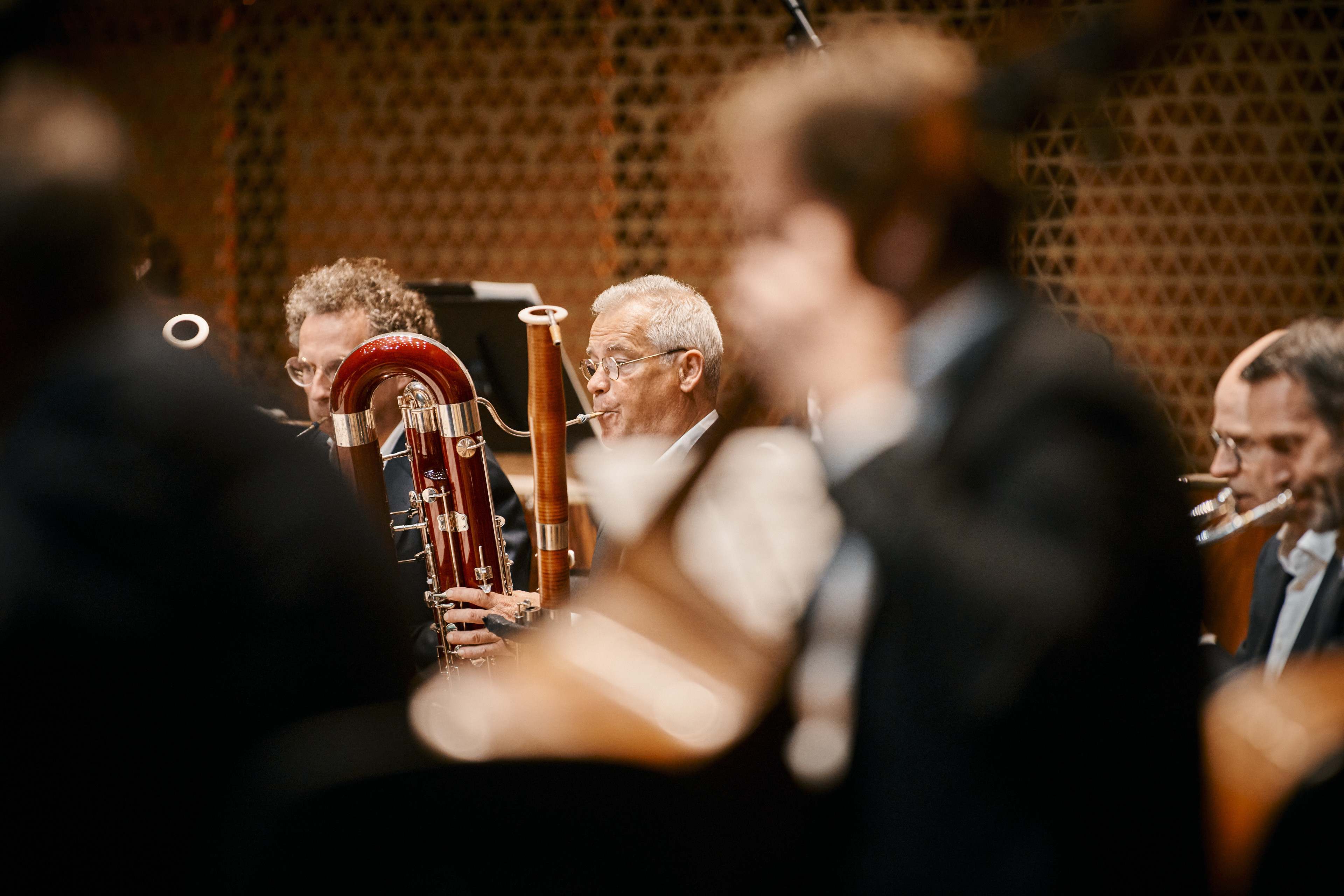
Erik is now in his 40th season with the Residentie Orkest, though he won’t quite finish it. All these years, he has alternated between the contrabassoon and the second bassoon. “I really enjoy that variety. I always say: if there are fourteen bassoons, I’ll play the fourteenth bassoon.” A modest statement, because it is precisely in the lower register that his instrument plays a key role. “As the second bassoonist, you’re the bass of the woodwinds. You have to provide a stable foundation and constantly listen to the intonation of the entire group. And just like with the contrabassoon , you form also "a bridge between the woodwinds and the low strings."
Forty Years of Change
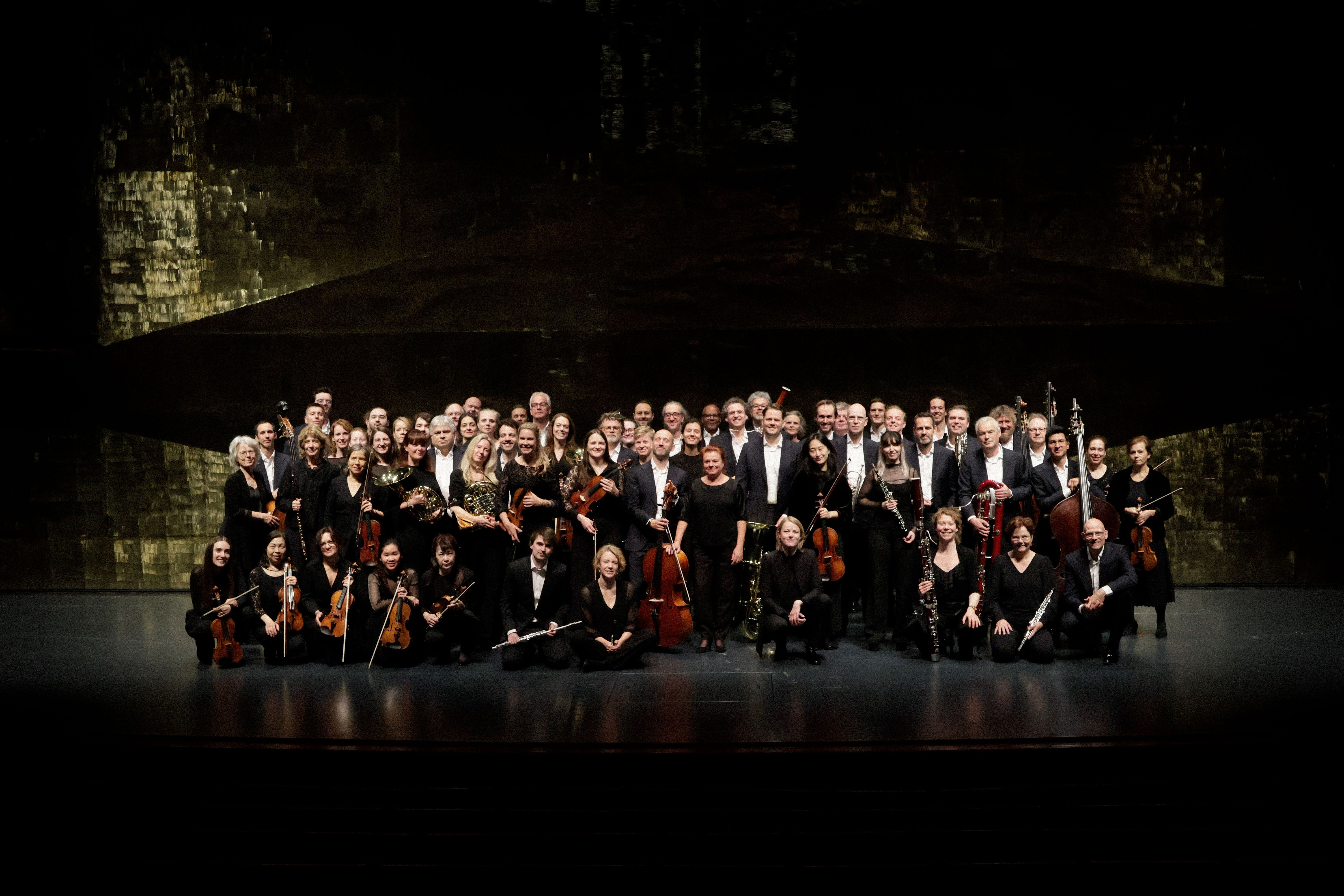
Since 1987, Erik has seen the orchestra change. When he arrived, the Dr. Anton Philipszaal had just opened. “The orchestra had to get used to that new hall and, in a sense, be rebuilt from scratch. With * Amare *, we’ve gone through another such development.” He also believes the level of performance has risen tremendously. “In the past, the first rehearsal could sometimes be quite chaotic. These days, a program is often rock-solid by the very first rehearsal. I also look at the younger generation with admiration. The level at which young musicians play today is unimaginably high.” But according to Erik, one of the most important things has remained unchanged: the collegial atmosphere. “It’s always been an incredibly pleasant orchestra. People aren’t out to get each other. That makes it a joy to work here.”
When Everything Falls into Place
Nearly forty years of orchestral music have yielded countless memories. Erik finds it difficult to single out just one highlight. Still, there are concerts that will always stay with him. “Messiaen’s opera *Saint François d’Assise* was fantastic. And I remember a performance of Bruckner’s Eighth Symphony with Hans Vonk in what was then East Berlin. Sometimes working with him could be quite challenging, but during that concert, everything truly fell into place.” For Erik, those were indeed the most beautiful musical moments. “It’s as if a turbo suddenly kicks in. The entire orchestra rises above itself, and so does the conductor.”
He looks back fondly on concerts with conductors such as Gennadi Rozhdestvensky and Yevgeny Svetlanov. “But the concerts with Jun Märkl and our regular guest conductor Richard Egarr are always highlights for me, too.” His enthusiasm isn’t limited to the great symphonic repertoire. “We’ve done fantastic children’s performances with small ensembles. I’ve enjoyed those immensely.” And after all these years, the familiar orchestral works still captivate him. “When Beethoven’s Eroica is on the program, I still think: amazing! The beauty of playing a piece more often is that you keep discovering new things. You start to hear the structure more clearly and understand how everything fits together. A composition then becomes almost like a sculpture in which you discover more and more layers.”
Quitting While He’s Ahead
Although Erik is looking forward to more free time, saying goodbye isn’t entirely easy for him. “I’m actually still having way too much fun to quit. Fortunately, my playing is still going well, and I’d love to keep going. But it’s important that young musicians get a chance, too. Besides, the orchestra is in fantastic shape. We have a beautiful concert hall, a great new chief conductor, and very talented young colleagues. It’s nice to say goodbye at a time when things are going so well.”
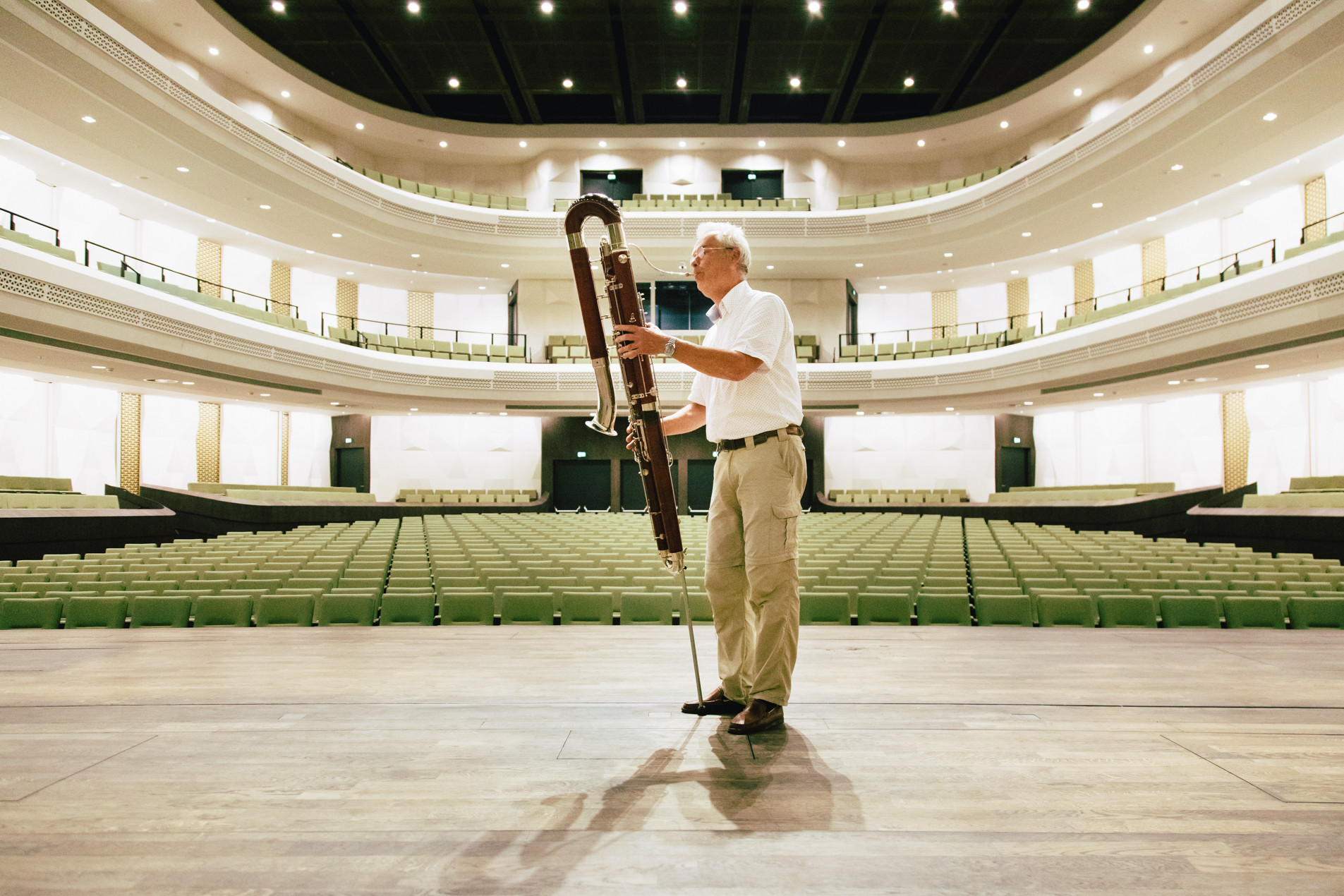
“Of course, I’ll miss certain things, like playing together, my colleagues, the warm atmosphere, and, of course, the beautiful music. And: the orchestra’s lovely new contrabassoon ! What I won’t miss as much is always having it in the back of my mind—even when I’m off for a week—that I still need to practice something or make a good reed. That feeling will soon be gone.”
From “ contrabassoon ” to “
” Erik has no intention of sitting still after his retirement. He continues to make music and has now also taken up the Baroque bassoon. Together with pianist Esther Steffens, he forms the duo “De zingende contrabassoon,” in which the contrabassoon takes on a surprising leading role. “We arrange songs, such as Schubert’s *Der Erlkönig*. In these arrangements, I play specifically in the high register of the contrabassoon —a range you almost never hear.” We regularly give small concerts, such as house concerts or performances in galleries. I’d like to keep doing that. And don’t forget the mountains. I’ve been skiing since I was seven, and every summer I go on a multi-day hut-to-hut hike with one of my three sons. That’s a wonderful thing to do! I also have two—and soon three—grandchildren who’ll keep me busy.”
Erik also has a remarkable hobby: he builds working miniature steam engines and locomotives. “I make all kinds of parts out of brass, bronze, and steel. I’ve already built two little locomotives. That interest in engineering goes way back. I seriously wavered between the conservatory and mechanical engineering. My parents thought that after a year of studying music, I might choose engineering after all. But that never happened,” he laughs.
On November 1, his Last contribution to the Residentie Orkest will be Shostakovich’s Tenth Symphony. “I think that’s a wonderful finale. It features a beautiful, substantial contrabassoon part. It’s great to end with that.”
Jan Jaap Zwitser
A new contrabassoon
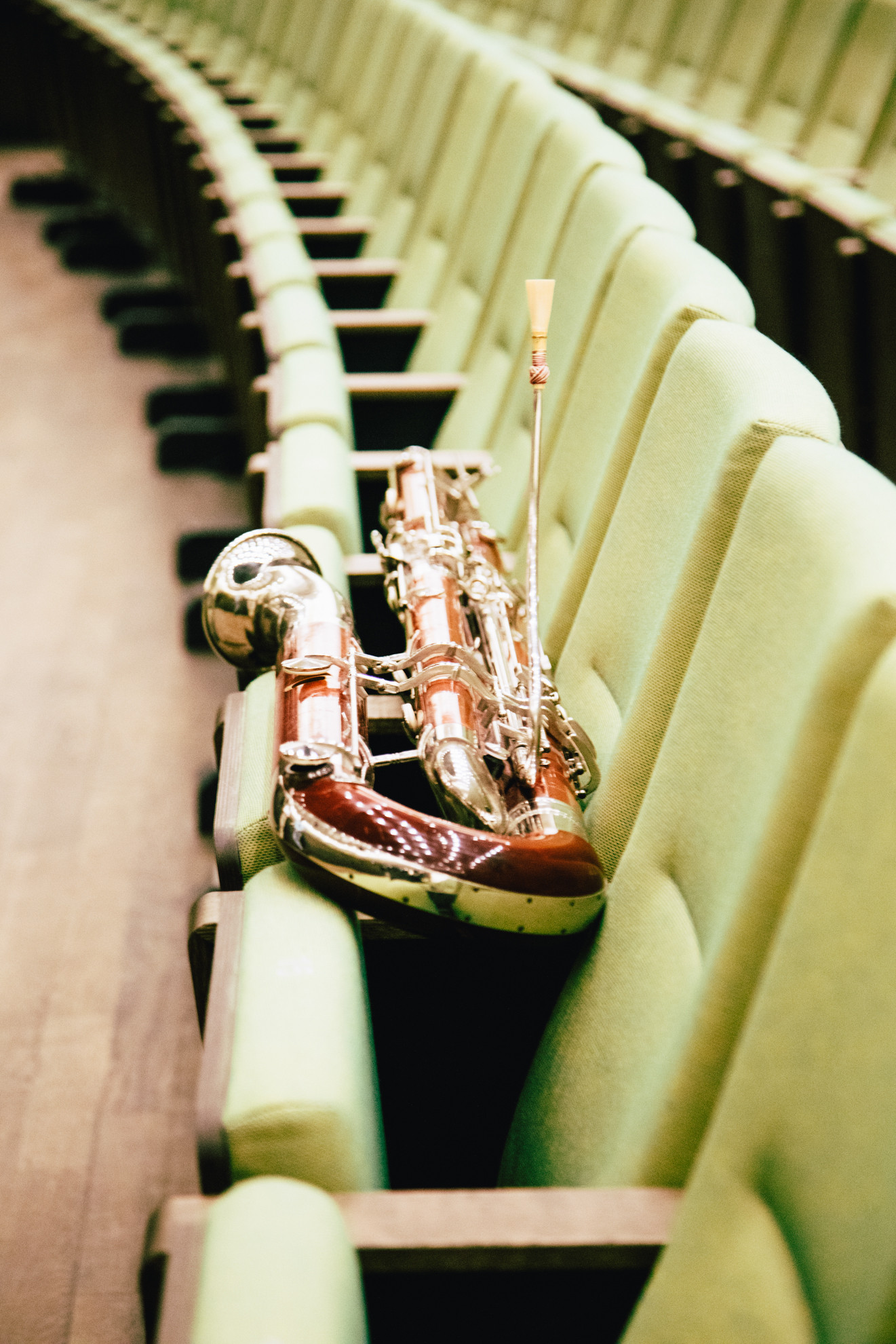
A special moment during his Last years with the orchestra was the purchase of a new contrabassoon, made possible in part by the Friends of the Residentie Orkest. Erik played a 1978 Heckel for many years. “A beautiful instrument, but instrument design never stands still. When I tried out the new instrument, I nearly fell off my chair in surprise. I thought: This is unbelievable!”